Nature loss is no longer an environmental footnote; it is a financial risk variable.
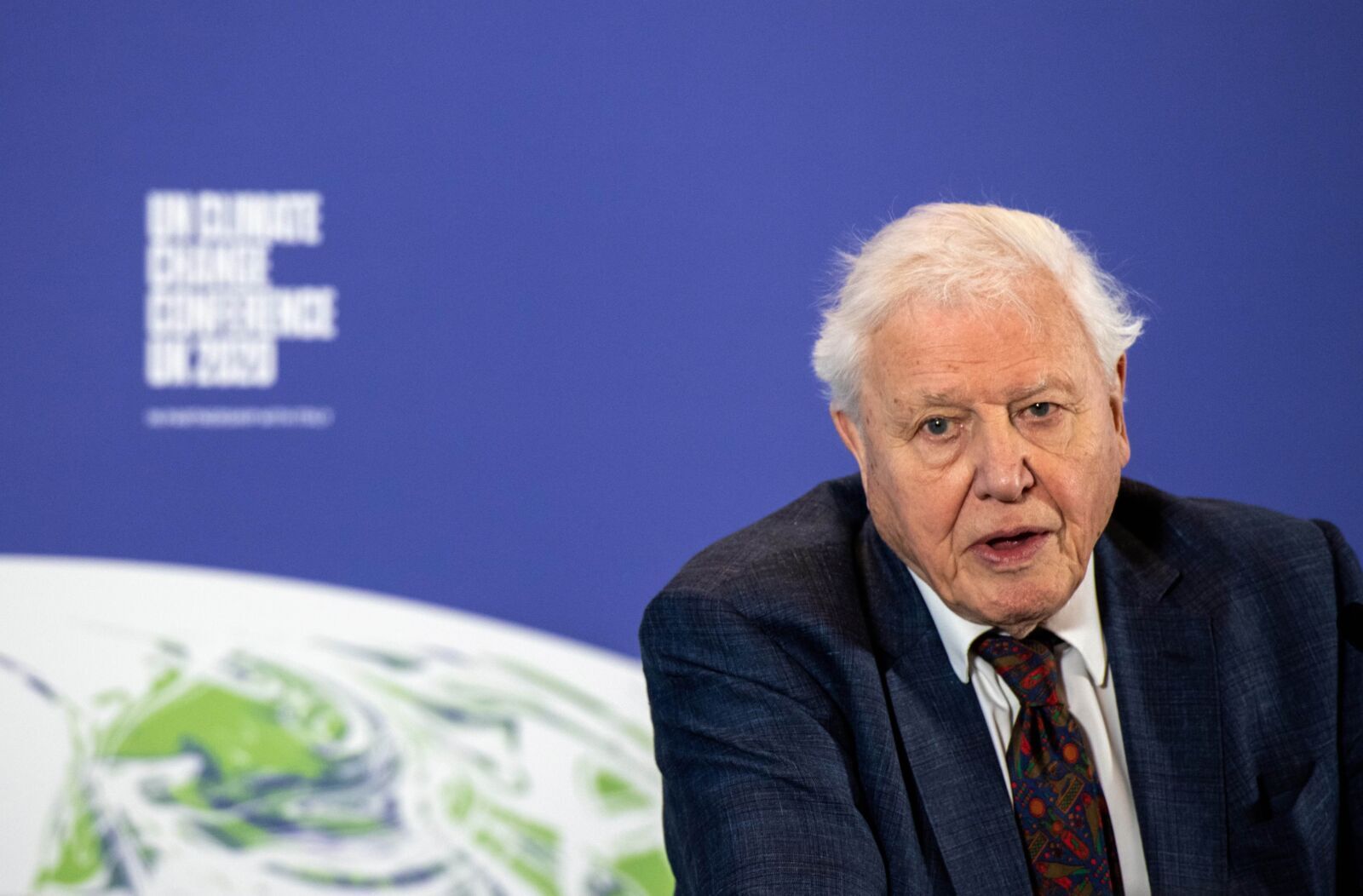
In a forceful message to investors, David Attenborough has reframed biodiversity as a balance-sheet issue, arguing that ecosystems underpin economic value and long-term returns.
For sustainable finance, the implication is clear: nature is emerging as the next “basis point”, a measurable factor shaping asset pricing, risk models, and capital allocation.
Repricing Nature in Financial Markets
Capital markets are built on risk assessment. Inflation risk, credit risk, and currency volatility risk are each quantified, priced, and embedded into valuation models.
However, nature, despite underpinning more than half of global GDP through ecosystem services, has historically remained unpriced.
Sir David Attenborough’s recent message to the sustainable finance community was blunt: economic systems are drawing down natural capital faster than it can regenerate.
Forests, oceans, soils, and freshwater systems form the infrastructure of economic productivity. Degradation of these systems represents systemic risk.
The argument marks a shift in framing. Biodiversity loss is not only an ethical concern; it is a financial materiality issue.
From agriculture supply chains to insurance underwriting and infrastructure resilience, nature-related risk exposure is embedded across portfolios.
The challenge now is translating ecological dependence into measurable financial metrics.
Biodiversity Underpins Economic Stability
Nature contributes ecosystem services valued in the trillions annually: pollination, water filtration, carbon sequestration, soil fertility, and climate regulation.
When these systems deteriorate, economic volatility rises. Crop yields decline. Insurance claims increase. Commodity prices fluctuate. Coastal infrastructure faces heightened exposure to extreme weather.
Financial institutions are beginning to recognise that biodiversity loss represents a macroeconomic shock channel.
The Taskforce on Nature-related Financial Disclosures has advanced frameworks to guide companies and investors in identifying, assessing, and disclosing nature-related risks.
Nature, once externalised, is entering mainstream risk conversations.
From ESG Add-On to Core Metric
Sustainable finance initially centred on carbon accounting and climate mitigation. Biodiversity, by contrast, remained less quantifiable.
Attenborough’s intervention underscores a pivotal shift: nature must move from ESG narrative to valuation driver.
Nature Dependency | Financial Exposure | Risk Transmission Channel |
|---|---|---|
Agriculture supply chains | Commodity volatility | Soil degradation, pollinator loss |
Infrastructure assets | Asset impairment | Flooding, coastal erosion |
Insurance portfolios | Claims escalation | Extreme weather intensity |
Extractives operations | Operational disruption | Ecosystem damage litigation |
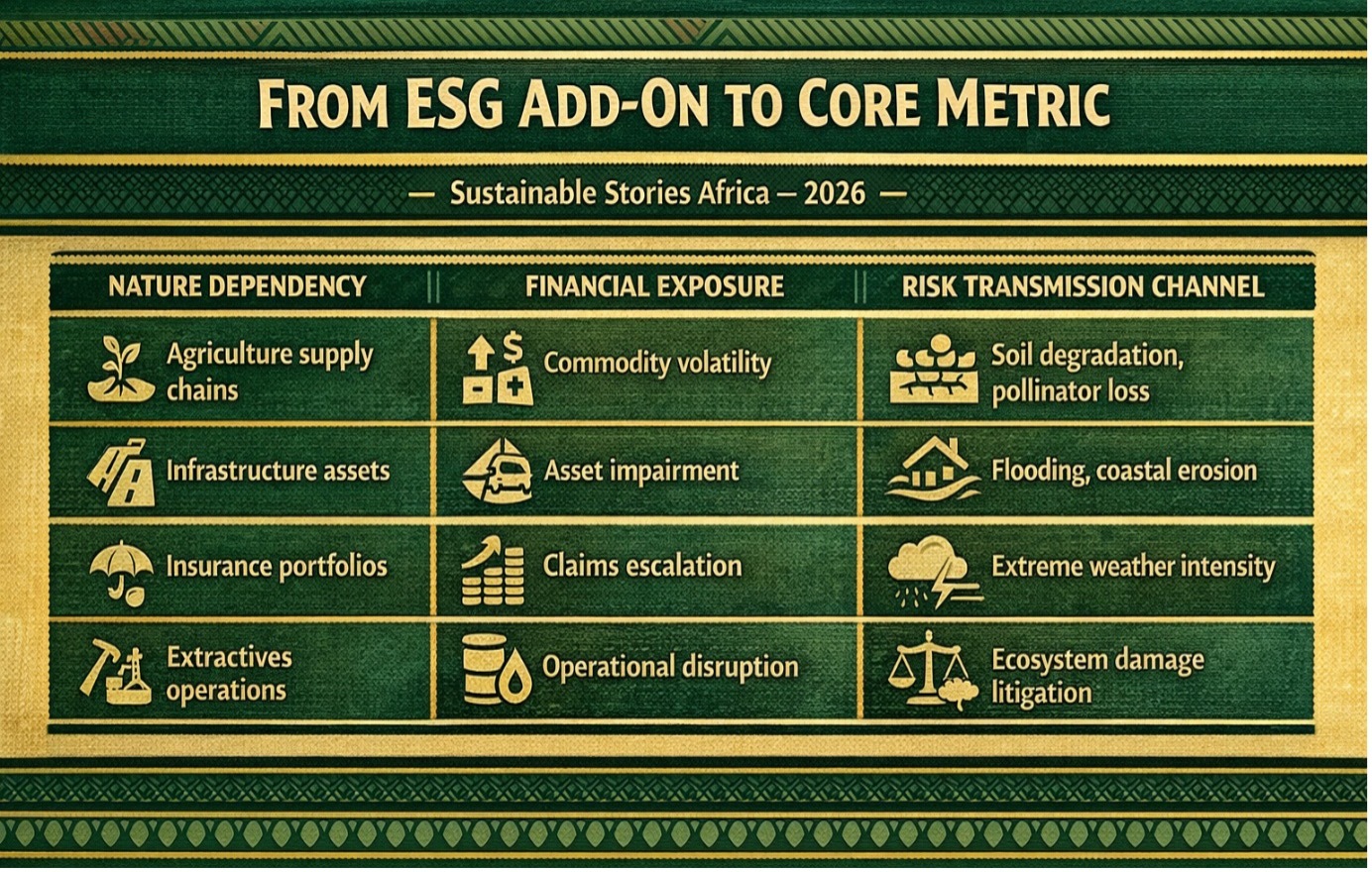
For investors, this reframes biodiversity as a portfolio-wide risk multiplier.
In Africa, home to some of the world’s most biodiverse ecosystems, the stakes are amplified.
Natural capital forms a significant portion of national wealth. Yet financing for conservation remains underscaled relative to investment flows driven by extraction.
Capital Flows Lag Ecological Risk
Global sustainable finance assets have grown rapidly; however, only a small fraction is explicitly allocated toward biodiversity-positive outcomes.
While climate finance commitments run into the hundreds of billions annually, biodiversity finance gaps are estimated in the hundreds of billions globally.
Africa’s paradox is acute:
- The continent hosts vast forests, wetlands, and marine ecosystems.
- It simultaneously faces deforestation, desertification, and biodiversity loss driven by population pressure and commodity demand.
Without integrating nature risk into sovereign bond pricing, infrastructure finance, and development planning, ecological degradation may continue to erode economic resilience.
Emerging instruments, including green bonds, sustainability-linked loans, and debt-for-nature swaps, offer pathways, but scale remains limited relative to need.
Embed Nature in Financial Architecture
The transition from awareness to execution requires systemic integration.
- First, integrate nature-related risk into fiduciary duty frameworks. Asset managers must treat biodiversity exposure as financially material.
- Second, expand nature-linked financial instruments. Blended finance can mobilise private capital for conservation and regenerative agriculture.
- Third, improve disclosure and data quality. TNFD-aligned reporting enhances comparability and risk transparency.
- Fourth, align public policy with capital markets. Subsidy reform, land-use governance, and ecosystem valuation tools can incentivise sustainable investment flows.
For Africa, embedding natural capital accounting into national statistics may strengthen fiscal planning and debt sustainability strategies.
Nature is not merely an environmental asset; it is economic infrastructure.
Path Forward – Pricing Nature Secures Long-Term Stability
Sustainable finance is entering a recalibration phase. Biodiversity must evolve from peripheral reporting to a core financial metric embedded in risk models and capital allocation decisions.
Attenborough’s message reframes conservation as economic prudence. By integrating natural capital into valuation frameworks, markets can protect ecosystems while safeguarding long-term returns and macroeconomic resilience.