Africa’s circular economy push is shifting from concept to coordinated action. Backed by the African Development Bank and a 22-country alliance, new data show circularity could address 45% of emissions tied to material use while unlocking 11 million jobs.
From plastic roads to e-waste reform, governments are repositioning waste as infrastructure, industry and climate capital, aligning policy, finance and procurement to close Africa’s materials gap.
Circular Economy Anchors Africa’s Climate Strategy
Africa is embedding circular economy reforms into its climate architecture, positioning material efficiency as a core lever for emissions reduction, biodiversity protection and green industrialisation.
According to the African Development Bank-backed programme outlined in Circular Economy in Africa as part of Climate Solution, circular strategies could address 45% of emissions linked to material production and use, help protect one million species at risk of extinction, and contribute toward Africa’s $1.3 trillion annual climate finance goal.
The programme integrates catalytic funding, regulatory alignment and national roadmaps across multiple countries, turning circularity into a measurable climate and economic strategy.
Circularity Becomes Africa’s Climate Lever
Africa’s climate challenge is not only about energy. Nearly half of global emissions stem from how materials are extracted, processed and discarded.
For a rapidly urbanising and expanding infrastructure, the stakes are even higher.
The African Development Bank (AfDB), through the Africa Circular Economy Facility (ACEF), is repositioning circular economy reforms as a climate and growth imperative.
The initiative aligns with the Continental Circular Economy Action Plan (2024–2034), linking emissions reduction with industrial transformation.
From construction and plastics to electronics and food systems, governments are deploying procurement, finance and regulatory tools to convert waste streams into investable climate assets.
Materials Drive Hidden Emissions Burden
The data are stark. Material production and use account for 45% of global emissions.
In Africa, unmanaged plastic waste alone is estimated at 11 million tons, much of which pollutes ecosystems rather than entering productive value chains.
The construction sector represents the highest-impact entry point, responsible for 40% of raw material use and 30% of CO₂ emissions.
Without systemic reform, rising urbanisation risks locking in carbon-intensive infrastructure for decades.
Circularity reframes the problem. Instead of extracting virgin materials, systems prioritise reuse, recycling, regenerative production and lifecycle extension.
Policy, Procurement and Finance Converge
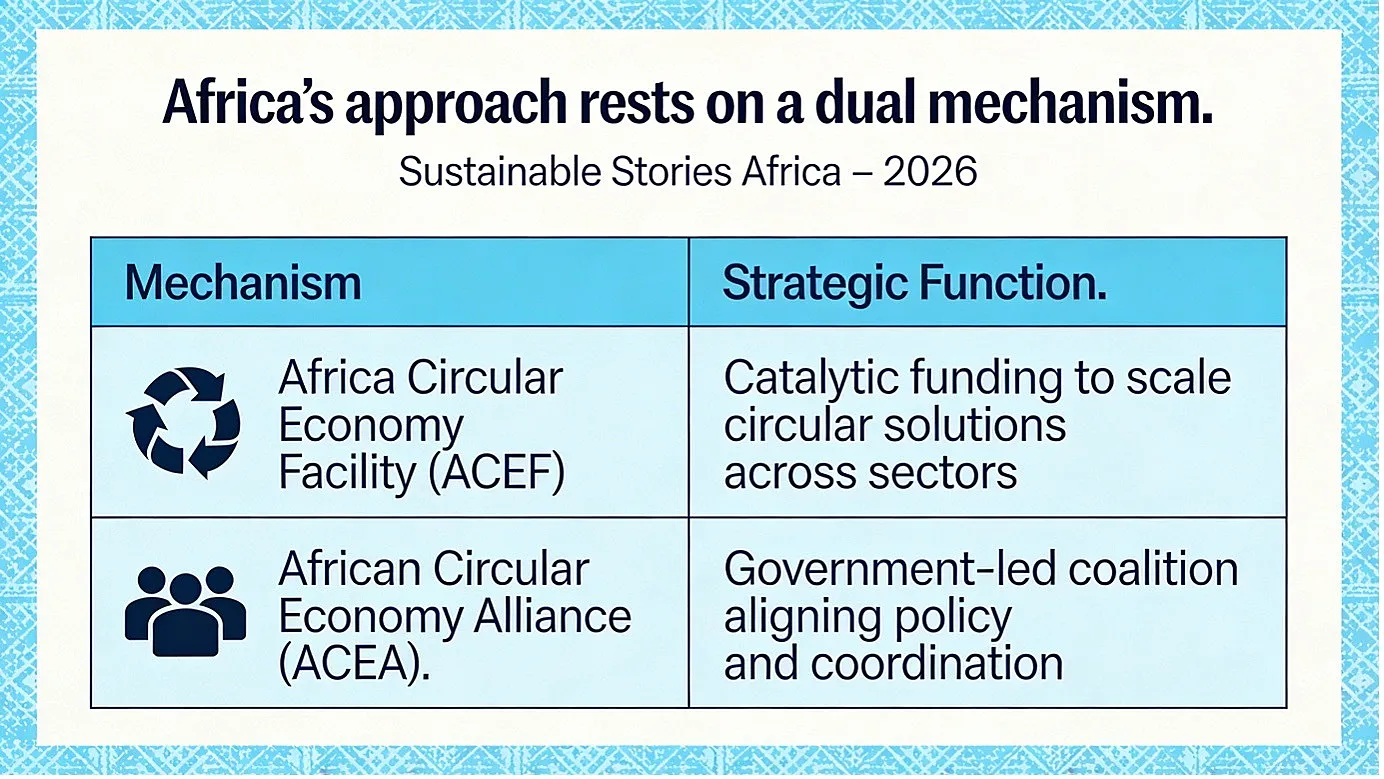
Africa’s approach rests on a dual mechanism:
Mechanism | Strategic Function |
|---|---|
Africa Circular Economy Facility (ACEF) | Catalytic funding to scale circular solutions across sectors |
African Circular Economy Alliance (ACEA) | Government-led coalition aligning policy and coordination |
ACEF channels strategic finance into climate-ready circular investments, including MSME scaling through the AfriCircular programme.
Meanwhile, ACEA, comprising 22 member countries, coordinates policy harmonisation and roadmap development.
Four countries, Cameroon, Benin, Ethiopia and Chad, are developing National Circular Economy Roadmaps that integrate circular strategies into Nationally Determined Contributions (NDCs).
Circular procurement has emerged as a macro lever. Redirecting 70% of public construction spending toward circular designs and low-carbon materials transforms procurement into a climate policy instrument.
Converting Waste into Climate Assets
Several flagship programmes illustrate the shift from strategy to execution:
- Circular Road Infrastructure
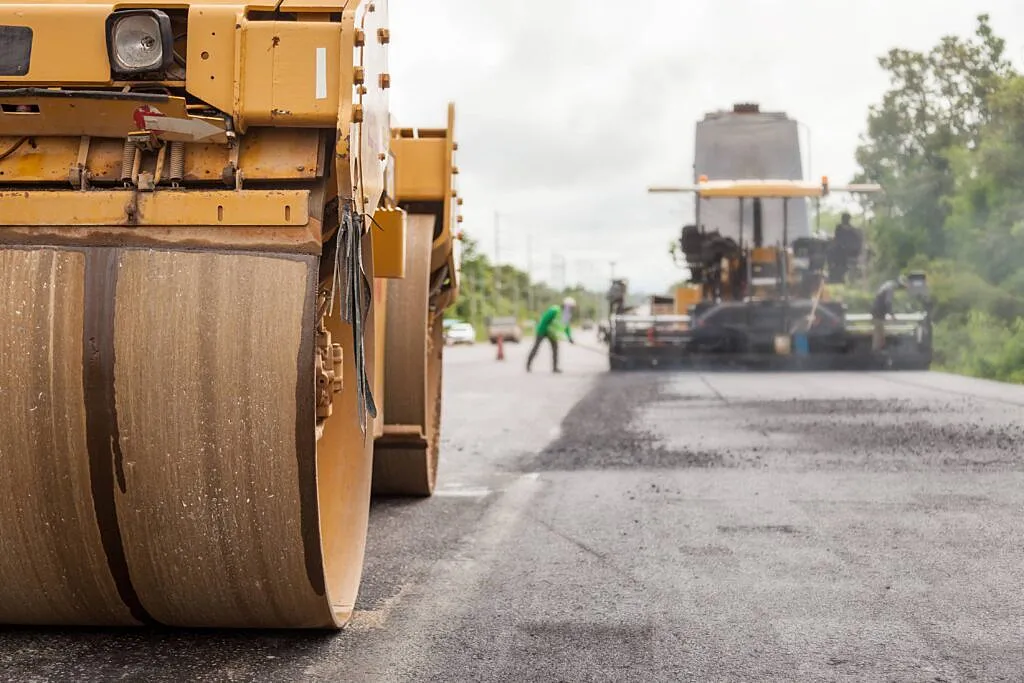
- Integrates 11 million tons of unmanaged plastic waste into Africa’s $40 billion road sector
- Reduces maintenance costs by up to 30%
- Generates 1 job per ton recycled, formalising recyclers into supply chains
- Resilient Circular Buildings
- Introduces Africa’s first circular building metrics
- Aligns construction with taxonomy-compliant finance
- Implemented across Kenya, Ghana, Mauritius, Senegal, Tunisia and South Africa
- E-Waste Reform in Rwanda
- Establishes a Producer Responsibility Organisation (PRO)
- Addresses e-waste growing at 7% annually
- Creates a producer-funded circular financing model
- MSME Climate Scaling (AfriCircular)
Operating in Zimbabwe, Benin, Angola, São Tomé and Príncipe, Rwanda, Ghana and Côte d’Ivoire, the programme strengthens repair, reuse and biobased material production to reduce dependence on imports and emissions.
Aligning Standards, Markets, Investment
Policy reform is advancing alongside industrial execution. The alliance has:
- Hosted the first World Circular Economy Forum in Africa (Kigali 2022)
- Contributed to the Global Circularity Protocol for Business
- Collaborated with ARSO on a harmonised rPET standard for food-contact applications
Standardisation is critical. Without harmonised definitions, taxonomies and metrics, capital cannot flow efficiently.
Circular building metrics and harmonised plastics standards aim to unlock green finance at scale.
The objective extends beyond waste reduction. It is about building climate resilience, strengthening fiscal efficiency, and formalising informal sectors into inclusive green industries.
Path Forward – Financing Africa’s Circular Transition
Africa’s circular strategy now hinges on scaling catalytic finance, harmonising standards and embedding circularity into procurement systems.
Governments are integrating roadmaps into NDCs while aligning building metrics and plastics standards with continental taxonomies.
If implemented at scale, circularity could unlock 11 million green jobs and raise GDP by 2.2%, transforming climate action from compliance to competitiveness.
The next phase demands execution discipline, investor confidence and cross-border coordination.