Africa’s green transition is accelerating, but communities remain largely excluded from decision-making and finance flows.
A synthesis report argues that unless women, youth, informal workers and Indigenous leaders are positioned as co-architects, not beneficiaries, the continent’s Just Transition risks entrenching inequality rather than solving it.
Africa’s Just Transition Hinges On Community Agency
Africa stands at a pivotal inflexion point in its climate trajectory. As governments advance ambitious net-zero pledges and renewable energy investments expand across the continent, a deeper structural question is emerging: who truly shapes the transition?
A synthesis report by the African Centre for a Green Economy (AfriCGE), Strengthening Community Agency in Africa’s Just Transition, argues that current transition pathways remain overly technocratic, centralised, and disconnected from lived realities.
Without embedding community leadership at the core of climate planning, the report warns, Africa’s Just Transition risks deepening inequality, perpetuating energy poverty, and missing green job opportunities.
Transition Promises Risk Leaving Communities Behind
Across Africa, less than 3% of global climate finance flows reach the continent, and under 10% of that reaches local actors directly.
Meanwhile, the informal economy, representing approximately 85% of Africa’s workforce, remains largely excluded from national green growth strategies.
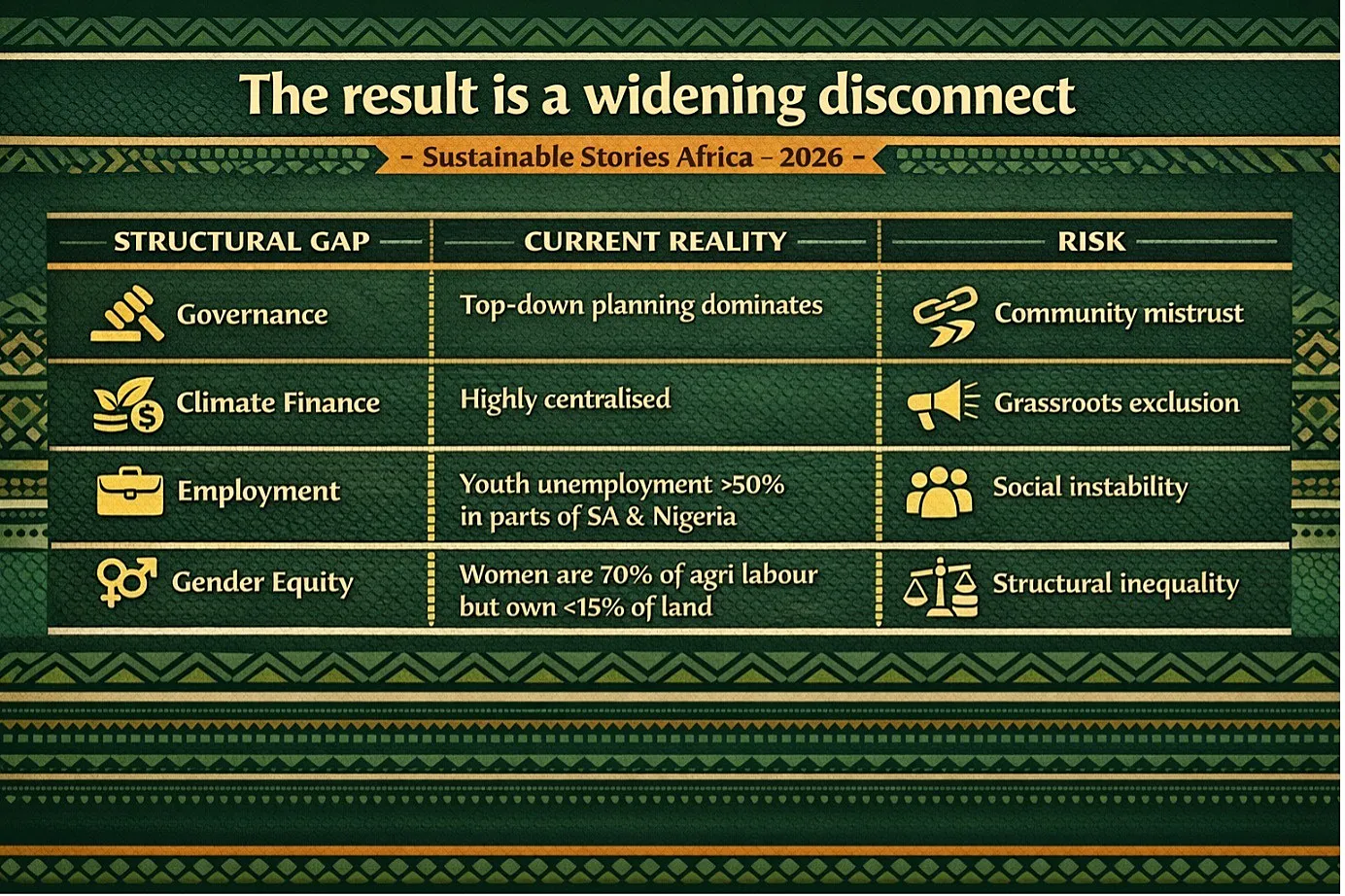
The result is a widening disconnect:
Structural Gap | Current Reality | Risk |
|---|---|---|
Governance | Top-down planning dominates | Community mistrust |
Climate Finance | Highly centralised | Grassroots exclusion |
Employment | Youth unemployment >50% in parts of SA & Nigeria | Social instability |
Gender Equity | Women are 70% of agricultural labour but own <15% of the land | Structural inequality |
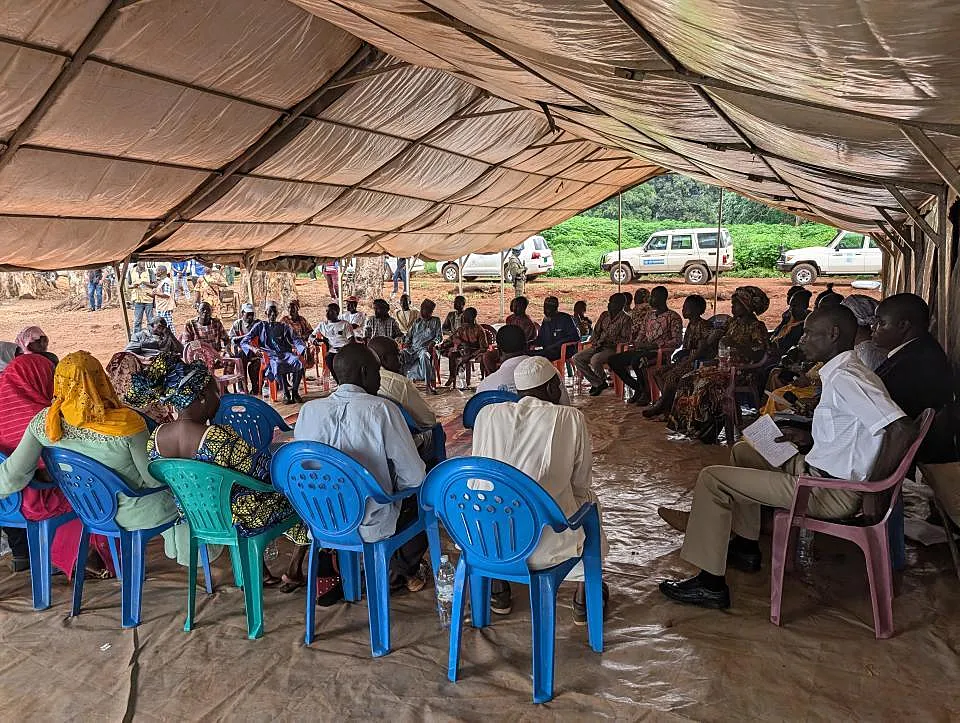
In coal-dependent Mpumalanga, limited consultation around energy decommissioning fuelled economic anxiety and mistrust.
In Morocco’s Ouarzazate solar region, communities cited insufficient compensation and limited local jobs.
Across Kenya’s Turkana region, pastoralists report significant exclusion from renewable planning processes.
The pattern is clear: climate ambition without community agency creates procedural injustice.
Grassroots Innovation Already Driving Change
However, across the continent, local innovation is quietly reshaping transition narratives.
In Zimbabwe, Women and Land in Zimbabwe (WLiZ) strengthens women’s land rights and agroecological systems through participatory mapping and tenure advocacy.
Women farmers report higher productivity and improved food security.
In Uganda, the Vital Crest Foundation’s Green Skills Accelerator equips youth with the necessary skills in renewable energy and climate-smart agriculture.
“Young people are not the future of the transition; they are the present force shaping it,” said Rose Kobusinge, Vital Crest Foundation.
In South Sudan, SPEDP integrates climate resilience with peacebuilding and women-led cooperatives.
“Resilience begins when communities own their recovery,” said CEO Mike Soro.
These examples reveal a common truth: the transition is already happening, but from the bottom up.
Finance And Governance Bottlenecks Persist
The report identifies three systemic failures:
- Exclusionary Governance
- Centralised Climate Finance
- Marginalisation of Indigenous Knowledge Systems
Key Structural Indicators
Indicator | Current Status |
|---|---|
Africa's share of global climate finance | 3% |
Climate finance reaching local actors | <10% |
Informal economy employment share | 85% |
Women’s land ownership | <15% |
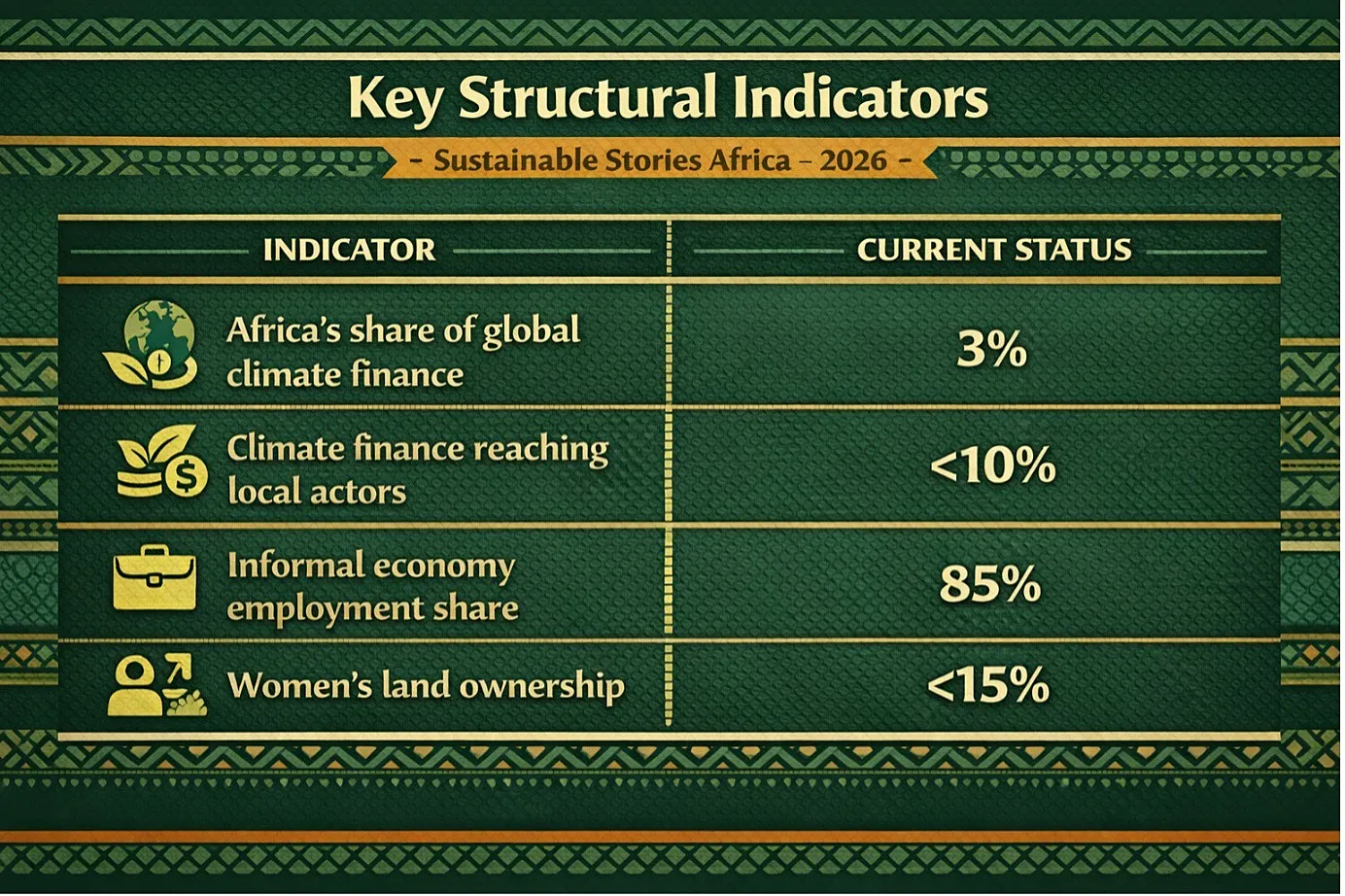
The report argues that unless climate finance is decentralised and governance platforms institutionalised at the community level, the Just Transition will remain rhetorically inclusive but structurally exclusive.
The SIT Framework For People-Centred Transitions
AfriCGE proposes the Shaping Inclusive Transitions (SIT) Framework, structured around:
Foundation: Communities At The Core
- Participatory planning and dialogue
- Gender-responsive and intergenerational leadership
- Anchoring in social equity and justice
Enabling Systems
- Inclusive Local Finance
- Local climate funds
- Cooperative finance mechanisms
- Micro-investment tools
- Skills & Institutional Strengthening
- Green reskilling for youth and women
- Municipal capacity building
- Cross-community peer learning
- Knowledge & Innovation Systems
- Integration of Indigenous Knowledge Systems
- Community innovation hubs
- Digital knowledge platforms
The framework reframes communities from beneficiaries to co-architects.
PATH FORWARD – Scaling Community Agency For Just Transition
Africa’s transition will succeed only if climate finance flows to the grassroots, governance becomes participatory, and women and youth anchor green job creation. Institutionalising community-led platforms and decentralised funding models is no longer optional; it is a strategic necessity.
As global climate negotiations advance toward COP30, elevating Africa’s frontline voices from policy margins to decision-making centres will determine whether the Just Transition becomes a transformative reality or another missed opportunity.