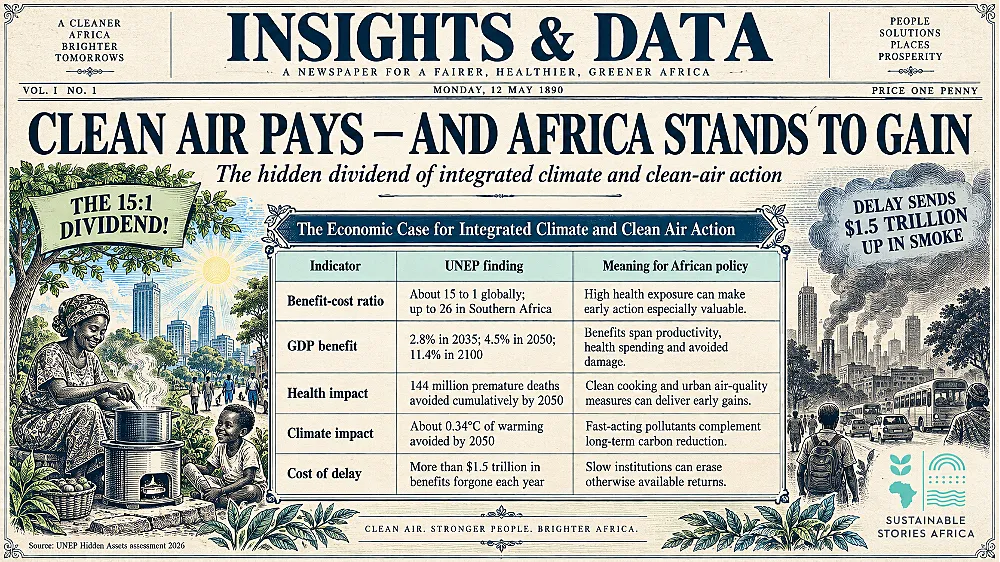
A UNEP-led assessment says 25 proven climate and clean-air measures could return about $15 in economic benefits for every dollar invested.
The package would begin paying through lower health costs and higher productivity within a decade.
For African governments facing tight budgets and high pollution exposure, the report recasts clean air as productive public infrastructure.
Delays carry a measurable price in lost output, preventable illness and foregone development.
Clean Air Returns Hidden Economic Dividends
Air pollution and climate change are usually funded through different ministries, measured against different targets and defended from different budget lines.
The new Hidden Assets assessment from the United Nations Environment Programme and the Climate and Clean Air Coalition argues that this separation conceals great economic return.
The report evaluates 25 measures across energy, fossil fuels, industry, transport, agriculture, household cooking and heating, and waste.
- 4 measures focus on deep carbon dioxide reductions.
- 21 target methane, black carbon and other pollutants that can improve air quality and slow near-term warming.
Its central findings are unusually direct.
- Immediate implementation could create benefits equal to 2.8% of global gross domestic product by 2035, 4.5% by 2050 and 11.4% by 2100.
For African economies, where illness, energy poverty and fiscal pressure overlap, those gains are development outcomes rather than environmental side benefits.
Pollution Costs Are Macroeconomic Risks Today
The starting point is a burden already visible in hospitals, workplaces and household budgets.
- UNEP estimates that human-caused outdoor fine-particle pollution and ozone contributed to 6.4 million premature deaths in 2025.
- Indoor fine particles added about two million deaths, including roughly 300,000 children.
Exposure also produces new cases of childhood asthma, heart attacks, chronic obstructive pulmonary disease, diabetes, stroke, dementia and lung cancer.
- The damage enters national accounts through treatment costs, fewer productive hours and lower workforce participation.
- However, these losses are often treated as health-sector expenses rather than a constraint on growth.
Without stronger action, the share of the global population exposed to the most dangerous fine-particle concentrations could rise from 27% in 2025 to 34% in 2050.
- Ageing populations would deepen the burden.
UNEP estimates that full implementation of the package could avoid 60% to 70% of annual air-pollution health damage.
Integrated Solutions Change the Investment Equation
The report estimates a benefit-cost ratio of 15 to one and a 60% internal rate of return.
- Market benefits alone, including lower healthcare spending, stronger labour productivity and avoided physical damage, would return about four dollars for each dollar invested.
- Those measurable gains exceed implementation costs within ten years.
Integration matters because the same sources often drive warming and polluted air.
- Cleaner power, efficient vehicles, reduced methane leakage, clean household energy and better waste systems can lower several pollutants at once.
- Coordinated delivery adds about 0.2% of global GDP in benefits compared with pursuing the climate and air-quality agendas separately.
By 2050, the 25 measures could halve carbon dioxide emissions, cut methane by 60%, and reduce black carbon and key fine-particle precursors by about 70%.
- The model also indicates 0.34°C of avoided warming by 2050. These are not speculative technologies; the assessment focuses on practices already available for deployment.
Implementation costs are estimated at 0.7% of global GDP during the coming decade, falling towards 0.5% by the century's end.
- For context, explicit fossil-fuel subsidies equalled 2.18% of GDP in 2022, while governments spent 3.5% on education and 9.3% on health in 2023.
- The comparison shows that the package is large but fiscally recognisable.
Desire Health Gains Strengthen African Investment Case
The regional results make the economic case especially strong for Africa.
- Benefit-cost ratios range from about three in several high-income regions to 26 in Southern Africa.
- Lower-income regions carry a greater share of pollution-related deaths; as such, each effective intervention can unlock larger health and productivity gains.
Clean cooking emerges as a leading near-term measure in Sub-Saharan Africa.
- It reduces household smoke exposure while easing pressure on forests and the unpaid labour associated with fuel collection.
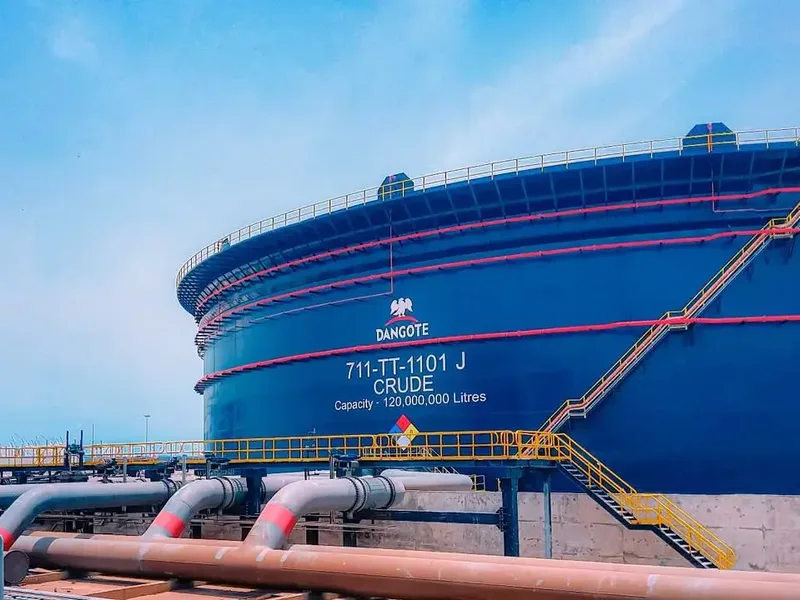
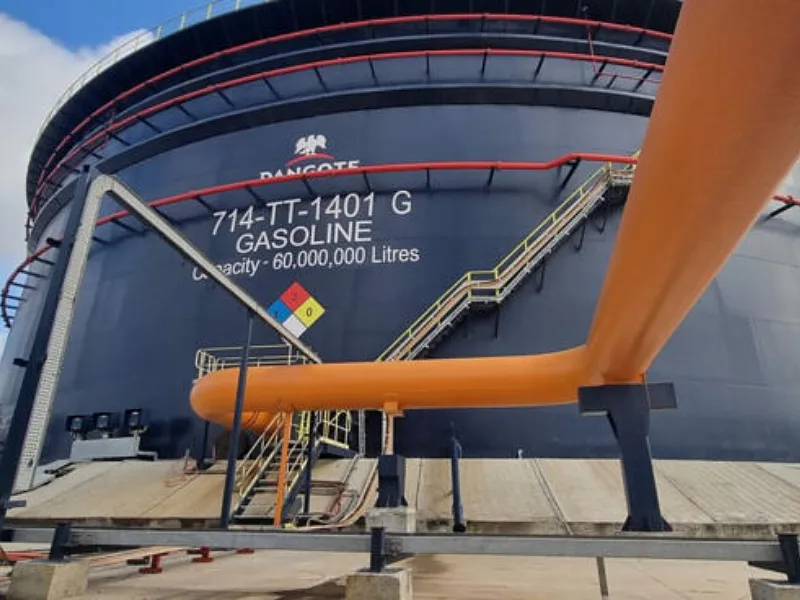
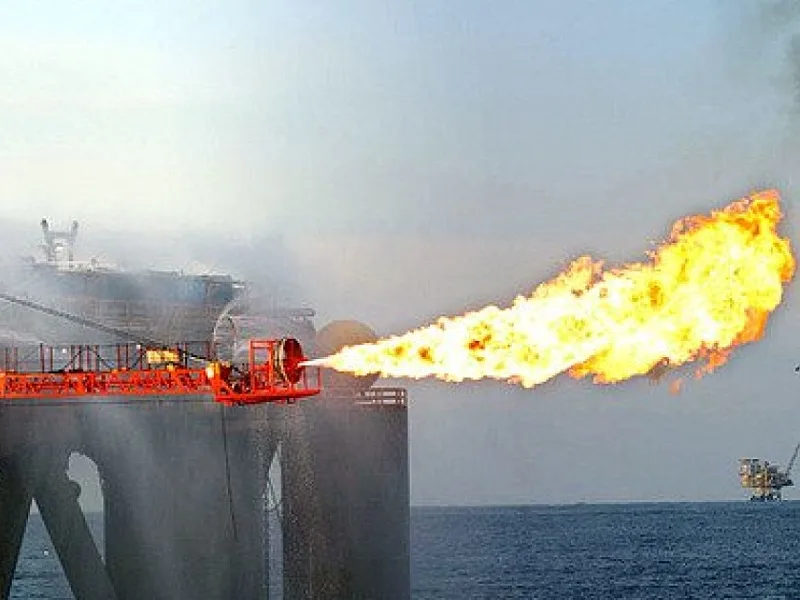
- For oil- and gas-producing regions in North Africa, controlling methane leaks and routine flaring offers another high-return route.
Nigeria already has foundations for integrated delivery.
- Its National Action Plan on short-lived climate pollutants, Nationally Determined Contribution and Energy Transition Plan connect methane, cleaner cooking, transport and power.
UNEP nevertheless identifies familiar implementation gaps across 36 states and 774 local government areas: limited budgets, weak technical capacity and poor data exchange.
The opportunity is practical.
- Expanded clean-cooking programmes can build local manufacturing and health benefits.
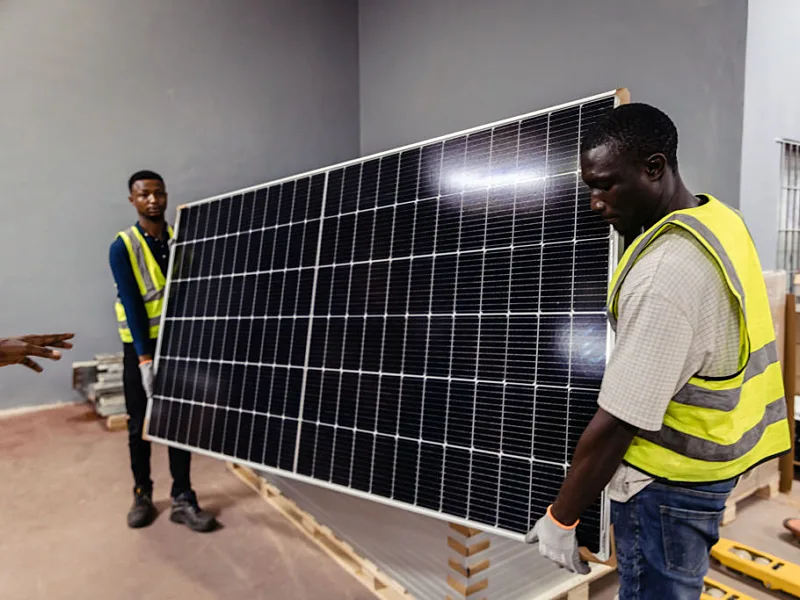
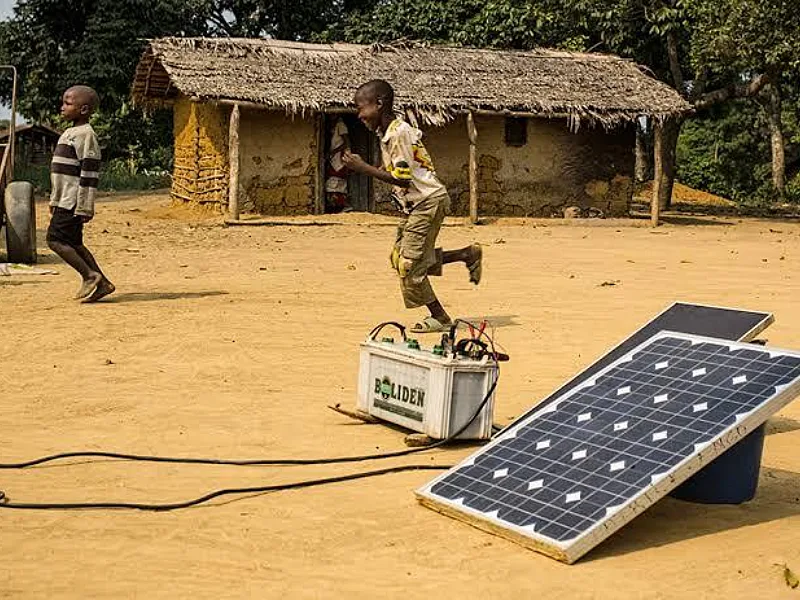
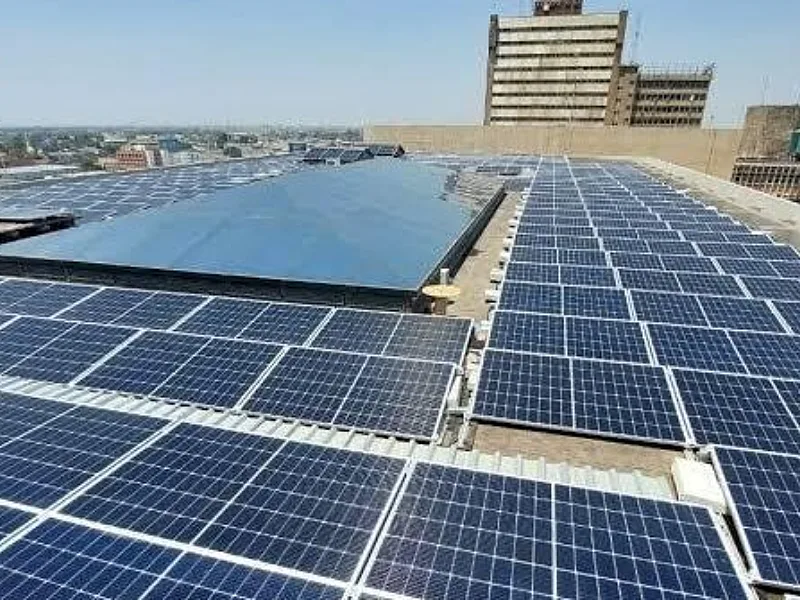
- Decentralised renewable energy could create more than twice the sector's new jobs and surpass oil-and-gas employment, according to Power for All.
- Better waste systems can turn organic material into compost, biogas and local enterprise rather than smoke and methane.
The health dividend reaches far beyond mortality.
- By 2050, the package could prevent an estimated 62 million childhood asthma cases, 87 million heart attacks, 63 million cases of chronic obstructive pulmonary disease, 56 million diabetes cases, 45 million strokes, 36 million dementia cases and seven million lung-cancer cases.
Avoiding illnesses significantly protects household income and public budgets.
Governments Must Remove Delivery Barriers Now
The assessment warns that the main obstacles are frequently institutional, not technical.
- On average, implementation barriers could delay delivery by 7.5 to eight years.
- Institutional barriers account for about 2.4 years of that period, cutting the emissions reductions achievable by 2035 roughly in half.
Every year of delay forfeits more than 0.5% of global GDP in market and non-market benefits, equivalent to over $1.5 trillion.
- Faster enabling reforms, including monitoring, agency coordination, skills and finance, could create up to $10 trillion in cumulative health savings by 2040.
Nigeria can translate that finding into a delivery agenda.
- Federal and state institutions need shared emissions data and clear responsibilities.
- Public finance should reduce the upfront cost of clean stoves, electric mobility and waste infrastructure, while private capital can support bankable operating models.
- Existing work on clean-cooking finance and open-burning controls offers a starting point, but local implementation needs predictable funding and enforcement.
Governments should also value benefits in budget decisions.
- A transport programme that reduces soot and carbon should be assessed against health savings, fuel efficiency and climate targets together.
- That approach makes trade-offs visible and gives finance ministries a stronger basis for ranking projects.
Delivery also requires fair transition measures.
- Clean technologies must be affordable to low-income households, while workers and small businesses need time, information and finance to adjust.
- Gender-responsive planning matters because women and children often carry the highest exposure to household smoke and the greatest burden of collecting traditional fuels.
Path Forward – Integrated Investment Must Start Now
African governments should treat clean air as economic infrastructure and select measures through integrated health, climate and productivity assessments.
Government’s national plans must be backed by local budgets, monitoring systems, and clear delivery ownership.
Immediate priorities are clean cooking, methane control, cleaner transport, renewable power and modern waste systems. Starting now protects lives and captures returns that later spending cannot recover.