A new United Nations call to action sets nine methane priorities for fossil fuels, agriculture and waste by 2030. Methane lasts about a decade in the atmosphere but warms far more strongly than carbon dioxide in the near term.
The plan combines regulation, direct measurement, food-system reform and modern waste infrastructure. Its biggest obstacle is finance: tracked annual flows remain far below the estimated $127 billion needed each year.
Methane Cuts Can Slow Warming Quickly
Carbon dioxide determines much of long-term warming, but methane offers a faster opportunity to reduce the rate of temperature rise.
The United Nations Secretary-General's call to action says methane is responsible for roughly one-third of current warming and is about 80 times more powerful than carbon dioxide over 20 years.
Methane remains in the atmosphere for about a decade.
- Cutting it can produce climate benefits more quickly than carbon dioxide reductions alone, while also lowering ground-level ozone that damages lungs and crops.
The report converts that opportunity into nine actions across fossil fuels, agriculture and waste.
It also makes a development case: recovered gas, stronger farm productivity and modern waste services can create economic value while reducing emissions.
Three Sectors Drive the Methane Problem
Agriculture produced about 42% of human-caused methane emissions in 2024, fossil fuels 38% and waste 20%.
- Atmospheric methane reached roughly 1,942 parts per billion that year, about 266% above pre-industrial levels and the highest concentration in at least 800,000 years.
The Intergovernmental Panel on Climate Change indicates that 1.5°C-consistent pathways require global methane cuts of about 34% by 2030 and 51% by 2050 relative to 2019.
- The Global Methane Pledge, backed by 159 countries and the European Union, seeks at least a 30% reduction by 2030 from 2020 levels.
- Delivery could avoid around 0.1°C to 0.2°C of warming by mid-century.
The world is off track.
- The report argues that action this decade will determine whether the expected overshoot of 1.5°C is limited in scale and duration.
- Methane control cannot replace carbon dioxide reduction, but it can reduce near-term pressure while energy systems decarbonise.
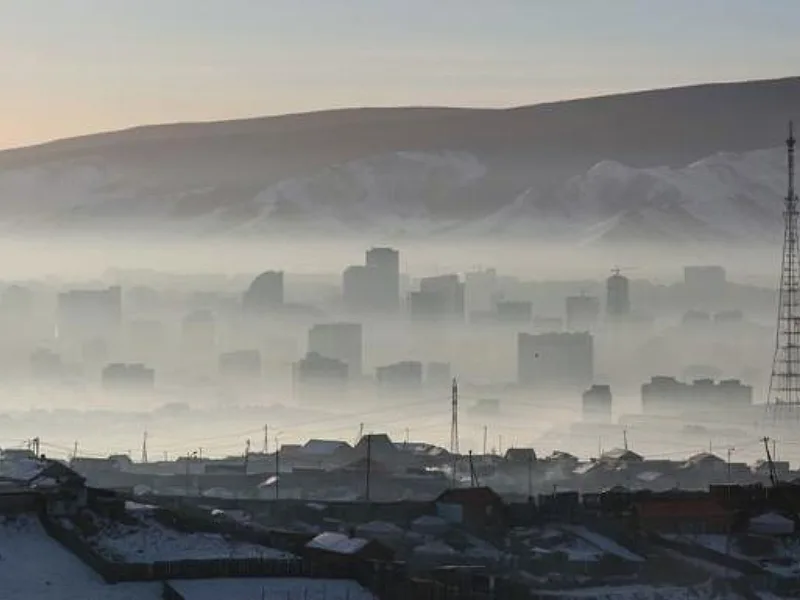
The air-quality connection strengthens the case.
- Methane helps form ground-level ozone, which contributes to respiratory disease and reduces crop yields.
- A methane programme can therefore protect food production and health before the full temperature benefit appears.
This is especially relevant to African economies where agriculture remains a major employer, and ozone damage can reduce already stressed harvests.
Existing Tools Make Faster Cuts Possible
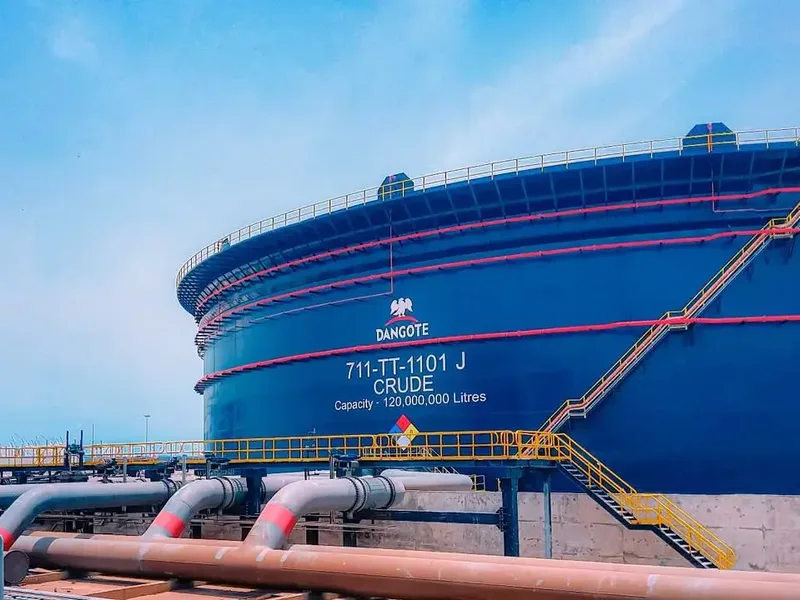
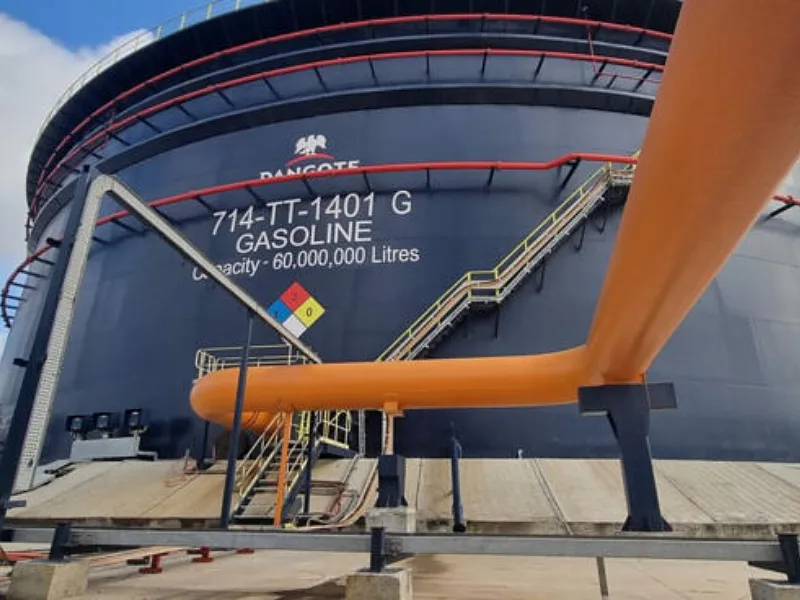
Fossil fuels are the immediate priority because many solutions already exist.
The UN says around 75% of oil-and-gas methane emissions can be avoided with current technologies, often at low or negative net cost because captured gas can be sold.
- The IEA Global Methane Tracker provides a broader evidence base for these measures.
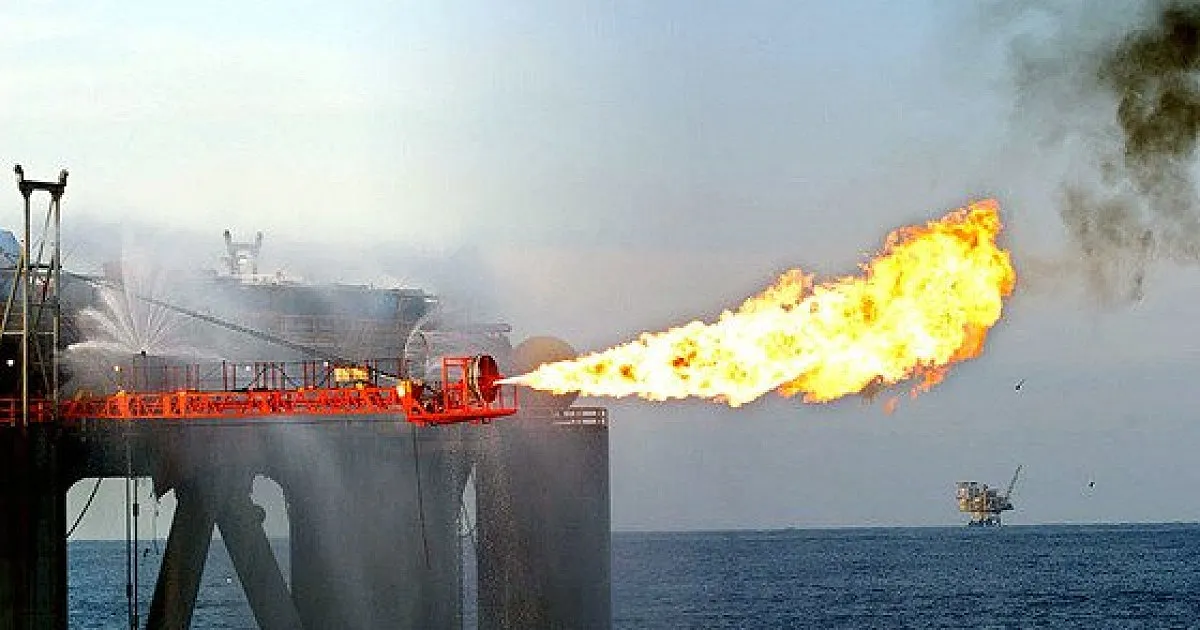
Flaring remains a visible loss.
- The World Bank tracker estimated that about 150 billion cubic metres of gas were flared worldwide in 2024, roughly equal to Africa's annual gas consumption.
- Regulations can ban routine flaring and cold venting, require leak detection and repair, and replace high-emitting equipment.
Measurement has also improved.
- By February 2026, UNEP's Methane Alert and Response System had issued more than 5,000 alerts across 33 countries.
However, the global response rate in 2025 was only 12%.
- The UN proposes an initial response target of at least 80%, supported by public, independently assured asset-level data. Readers can explore the MARS dataset directly.
Coal mines need a parallel response.
- Metallurgical-coal production releases about 12 million tonnes of methane each year, equal to roughly 324 million tonnes of carbon dioxide equivalent over 100 years.
- Pre-mining drainage, ventilation-air oxidation and responsible mine-closure management can reduce this overlooked source while improving site safety.
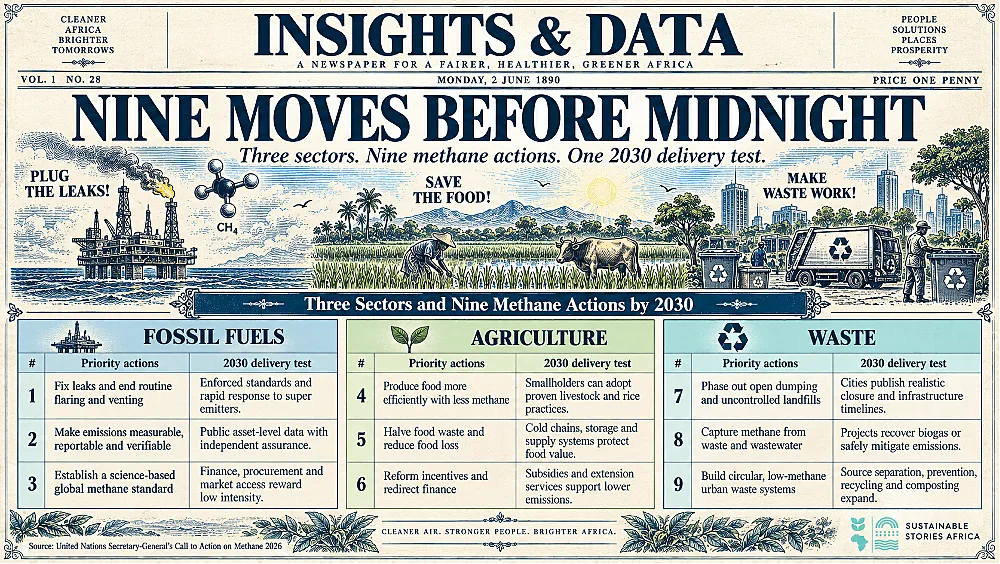
Path Forward – Requires Delivery Before 2030
Governments should translate the nine actions into dated sector plans, public methane data and financed projects.
Fossil-fuel regulators can move first because proven measures offer rapid reductions.
Agriculture and waste require equal attention to livelihoods, local capacity and urban infrastructure.
Finance must rise alongside enforcement so methane cuts improve energy security, food systems, sanitation and public health.