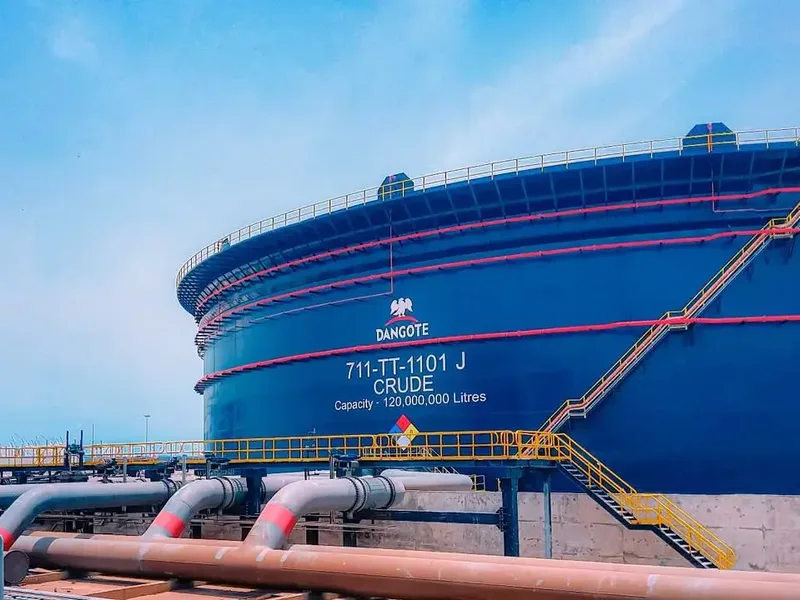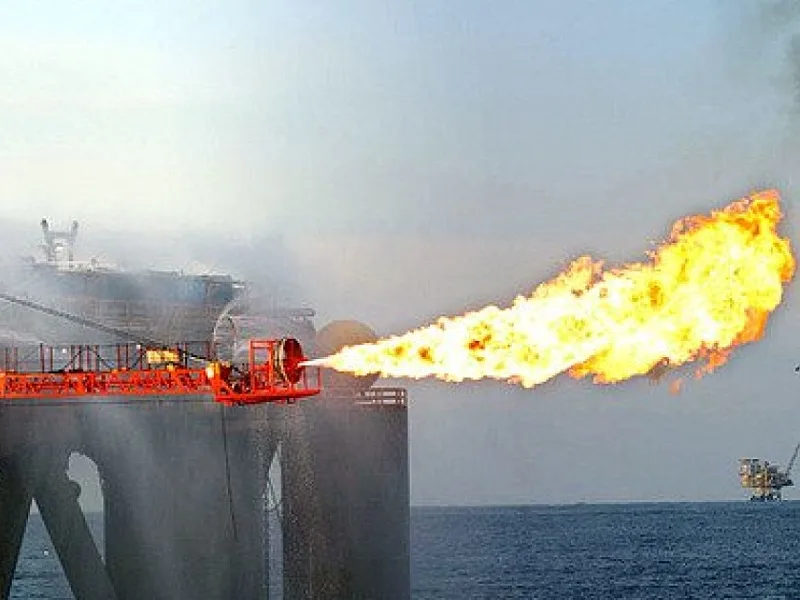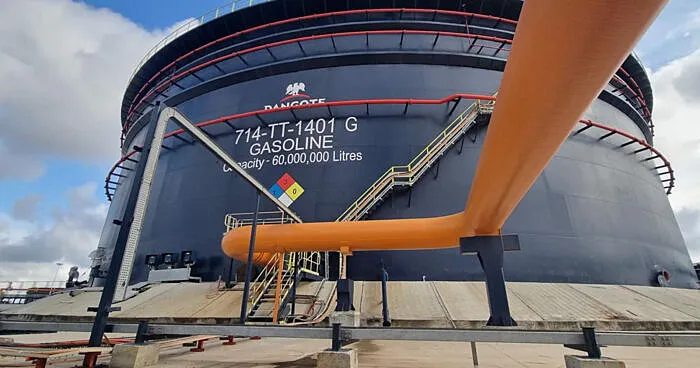
Dangote Refinery's public offer gives Nigerians access to a major industrial asset; however, a 1914 Reader analysis argues that the offer price requires harder scrutiny of recurring earnings, expansion funding and related-party governance.
The investment question is distinct from the refinery's national importance.
Investors need reconciled figures, clear cash priorities and evidence that a valuation premium is supported by performance that can survive ordinary market conditions.
National Significance Does Not Set Price
The proposed listing of Dangote Petroleum Refinery and Petrochemicals has been promoted as a chance for Nigerians to own part of the country's largest private industrial project.
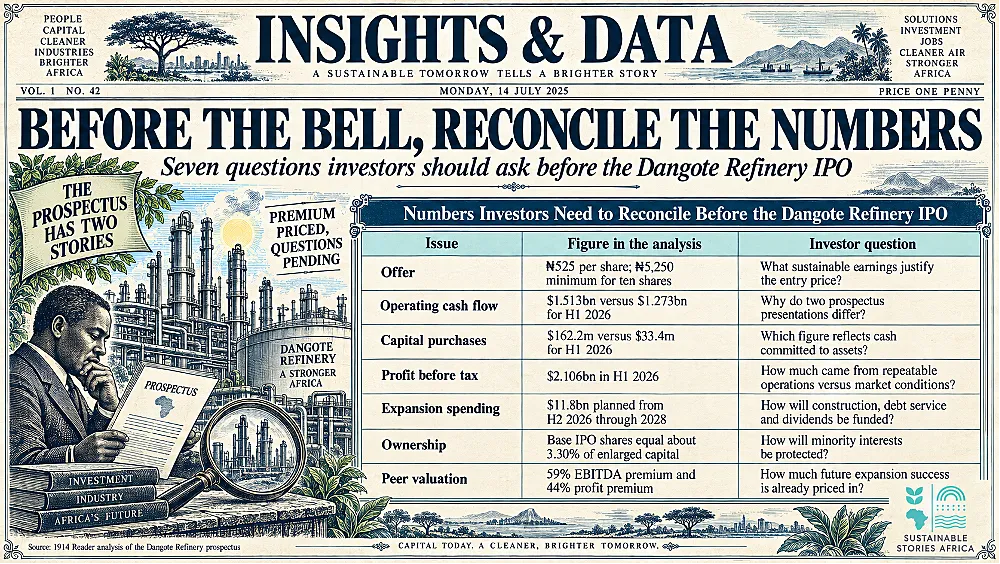
A minimum subscription of ten shares at N525 each puts the entry at N5,250, while public-company disclosure should make the refinery's finances more visible.
Those are real benefits. They do not answer whether N525 is an attractive price. In Is This IPO Halal, Feyi Fawehinmi separates the refinery's contribution to Nigeria from the evidence needed to value its shares.
His analysis raises three questions:
- What earnings can be sustained in a normal market?
- How much of the price reflects the operating 650,000-barrel-per-day refinery versus a planned 1.4-million-barrel expansion?
- How do earlier equity, refinancing, construction spending and dividends compete for the same cash?
Conflicting Figures Weaken Investor Confidence Early
The first issue is reconciliation.
- Fawehinmi reports that the prospectus presents $1.513 billion of cash generated from operations in the reporting accountant's extract for the first half of 2026, but $1.273 billion in the historical summary.
- Cash purchases of property, plant and equipment are shown as $162.2 million in one presentation and $33.4 million in another.
Gross profit is $2.583 billion in the reporting accountant's extract and $2.495 billion in the summary.
- Finance income moves from $498.5 million to $49.6 million, while finance costs move from $807.6 million to $308.8 million.
- Both presentations still reach $2.106 billion in profit before tax because differences are offset elsewhere.
Different classifications do not necessarily mean that the final profit is wrong.
- They do mean investors need a numerical bridge explaining why the same six-month period produces materially different pictures of operations, capital spending and financing.
- The IPO prospectus incorporates financial statements and notes by reference, but Fawehinmi argues that the available document does not give a complete reconciliation.
Strong Profits Need Normal Market Testing
The refinery moved from a first-half 2025 loss to a $2.106 billion pretax profit in the first half of 2026.
- According to the analysis, 98.4% of that improvement came from a $2.35 billion rise in gross profit.
- Petrol volumes almost doubled, and diesel volumes increased 62%, while selling prices rose about 35% for petrol and 78% for diesel.
Stable, full-capacity operations began in March 2026, close to exceptional product-market conditions linked to the Iran war.
- The available results therefore combine operating improvement with unusually strong refining margins.
- The prospectus estimates a 2026 gross refining margin of about $24.20 per barrel but cautions that market conditions can change.
Sensitivity matters.
- Fawehinmi notes that a $5 reduction in margin removes more than $1.1 billion of annual EBITDA in Renaissance Capital's model.
- The IEA July oil-market report also described a period in which crude prices fell while tight product markets kept refining margins elevated.
- Investors need to identify how much of first-half profit depends on repeatable throughput and efficiency, and how much depends on the market spread between crude and finished fuels.
This distinction also affects forecasts.
- Renaissance Capital expected the gross refining margin to recover from about $18 per barrel in the second quarter of 2026 to $29 to $30 in the second half and $30.20 in 2027, while Chapel Hill Denham used $25 for 2027.
These earnings assumptions are materially different for the same asset.
Expansion Could Grow Value and Risk
The proposed expansion could more than double capacity; however, it also creates a demanding cash timetable.
- The prospectus budgets $4.8 billion of capital expenditure for the second half of 2026, $3.9 billion in 2027 and $3.1 billion in 2028, or $11.8 billion over two and a half years.
Fawehinmi says the wider programme is costed at about $14.3 billion.
Net IPO proceeds are estimated at $1.55 billion.
- The refinery also held $4.27 billion in cash at June 2026, had $5.67 billion of debt and subsequently completed a $750 million bond.
That provides substantial liquidity, but construction, debt service and dividends still draw from the same pool.
The low $1.40 billion net-debt figure reported in June is partly a snapshot after fresh equity arrived and before major expansion spending.
- Spending cash on construction can increase net debt even without a new loan.
- Investors therefore need a year-by-year funding bridge showing operating cash generation, committed capital expenditure, financing and the residual amount available for dividends.
The expansion can create scale and earnings growth.
- The valuation question is how much of that success is already reflected in today's price.
- Fawehinmi's peer comparison places Dangote at 8.94 times annualised first-half EBITDA against a 5.62-times median, a 59% premium.
- On annualised first-half profit, the premium is 44%.
Fawehinmi estimates that repeating first-half performance would produce about $5.3 billion of annual earnings.
- To trade at the peer group's typical price for each dollar of earnings, the refinery would need about $8.4 billion, roughly 60% more.
- That gap frames the execution burden already embedded in the premium.
Governance Must Protect Minority Shareholder Value
A fully subscribed base offer would represent about 3.30% of the enlarged company, while Fawehinmi calculates Aliko Dangote's beneficial interest at roughly 84.39%.
- Concentrated ownership is not automatically destructive, but it makes board independence, related-party pricing and minority protections central to valuation.
The prospectus describes transactions with other Dangote companies, including a $3.99 billion loan repayment to Dangote Industries Limited and an intercompany derivative that offset losses on external commodity derivatives.
- The economics of these arrangements affect the refinery's reported profit and cash.
- Investors need their pricing, duration, approval process and independent review.
Fawehinmi also notes overlapping roles between the refinery's Finance and Investment Committee and Dangote Industries Limited.
- The prospectus says newly established board committees had not yet met, a statutory audit committee would follow listing, and some governance policies were still under review.
Those safeguards should be judged by evidence of operation, not their names.
Analyst research needs equal scrutiny.
- The original article challenges valuation arithmetic and conflicts in notes issued by the joint issuing houses.
- The CardinalStone report currently available through the original link displays a 33.7% expected total return and 2.6% dividend yield, while Fawehinmi says the version he reviewed showed 39.6% and 8.5%.
- The apparent change makes dated versions and visible correction notices important for market accountability.
Share-count assumptions also deserve attention.
- Fawehinmi says CardinalStone used 112.981 billion shares, while the prospectus indicates 120.129 billion after a private placement and 124.229 billion after the IPO shares.
- A larger denominator reduces per-share value even when the new cash benefits the company.
- Models should show both the incoming proceeds and the fully diluted share count.
Path Forward – Demand Reconciled Evidence Before Commitment
Investors should separate national pride from price, reconcile conflicting prospectus figures and stress-test margins, capital spending, debt and dividends together.
Independent advisers should disclose commercial interests and preserve dated research versions.
The refinery can be strategically important and still require demanding due diligence.
Clear related-party rules, functioning committees and transparent corrections will determine whether public ownership improves accountability for minority shareholders.
Source Links Preserved From The Original
Offer documents and research: PenCom regulatory forbearance circular; Renaissance Capital note; Chapel Hill Denham note; CardinalStone note; and the Dangote Refinery prospectus.
Operations, funding and governance context: the RFCC explainer; Premium Times on Greenview; 1914 Reader's earlier refinery financing history and cement-listing analysis; the IEA July 2026 oil report; and the $750 million bond report.
Peer evidence: MRPL annual report and ownership page; S-Oil operating profile and H1 2026 results; Tüpraş financial statements; and Valero's second-quarter results.
Cement, development and pricing context: the World Bank cement-floor health study; Dangote Cement's 2013 results, 2020 annual report and 2025 annual report; Proshare on the coal conversion; the NEITI solid-minerals report; the mining-cadastre register; the local-coal earnings-call report; the coal-price reference; and 1914 Reader's cement-consumption analysis.
Comparative context and original asides: Forbes' earlier wealth report and current profile; the Bible passage referenced by the author; reports for China Resources Cement, UltraTech Cement and Semen Indonesia; the Financial Times article on Tim Cook; and the author's 1914 Reader subscription page.