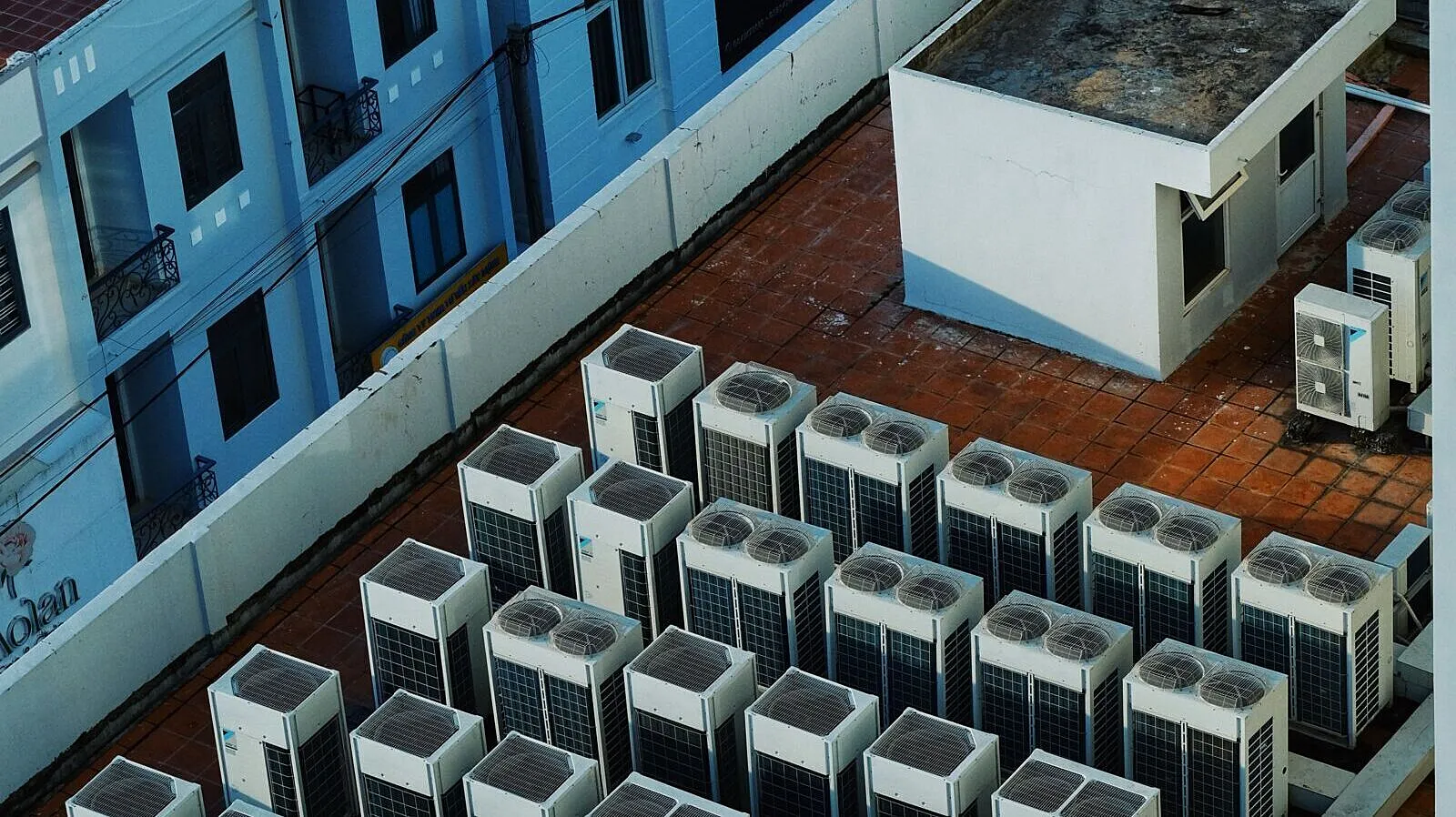
A Danfoss case study estimates that variable-frequency drives sold for North American heating, ventilation and cooling systems in 2024 could avoid up to 614 kilotonnes of carbon dioxide equivalent over their assessed service lives.
The bigger question is whether avoided-emissions claims can withstand scrutiny, and what African markets can learn about turning building efficiency into a credible climate, cost and resilience strategy.
Buildings Hide A Large Climate Opportunity
A technology installed deep inside a building’s mechanical system may offer one of the least visible routes to lower electricity consumption.
A new avoided-emissions case study published by the World Business Council for Sustainable Development examines how Danfoss variable-frequency drives can reduce energy consumption by heating, ventilation, air-conditioning and refrigeration systems.
The North American assessment estimates that HVAC/R systems fitted with Danfoss drives consume about 3.7% less energy than an average system.
The company calculates that drives sold in 2024 could deliver up to 614 kilotonnes of avoided carbon dioxide-equivalent emissions over their assessed operating lives.
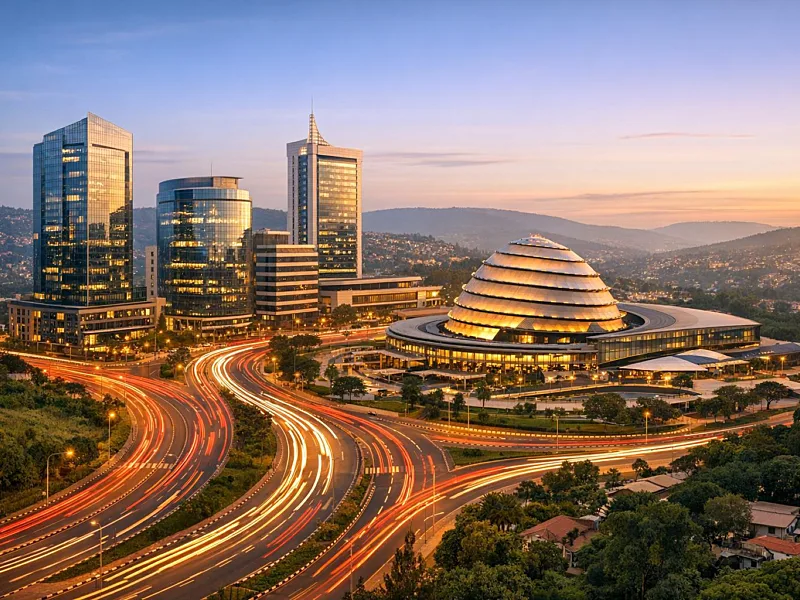
Although the study does not measure African buildings, its underlying question is highly relevant to the continent: can existing schools, hospitals, offices, hotels, factories and retail centres deliver the same indoor services while drawing less electricity?
In markets where power reliability, energy affordability, climate resilience and emissions reduction increasingly intersect, the answer could shape both building economics and environmental performance.
Buildings Waste Energy Behind Closed Doors
The headline figure, up to 614,000 tonnes of carbon dioxide equivalent, stems not from solar panels or new power plants, but from how motors operate within ventilation and refrigeration equipment.
Conventional HVAC systems often run fans at fixed speeds regardless of demand; a variable-frequency drive (VFD) adjusts motor speed to match actual requirements, which slows consumption without cutting output.
Danfoss's low-carbon scenario preserves the same service level, including heating, cooling, or ventilation at a defined setpoint, meaning savings come from efficiency, not reduced comfort or function.
This distinction matters: sustainability cannot mean hotter, less-ventilated buildings, but improved efficiency to deliver the same standard hospitals, classrooms, and homes require.
Crucially, savings depend on the comparison baseline. Against market-average drives in new systems, savings may reach just 2%; against fixed-speed or older drives in retrofit projects, savings can reach 40%.
That gap reveals climate governance's first lesson: that the baseline determines the claim.
How Danfoss Calculates Avoided Emissions
Avoided emissions represent the gap between a reference scenario and outcomes after a lower-carbon solution is introduced; they don't automatically result in reductions in a manufacturer's own Scope 1, 2, or 3 inventory.
Here, the immediate benefits mainly surface in the building operator's Scope 2 emissions, since the HVAC/R system consumes less purchased electricity.
Danfoss frames the avoided-emissions figure as its drive technology's wider climate contribution relative to defined alternatives, using three reference scenarios:
- New demand: a newly built system using a market-average drive
- Improvement: an existing system running at fixed speed or with an older, less efficient drive
- Replacement: a new drive replacing an equivalent drive
Notably, Danfoss makes no avoided emissions claim for the replacement scenario, since swapping equivalent products without meaningful efficiency gains yields no defensible climate benefit.
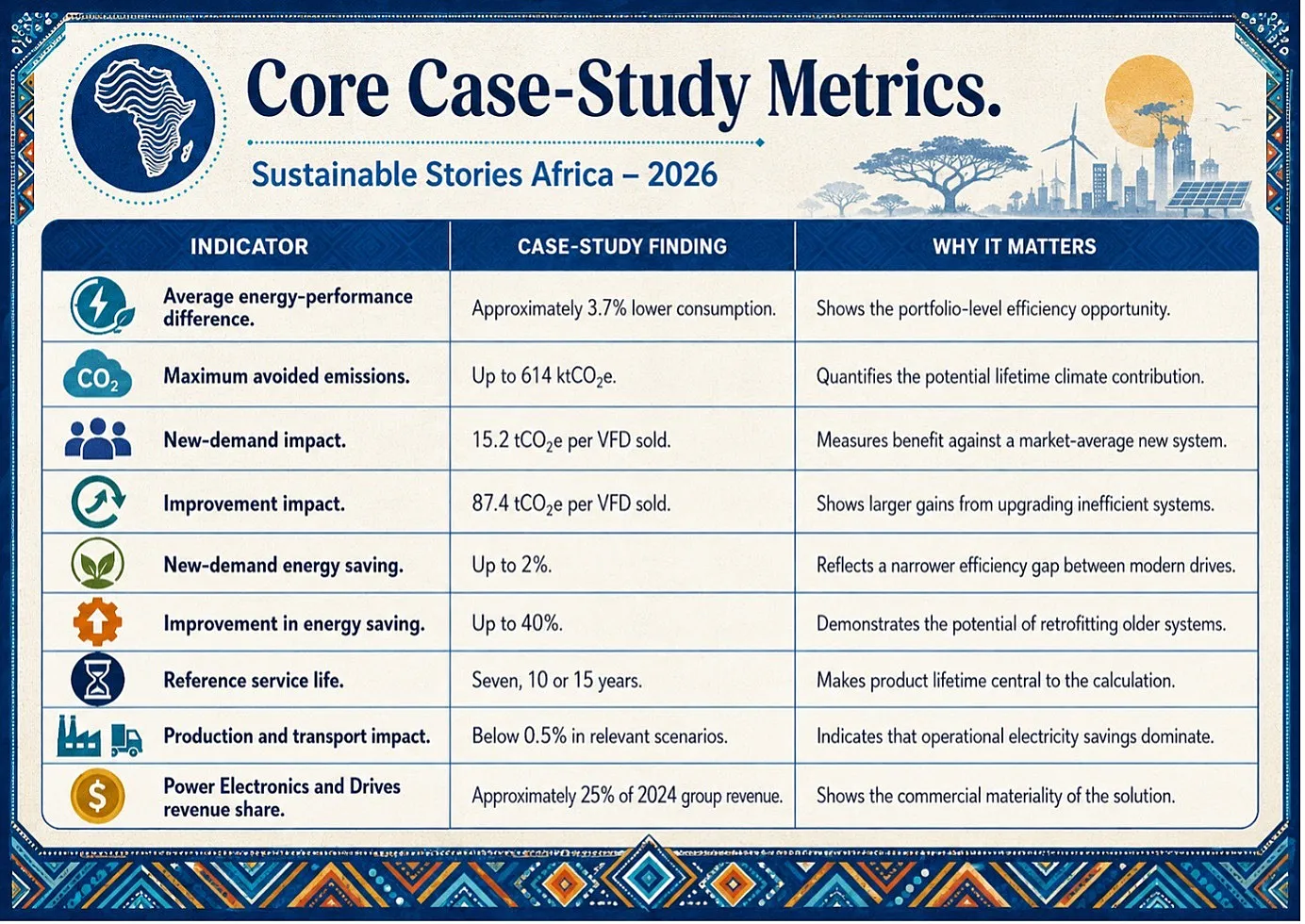
Calculations factor in electricity savings, operating hours, sales volumes, regional grid factors, and projected decarbonisation over each product's service life, covering 2024 sales with lifetimes of 7, 10, or 15 years. These are necessary because benefits accrue over the operation period, not at the point of sale.
Long-term projections carry uncertainty: grids may decarbonise faster or slower than assumed, operating hours may differ, or equipment may be poorly installed or retired early.
Danfoss acknowledges that its reference scenarios assume no further upgrades occur, potentially overstating avoided emissions.
The study also flags that side effects and efficiency claims could encourage premature replacement or require additional components.
FORCE Technology Denmark verified the methodology in 2024, though WBCSD stresses this remains an illustrative use case, not formal certification.
Efficient Systems Create Wider Social Value
For African markets, the key takeaway isn't the North American total emissions; it's the operating principle: buildings can cut electricity demand by better control of equipment already essential to daily life.
- A hospital ventilation system responding to actual occupancy reduces waste while preserving required conditions
- A hotel lowers costs without compromising comfort
- A shopping centre eases peak demand through smarter motor and chiller coordination.
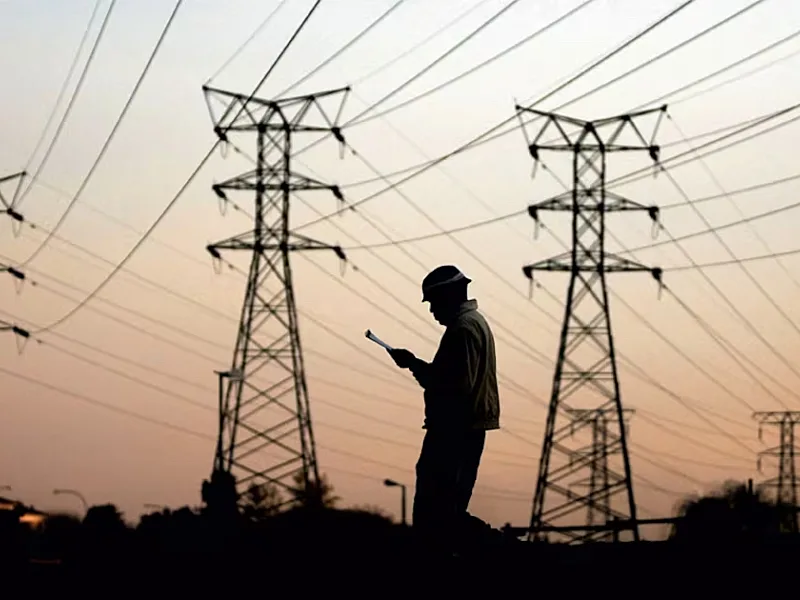
At the system level, this efficiency uses its scarce electricity for other productive uses, easing utility pressure and reducing businesses' exposure to price hikes and supply disruptions.
However, this opportunity depends on credible accounting. WBCSD's three eligibility gates;
- Climate-action credibility
- Alignment with climate science
- Legitimacy of contribution offers a governance screen against misleading baselines or comparisons.
What African Markets Must Do Next
To achieve progress;
Governments and regulators are to make building energy performance measurable.
- Building codes should move beyond basic equipment specifications and establish clear expectations for energy management, motor efficiency, commissioning and operational monitoring.
Public institutions can lead by requiring energy audits for large government buildings, hospitals, universities and transport facilities.
- Procurement rules should compare lifecycle electricity costs rather than focusing only on the lowest initial purchase price.
Building owners must also understand that installing efficient equipment is not enough.
- Drives, sensors and control systems need to be properly sized, commissioned and maintained.
- Poor configuration can erase expected savings, while unnecessary replacement can increase material use and embedded emissions.
Financiers can help overcome the cost barrier
- Through green loans, leasing, energy-performance contracts and retrofit facilities linked to verified electricity savings.
However, financing documentation should define the baseline, measurement period, equipment lifetime and responsibility for performance verification.
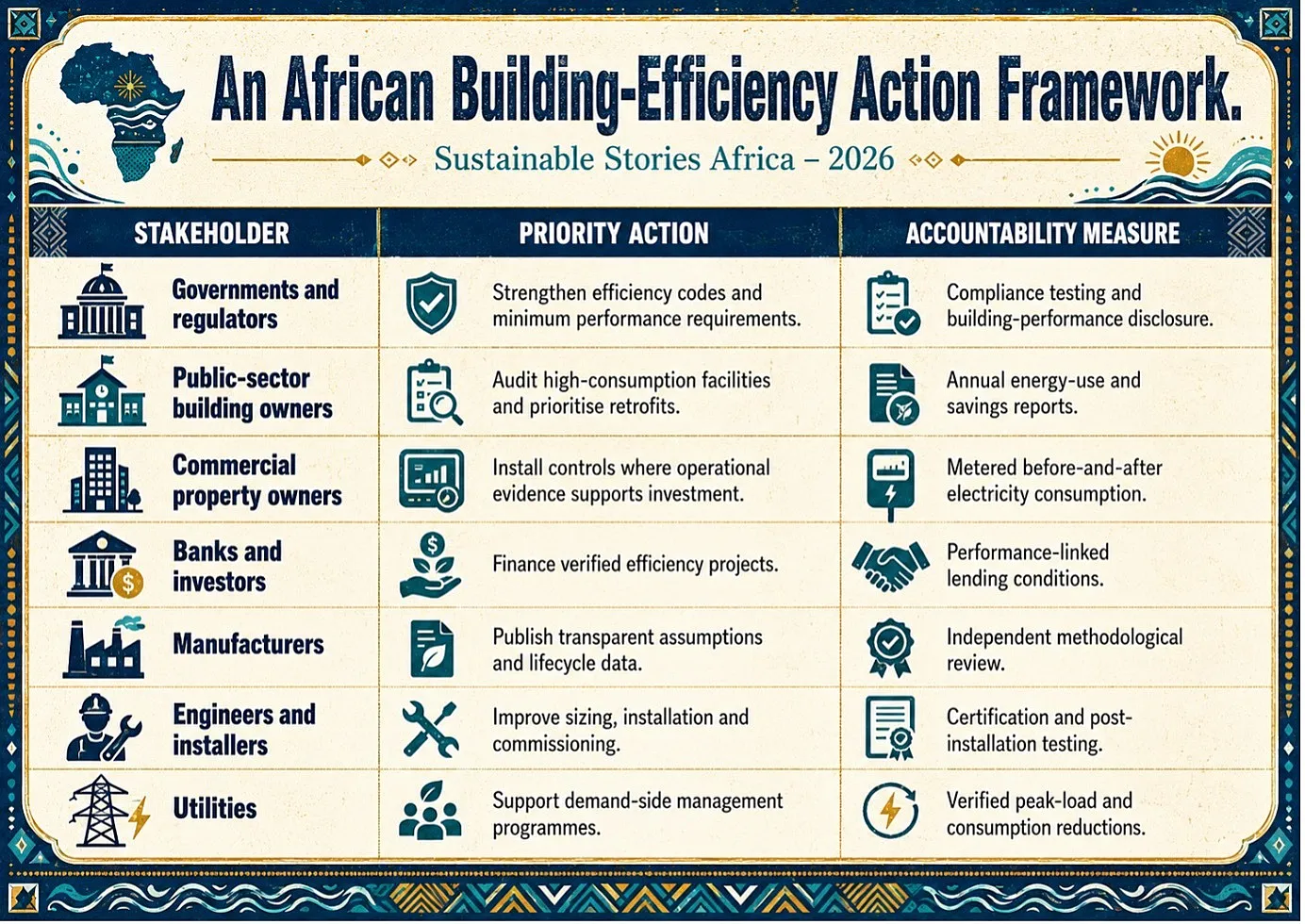
Manufacturers must remain conservative when communicating avoided emissions.
- Claims should disclose the reference scenario, geographical coverage, grid assumptions, expected service life and treatment of production, transport and end-of-life emissions.
African building datasets may be less complete, electricity supplies may include significant on-site generation, and equipment operating conditions may differ from the North American assumptions.
Local assessments must therefore incorporate actual grid factors, generator use, climate conditions, maintenance practices and equipment lifetimes.
Path Forward – Make Efficiency Measurable And Credible
African markets should treat building efficiency as infrastructure: measure consumption, identify high-impact retrofits, finance lifecycle savings and verify results against transparent baselines.
Efficient indoor systems can reduce operating costs, ease electricity pressure and support credible emissions strategies.
Avoided-emissions claims must remain conservative, locally grounded and independently reviewed.
The strongest climate solution is not the largest headline number, but one that delivers measurable performance without compromising essential indoor services.