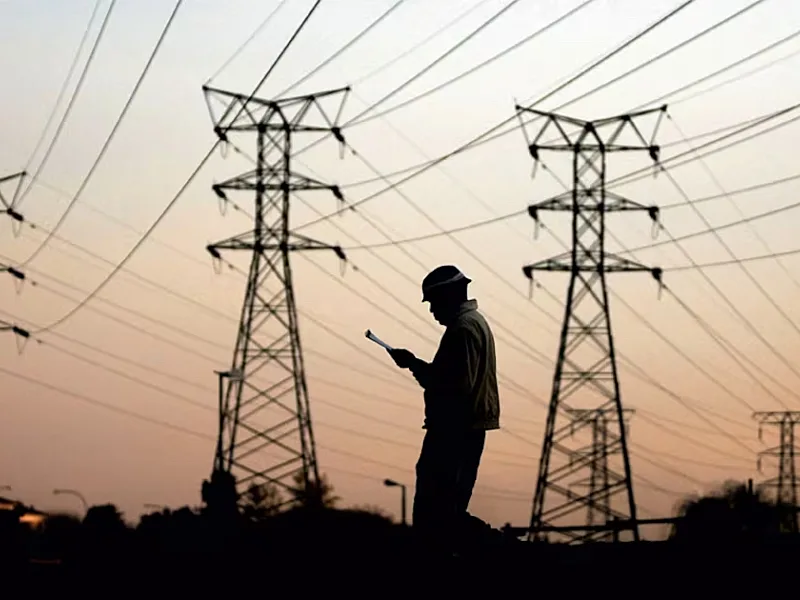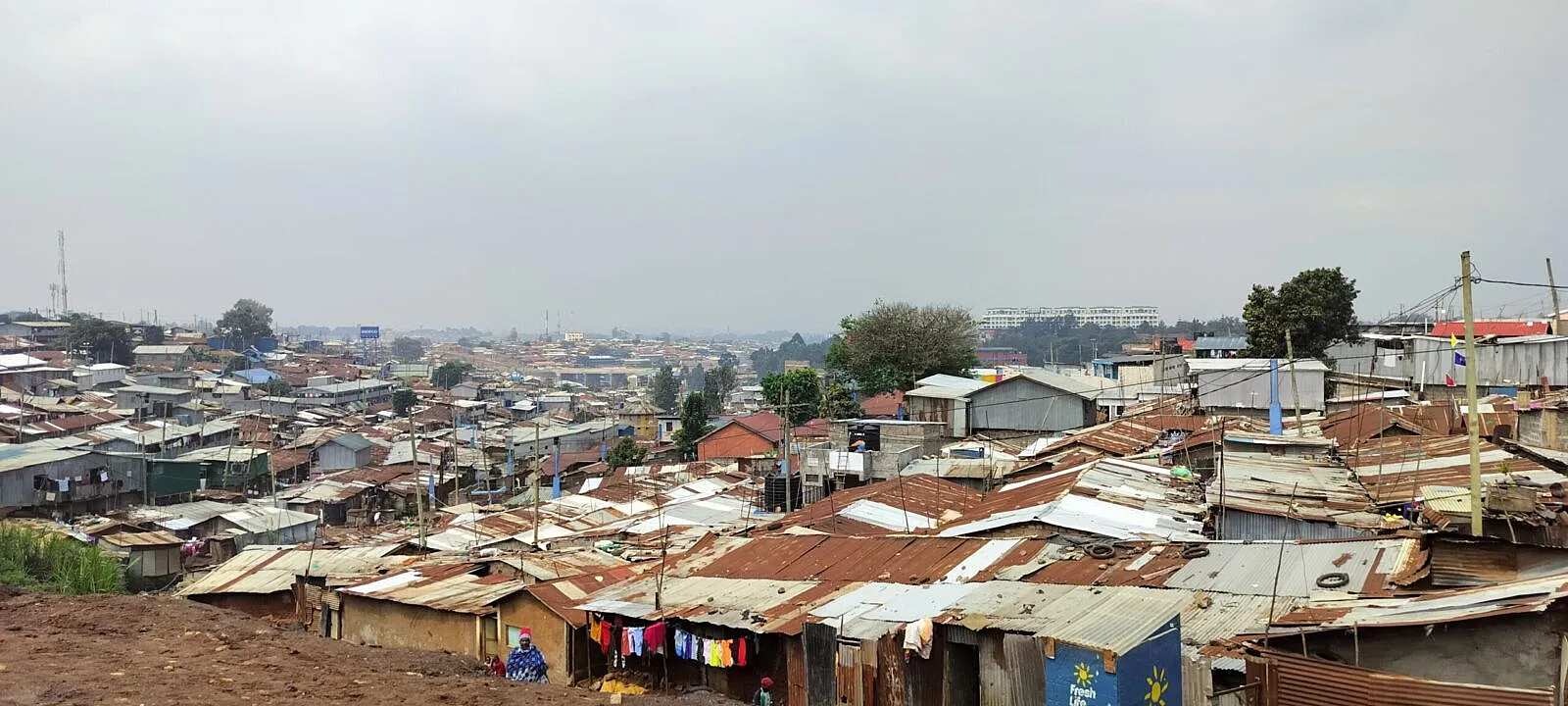
Global energy access is improving, but not at a fast enough pace. The world is drifting off course from Sustainable Development Goal 7, with progress masking deep regional inequalities.
Global Energy Progress, Unequal Realities
The global energy transition is advancing, however, unevenly. According to the Tracking SDG 7: The Energy Progress Report 2025, nearly 92% of the world's population now has access to electricity, up from 87% in 2010. Renewable energy capacity is expanding rapidly, and international clean-energy finance rebounded in 2023.
Yet behind these aggregate gains lies a more sobering reality. Progress toward affordable, reliable, and modern energy for all is slowing, not accelerating. Nearly 666 million people still live without electricity, and 2.1 billion lack access to clean cooking, exposing them to health risks, lost productivity, and climate vulnerability.
Nowhere is this gap more pronounced than in Sub-Saharan Africa, where population growth continues to outpace electrification. As the world edges closer to 2030, the SDG 7 deadline is looming, and the numbers suggest the global energy transition risks leaving Africa behind unless the rules of delivery change.
Progress Masks Structural Energy Inequality
The headline figures suggest momentum. Global electricity access rose again in 2023, renewables now account for 17.9% of total final energy consumption, and international public finance for clean energy reached $21.6 billion, its highest level since 2016.
But these gains conceal widening disparities. Sub-Saharan Africa now accounts for 85% of the global electricity access deficit, a staggering 70% increase from 50% in 2010. Three countries, Nigeria, the Democratic Republic of Congo, and Ethiopia, represent more than one-third of the world's unelectrified population.
The challenge is no longer technological. It is structural, financial, and political.
Where SDG 7 Is Falling Behind
Electricity Access: Africa's Net-Zero Paradox
While 35 million Africans gained access to electricity in 2023, population growth wiped out the progress. Net gains amounted to just five million, leaving 565 million Africans still without power.
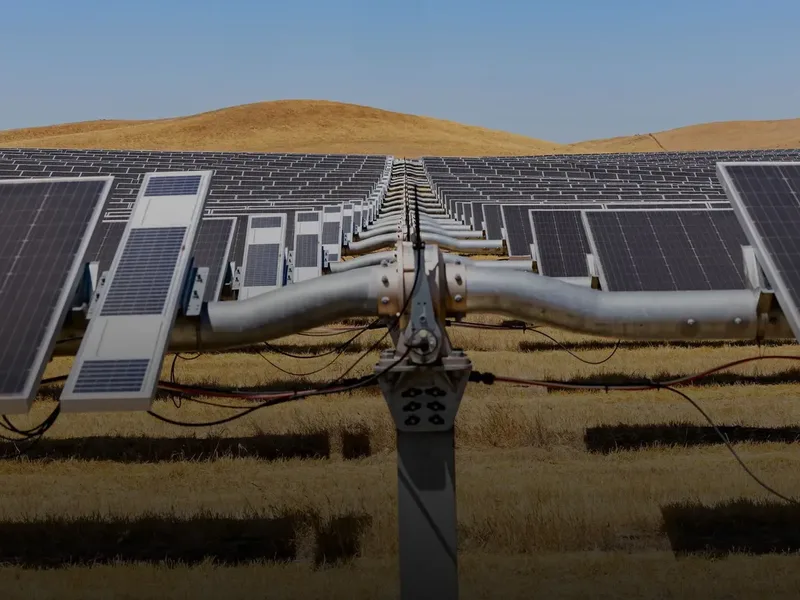
Decentralised renewable energy, such as mini-grids and off-grid solar, accounted for over half of new connections in Sub-Saharan Africa between 2020 and 2022, proving faster and cheaper than grid expansion in remote areas.
Clean Cooking: The Quiet Energy Crisis
Clean cooking remains the most stubborn SDG 7 target. Despite modest gains, 2.1 billion people still rely on polluting fuels, with Sub-Saharan Africa adding 14 million people annually to this number. Women and children bear the brunt, facing health risks and lost educational opportunities.
Current trends suggest that 1.8 billion people will still lack clean cooking opportunities by 2030, far from the expected universal access.
Renewables: Capacity Rising, Access Lagging
Global installed renewable capacity reached 478 watts per capita in 2023. In contrast, Sub-Saharan Africa averages just 40 watts per capita, barely enough for lighting and phone charging.
Modern renewables account for only 12% of Africa's energy consumption, despite the continent's vast solar and wind potential. This gap reflects financing constraints, weak grids, and limited industrial demand.
Energy Efficiency: The Missed Multiplier
Energy intensity improved by 2.1% in 2022, yet the SDG 7 target requires 4% annual improvement through 2030. Without stronger efficiency standards, electrification alone will not deliver affordability or resilience.
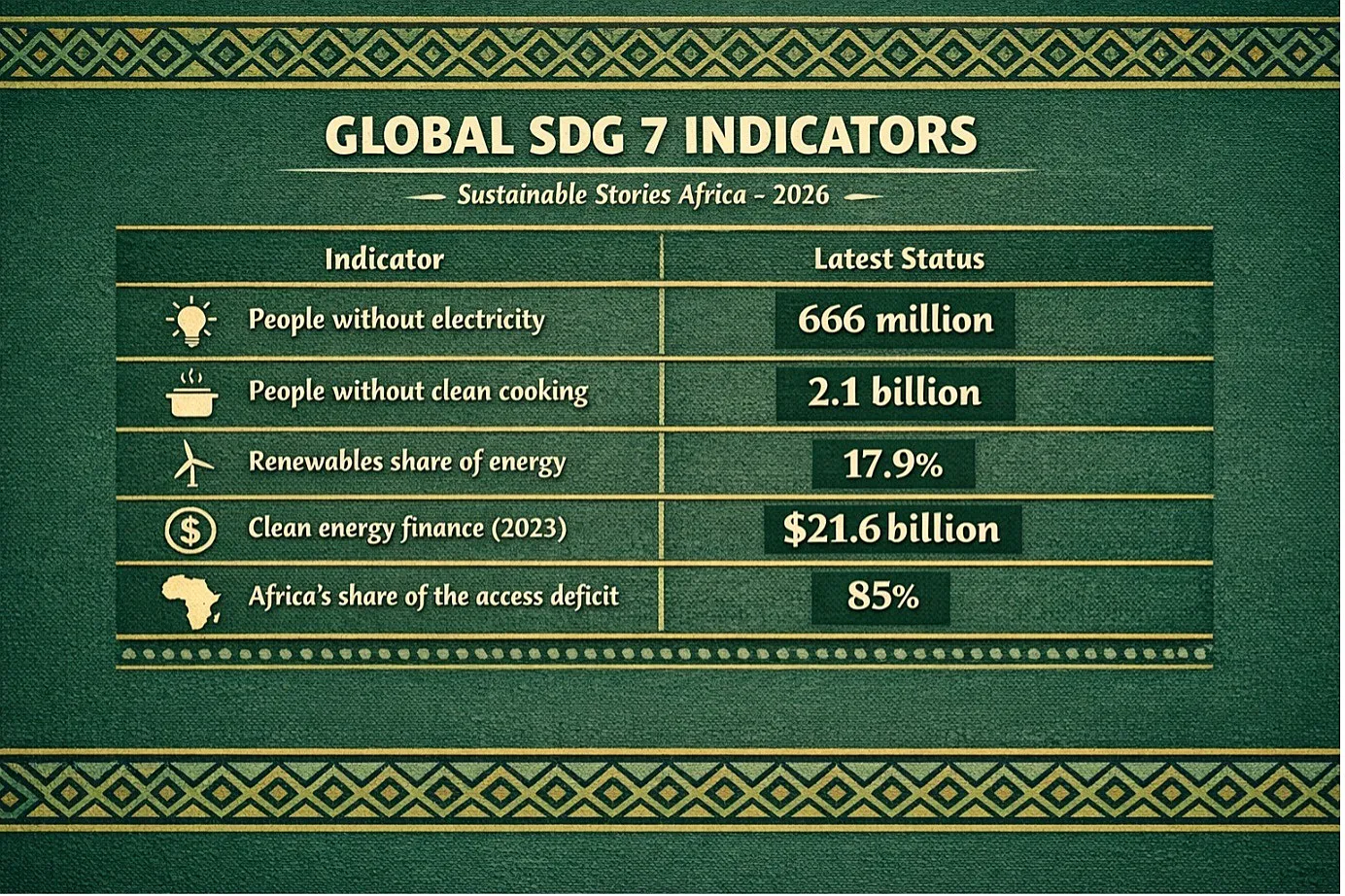
GLOBAL SDG 7 INDICATORS
| Indicator | Latest Status |
|---|---|
| People without electricity | 666 million |
| People without clean cooking | 2.1 billion |
| Renewables share of energy | 17.9% |
| Clean energy finance (2023) | $21.6billion |
| Africa's share of the access deficit | 85% |
What Success Would Unlock
Achieving SDG 7 is not merely about lights and kilowatts. Access to universal energy underpins health outcomes, gender equity, industrial productivity, digital inclusion, and climate resilience.
IRENA and IEA estimate that meeting SDG 7 requires $4.2 – $4.5 trillion in energy investments annually by 2030. What will be the expected returns include reduced poverty, expanded markets, and emissions reductions, which far outweigh the costs.
Africa's decentralised energy market alone could unlock millions of productive-use jobs if financing barriers are removed and policy certainty improves.
Rethinking Delivery, Not Just Ambition
The report is clear: business-as-usual will fail. Scaling energy access requires:
- Blended finance to lower the cost of capital
- Grants and concessional funding for least-developed countries
- Risk guarantees to crowd in private capital
- Decentralised solutions as first-choice, not fallback
- Integrated planning linking power, cooking, and productive use
Debt-heavy financing, which now stands at 83% of clean-energy flows, is no longer fit for purpose in fragile economies.
PATH FORWARD: Financing Access, Not Just Megawatts
The path to SDG 7 runs through Africa. Universal access will only be achieved if global finance shifts from optics to inclusion outcomes. Electrification strategies must prioritise decentralised renewables, clean cooking, and affordability, especially for women and rural communities.
With five years remaining, SDG 7 is no longer a technical challenge. It is a test of political will, financial redesign, and global equity.