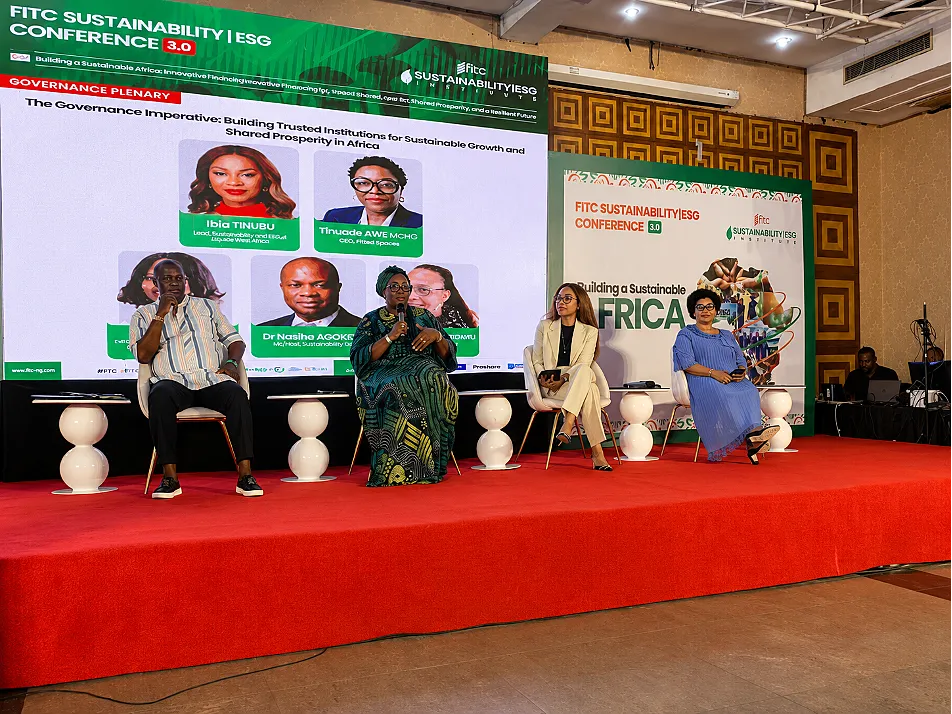
Trust, Not Capital, Is Africa's Scarcest Asset - Governance experts at Lagos's FITC Sustainability | ESG Conference 3.0 delivered a stark verdict: trust, not capital or talent, is the resource holding back African institutions, and governance is the only mechanism that builds it
At the governance plenary of the FITC Sustainability | ESG Conference 3.0 on 8 July 2026, Bola Tinubu of DLA Piper Africa opened with a warning that boardroom failures rarely stem from weak strategy but from governance built too late, or never built at all.
The panel, including Ije Jidenma, Chimdi Onwuegwu, and Dr Nosike Agokei, moderated by Tinuade Awe, explored why independent, verifiable governance now determines whether African companies can access capital at all, and at what price.
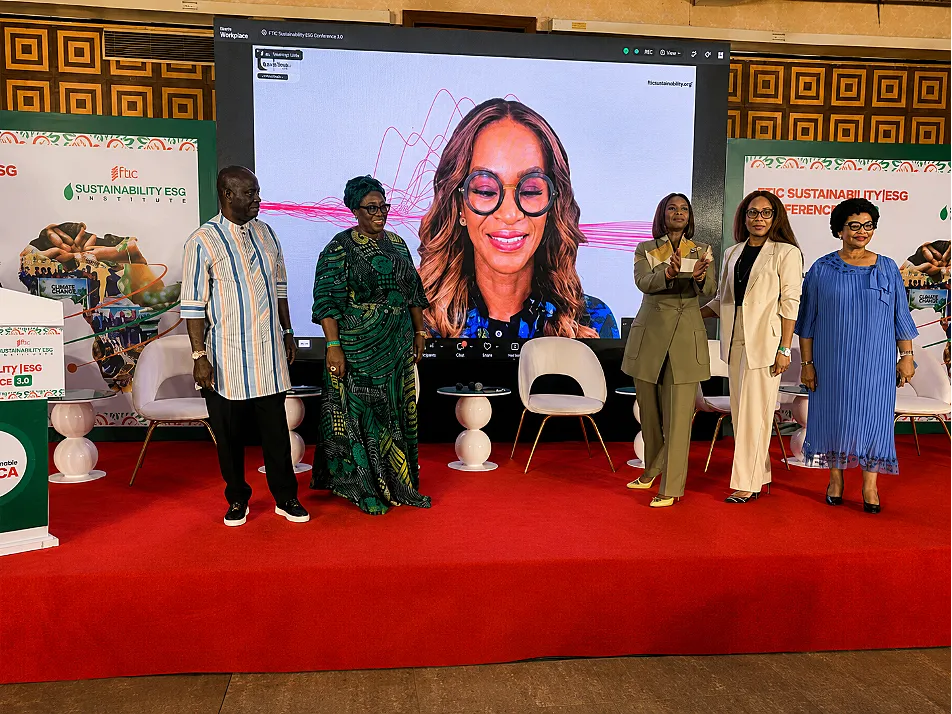
Lagos Panel Names Trust the Missing Asset
At the FITC Sustainability | ESG Conference 3.0 in Lagos on 8 July 2026, lead speaker Bola Tinubu, Country Managing Partner at DLA Piper Africa, set the tone for the governance plenary with a striking reframing: "the scarcest asset in Africa today isn't capital, it isn't talent, it's trust"
Moderated by Tinuade Awe of TMSN Limited, the panel brought together Ije Jidenma, President of the Nigeria-South Africa Chamber of Commerce and former President of the Chartered Institute of Directors, Chimdi Onwuegwu, Country Manager at Dalberg, and Dr Nosike Agokei, MD/CEO of Agokei & Co.
Their collective message was unambiguous: governance has shifted from a compliance checkbox to the price-setting mechanism behind every capital decision made about African businesses today.
The Phone Call Governance Prevents
Tinubu's hook was visceral; she described the late-night calls she receives as a crisis advisor, and argued that institutions surviving shocks like the pandemic or currency volatility "weren't lucky. They were governed".
This matters urgently because trust functions as an invisible balance-sheet asset, lowering borrowing costs, attracting senior talent, and earning companies the benefit of the doubt when things go wrong.
How Governance Now Prices Capital
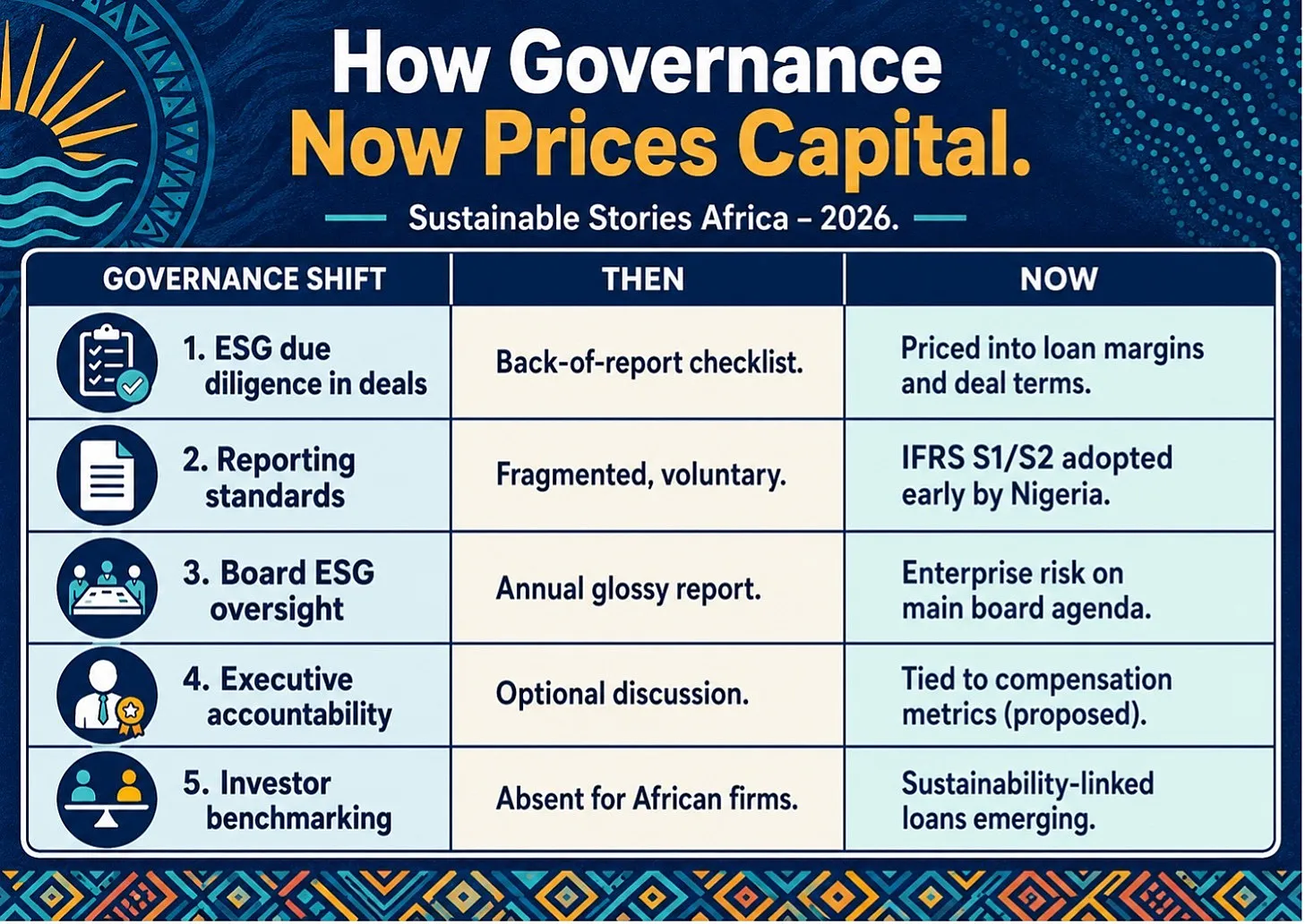
Tinubu revealed that ESG due diligence has moved decisively from documentation to deal substance over the past five years, with sustainability-linked loans now adjusting borrowing margins based on whether companies hit agreed sustainability targets.
Chimdi Onwuegwu of Dalberg argued governance is "a necessary condition, but not a sufficient condition" for attracting capital, noting African companies remain largely absent from global comparability indices, such as MSCI's governance framework, leaving investors unable to benchmark local firms against international peers.
Dr Nosike Agokei highlighted a structural blind spot: many boards discuss ESG only superficially, with executives "pretending" to drive sustainability, while genuine accountability mechanisms remain absent, and few companies maintain a documented AI or sustainability governance framework at all.
Ije Jidenma reinforced the human dimension, recounting a board that dismissed a director for crossing behavioural boundaries, illustrating that reputational discipline, rather than structural charts, determines institutional integrity.
What Trusted Institutions Unlock
Onwuegwu explained that companies embedding independent, third-party verified governance, akin to financial audits, can command better financing terms and stronger investor confidence than those merely claiming compliance.
Tinubu outlined tangible advantages: well-governed institutions "earn access to capital on better terms," while those lacking credible governance either lose financing entirely or pay prohibitively expensive premiums.
The risk of inaction was equally clear; Agokei warned that ungoverned AI and sustainability systems could cause institutions to "disappear overnight," regardless of how strong their governance appeared on paper.
What Boards and Regulators Must Do
Panellists converged on specific, actionable governance reforms across institutions and government.
- Boards should install genuinely independent directors empowered to ask difficult questions, since Onwuegwu and Tinubu both identified independence as the single highest-leverage governance change available.
- Companies should tie executive compensation to verifiable ESG performance metrics, following Agokei's recommendation to align incentives directly with sustainability delivery.
- Institutions should treat governance as a stewardship duty rather than a career perk, as Jidenma urged, prioritising long-term institutional value over short-term popularity.
- Governments should ensure policy predictability and close the gap between rules and enforcement, since Onwuegwu noted investors price in the risk of unenforced regulation regardless of governance quality.
- Companies should build credible, time-bound remediation plans for identified ESG gaps with clear board ownership, per Tinubu's four-step governance roadmap.
- Boards should digitise governance processes and adopt interactive dashboards to strengthen agility and real-time risk monitoring, as Agokei recommended.
Path Forward – Independence as the Lever
The panel's closing consensus, delivered through a rapid-fire round of "one governance change" recommendations, centred overwhelmingly on independence, the presence of directors willing to voice dissent, and the institutional safety to be allowed in the boardroom.
Tinubu's closing challenge was direct: trust isn't built by adding another policy, but by making it safe for a dissenting voice to be heard, a shift she argued would change every downstream governance outcome across African boardrooms.