Renewable energy auctions are now the world's leading tool for expanding clean power. However, how risks are shared between governments, utilities, investors, and citizens can determine whether these projects deliver long-term prosperity or deepen financial strain.
A new IRENA report highlights the realities of how many emerging economies shoulder the most risks, raising concerns about debt, affordability, and fairness. Smarter auction design, the agency argues, can protect public finances while sustaining investor confidence.
Renewable Auctions Reshape Power Markets
Renewable energy auctions have become the dominant mechanism for procuring clean power worldwide, accounting for nearly 60% of global capacity additions expected between 2025 and 2030. Their appeal lies in competitive price discovery, transparency, and the ability to tailor designs to national contexts.
However, behind record-low tariffs lies a deeper challenge: who bears the risks?
According to the International Renewable Energy Agency (IRENA), most auctions in emerging markets and developing economies (EMDEs) are designed to shift financial and political risks from private investors to governments, utilities, and ultimately consumers.
While this approach has attracted foreign capital and delivered competitively priced renewable energy, it has also raised fiscal pressures, increased contingent liabilities, and limited local value creation.
IRENA's 2026 report argues that future auctions must move beyond "lowest-price wins" toward fairer risk allocation that supports sustainable development, energy security, and long-term economic resilience.
Auctions Drive Global Energy Growth
Renewable energy auctions have expanded globally because they assist information gaps, boost competition, and reduce the need for subsidies, using long-term PPAs to provide investors with predictable cash flows.
In riskier markets such as Sub-Saharan Africa and Latin America, DFIs and MDBs back auctions with guarantees, credit enhancements, and political risk insurance to attract foreign capital.
This has driven rapid capacity growth but also increased sovereign guarantees, FX-linked PPAs, and fiscal backstops that leave governments exposed to macro shocks, debt stress, and currency risk, raising concerns at IRENA about fairness in the transition.
Risk Shapes Auction Outcomes
Renewable energy auctions involve multiple risks throughout the project lifecycle, including bidding and contracting, construction and operation. Poor risk allocation can lead to underbidding, project delays, cost overruns, and failed delivery.
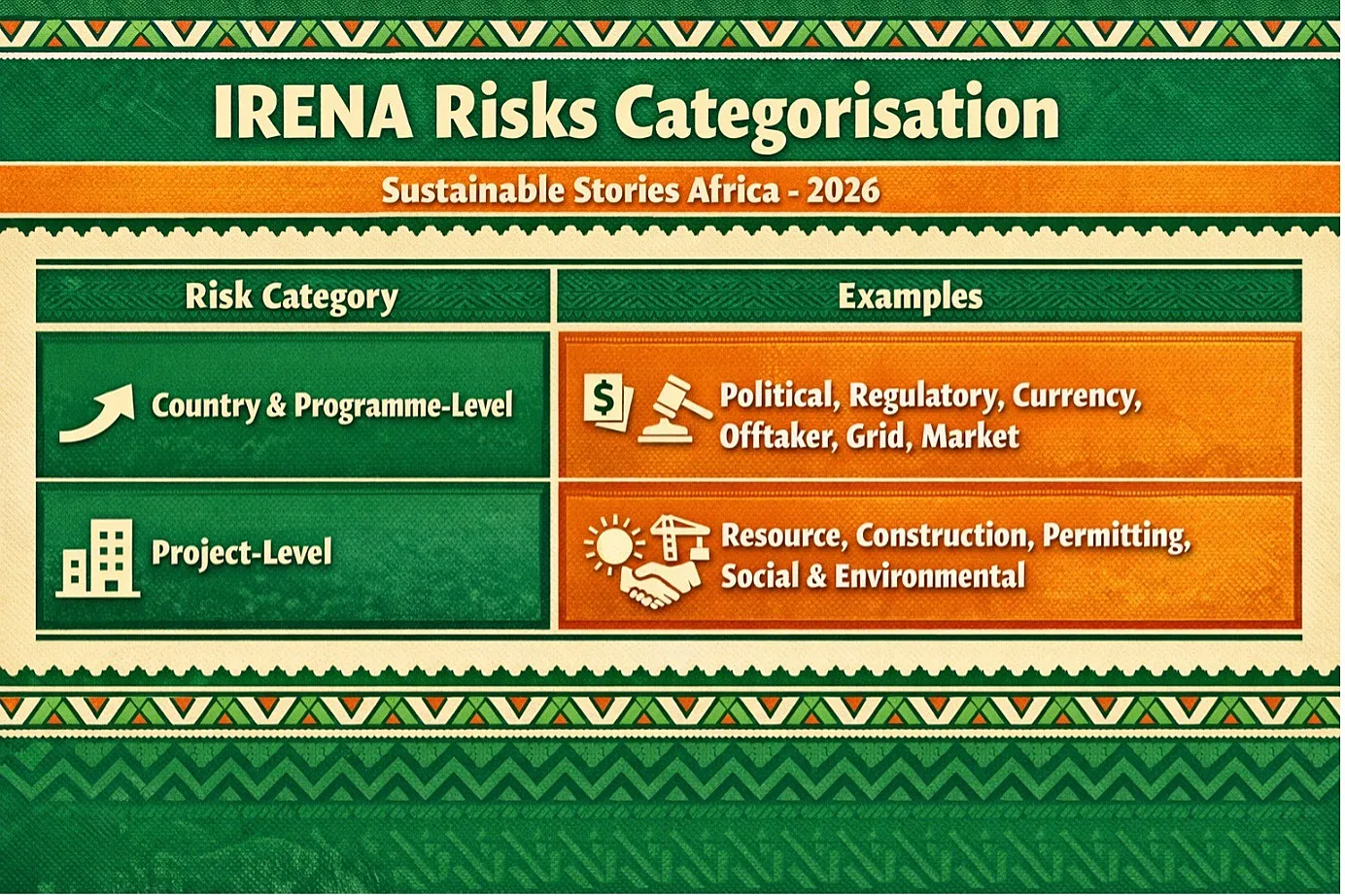
IRENA categorises risks into two broad groups:
| Risk Category | Examples |
|---|---|
| Country & programme-level | Political, regulatory, currency, offtaker, grid, market |
| Project-level | Resource, construction, permitting, social & environmental |
In many EMDEs, investors face high political, regulatory, and currency risks. To attract bidders, governments often absorb these risks through guarantees, foreign-currency PPAs, and payment security mechanisms.
While this boosts investor confidence, it also transfers financial exposure to the public sector.
Over time, this can strain national budgets, weaken credit ratings, and increase electricity costs for consumers.
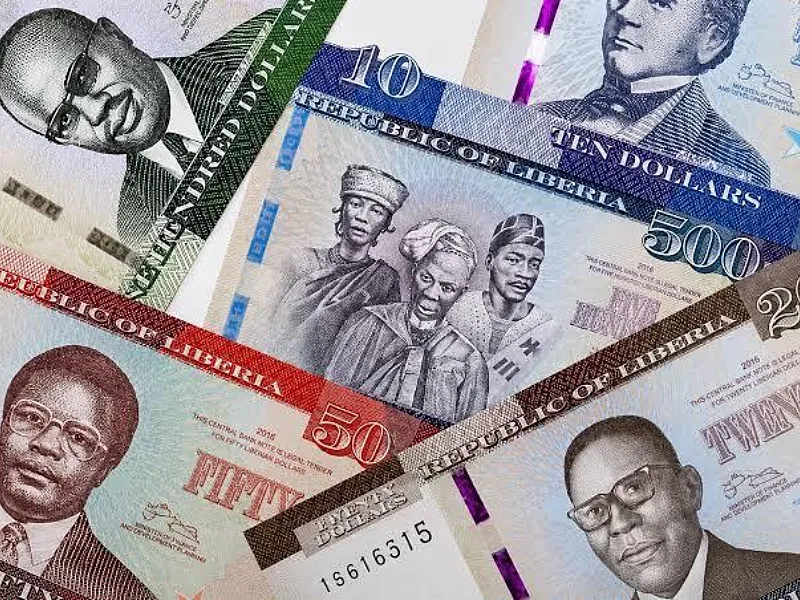
As currencies weaken, such as Nigeria's steep naira depreciation against the dollar, foreign-currency PPAs become costlier, deepening fiscal strain. IRENA argues these arrangements should gradually shift toward fairer models that ease long-term burdens on states and citizens.
Why Fairer Risk Allocation Matters
The way risks are allocated in auctions has implications far beyond electricity prices. IRENA highlights four critical outcomes affected by auction design:
- Fiscal sustainability
- Consumer affordability
- Project delivery success
- Local value creation
In many African power markets, utilities still fail to recover full costs; earlier assessments found only two of 39 countries cover both operating and capital expenses via tariffs, making offtaker default a constant risk.
To reassure investors, governments deploy letters of credit, escrow accounts, sovereign guarantees, and MDB-backed insurance, but these protections show up as contingent liabilities on public balance sheets.
As currencies weaken, such as Nigeria's steep naira depreciation against the dollar, foreign-currency PPAs become costlier, deepening fiscal strain. IRENA argues these arrangements should gradually shift toward fairer models that ease long-term burdens on states and citizens.
Political and Regulatory Risks Dominate
Political risk, ranging from contract breaches to policy reversals and unrest, remains a major deterrent to renewable investment in emerging markets.
To de-risk projects, countries such as South Africa, Zambia, Uganda, and Argentina offer sovereign guarantees for non-payment, tax shifts, and FX restrictions, often complemented by MIGA insurance.
However, when guarantees are triggered, arbitration and payouts inflate debt and hurt fiscal credibility, with the IMF treating them as contingent liabilities that constrain future borrowing.
Regulatory risk adds another layer: retroactive subsidy cuts in Spain and tariff disputes in India's Bihar solar auctions triggered legal battles and tariff renegotiations, undermining investor trust.
IRENA's guidance is that governments should stabilise policies, transparently auction pipelines, and involve regulators at the early stages to reduce risk without overusing guarantees.
Currency and Offtaker Risks Hurt Governments
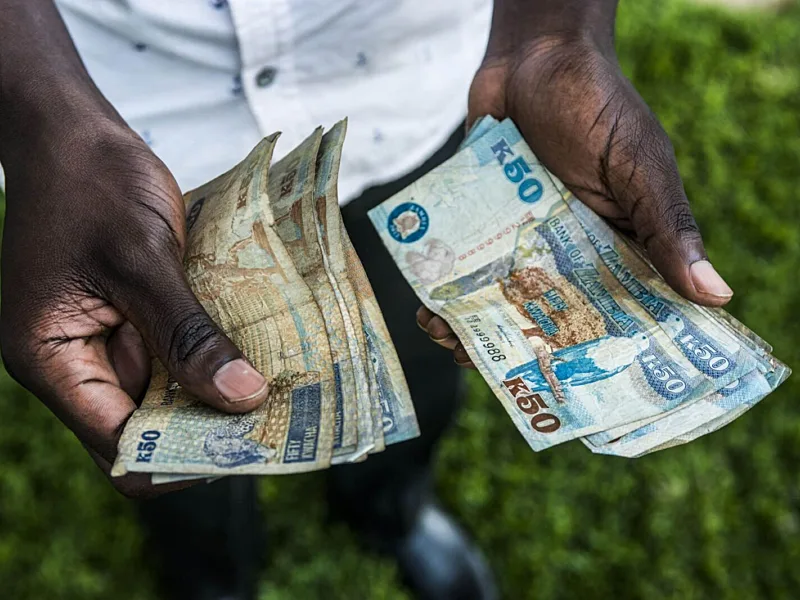
Currency risk is a major drag on renewables in EMDEs: projects are typically financed in dollars or euros, but revenues come in weaker local currencies, eroding returns unless PPAs are hard currency-indexed.
Many governments, therefore, allow dollar-denominated or indexed PPAs, shifting exchange-rate risk onto public finances. With sharp depreciations in countries such as Nigeria, Ghana, Egypt, and Angola, the local cost of these PPAs has surged.
The picture is worsened by offtaker risk: loss-making state utilities, weighed down by low tariffs, poor collections, and operational inefficiencies, often depend on government bailouts when they default.
IRENA shows that liquidity facilities, MDB guarantees, and sovereign backstops protect investors, but shift risk onto taxpayers. This raises critical questions about fairness, affordability, and fiscal responsibility.
Auctions Can Support Development Goals
Auctions are not just about price. With the right design, they can advance broader development objectives such as:
- Local manufacturing
- Job creation
- Grid resilience
- Socio-economic inclusion
Many EMDEs design renewable energy auctions to chase the lowest tariff, with little emphasis on local sourcing or skills; as such, projects lean heavily on imported equipment and foreign contractors, leaving minimal local value behind.
IRENA notes that auction design choices, such as technology, siting, project size, and socio-economic criteria, can grow domestic value chains. Uganda's GET FiT and Zambia's grid-linked siting show how proximity rules and substation mapping can cut congestion risks.
Where auctions embed socio-economic conditions
Where auctions embed socio-economic conditions, including local hiring, community benefits, training, and energy transition, they add megawatts, supporting livelihoods, capabilities, and long-term development priorities.
Rethinking Risk Allocation Models
IRENA's updated auction design framework highlights six decision areas that shape risk allocation:
- Auction demand and responsibilities
- Location, technology, and project specifications
- Qualification requirements
- Winner selection criteria
- Seller remuneration and risk allocation
- End-of-contract provisions
Each choice affects not only prices, but also who bears financial, operational, and macroeconomic risks.
For instance:
- Hard-currency PPAs protect investors but strain government finances.
- Strict qualification rules improve project quality but may reduce competition.
- Long contract durations lower investor risk but increase fiscal exposure.
IRENA emphasises systems thinking, understanding how one design choice influences the entire energy ecosystem.
From Protection to Partnership
In early market stages, heavy risk protection may be necessary to attract investors. But as renewable sectors mature, IRENA recommends a gradual shift toward shared responsibility.
This includes:
- Reducing blanket sovereign guarantees
- Promoting local-currency financing
- Strengthening utility finances
- Enhancing regulatory stability
- Encouraging local industry participation
Rather than socialising risks while privatising returns, governments should aim for balanced partnerships where risks are matched to the stakeholders best able to manage them.
This shift can protect public budgets, maintain investor interest, and ensure renewable energy contributes to long-term economic resilience.
Path Forward: Building Fairer Energy Markets
Renewable energy auctions will continue to shape global power systems. But for emerging economies, success must be measured not only by low prices, but by fiscal sustainability, social inclusion, and local value creation.
By redesigning auctions to distribute risks more fairly, governments can attract investment without overburdening public finances, ensuring the energy transition delivers prosperity, not pressure.