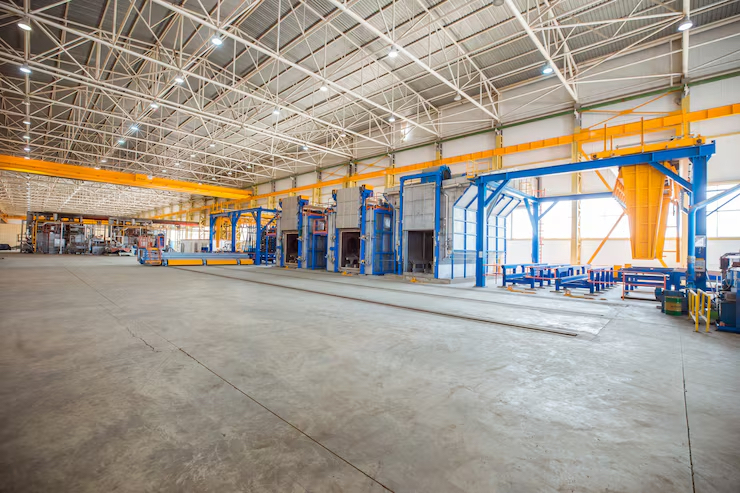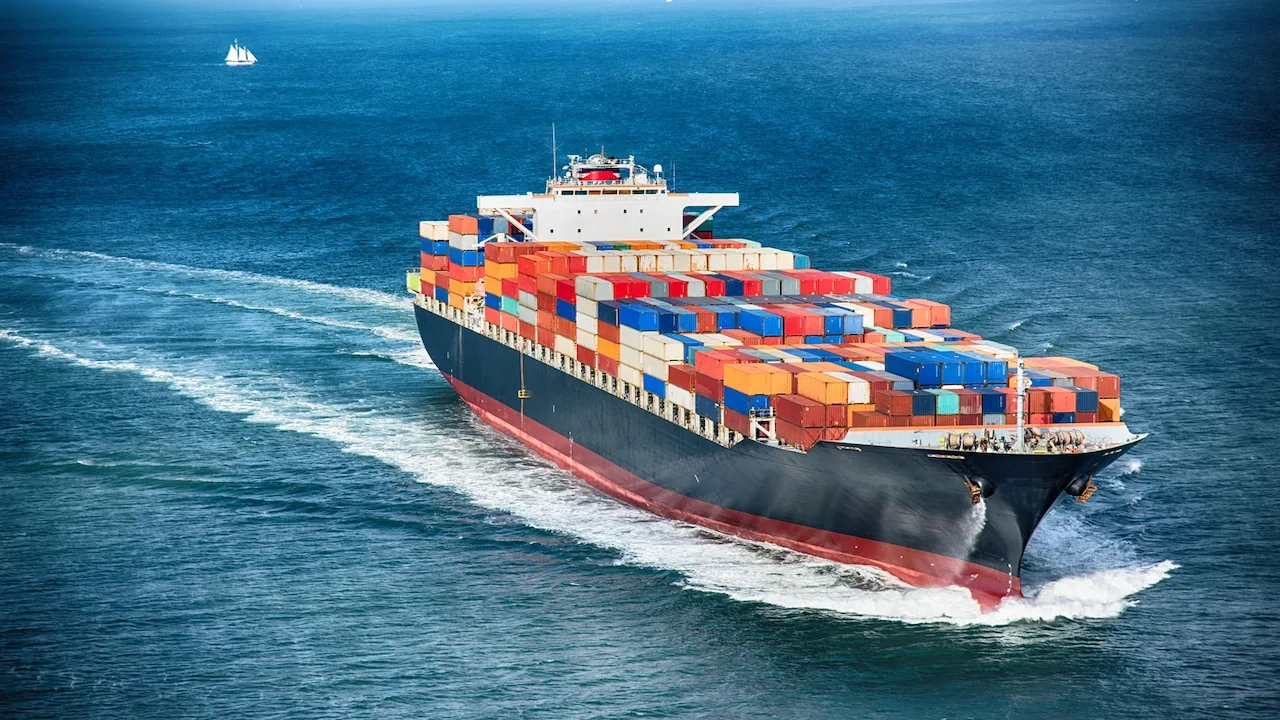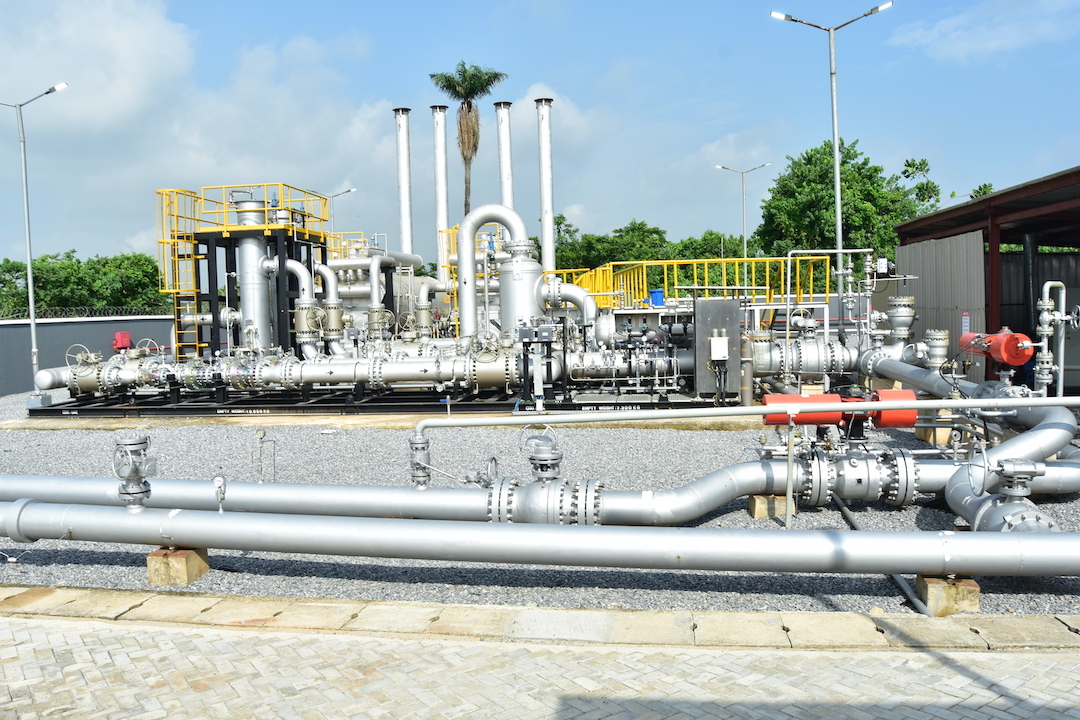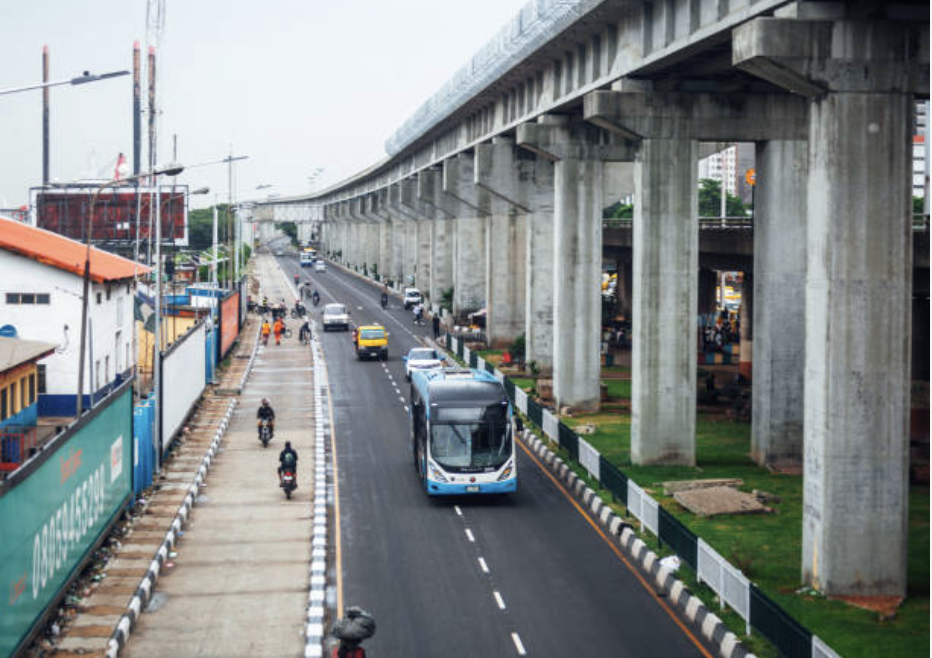
Nigeria's transport sector sits at a critical crossroads between growth and sustainability. With over 90% of goods moved by road and transportation accounting for 21% of national emissions, the sector is both vital and vulnerable.
As the nation pursues decarbonisation under its latest climate commitments, a dynamic and inclusive transition is required for balancing economic realities with environmental ambition, as a matter of great urgency.
Nigeria's Race to Green Transport
Nigeria's highways buzz with life, from trucks, buses, and motorcycles powering one of the continent's largest economies. But behind the movement lies a growing environmental cost.
Transportation contributes roughly 21% of Nigeria's greenhouse gas emissions, driven by a near-total dependence on fossil fuels for goods and passenger movement.
As the world accelerates toward net-zero ambitions, Nigeria faces the twin challenge of sustaining economic momentum while cutting its carbon footprint.
The recently released SOStainabilityWeekly by thisdaylive.com highlights this delicate balance. It captures how Nigeria's transport and logistics industry, which is responsible for over 90% of domestic freight, must confront its environmental impact through electrification, cleaner fuels, and infrastructure reform.
Meanwhile, the broader sustainability conversation continues to shift as companies are being called to move beyond token corporate gestures to measurable, data-driven action.
The Road Ahead for a Carbon-Heavy System
Nigeria's transport network is both a lifeline opportunity and a potential liability. Road transport dominates over 90% of internal movement, yet it contributes massively to carbon emissions and inefficiencies.
According to Nigeria's Third Nationally Determined Contribution (NDC 3.0), the sector holds a mitigation potential of 44.3 million tonnes of CO₂ equivalent, if urgent reforms are made.
The challenges range from inadequate infrastructure, overreliance on fossil fuels, and fragmented logistics, due to the inherent lack of structure in the sector.
While policies promote cleaner mobility, implementation remains slow. Many of Nigeria's roads, worn from decades of underinvestment, amplify emissions through traffic bottlenecks and fuel wastage.
"Transport is the heartbeat of the economy, but also the lungs that choke it,"
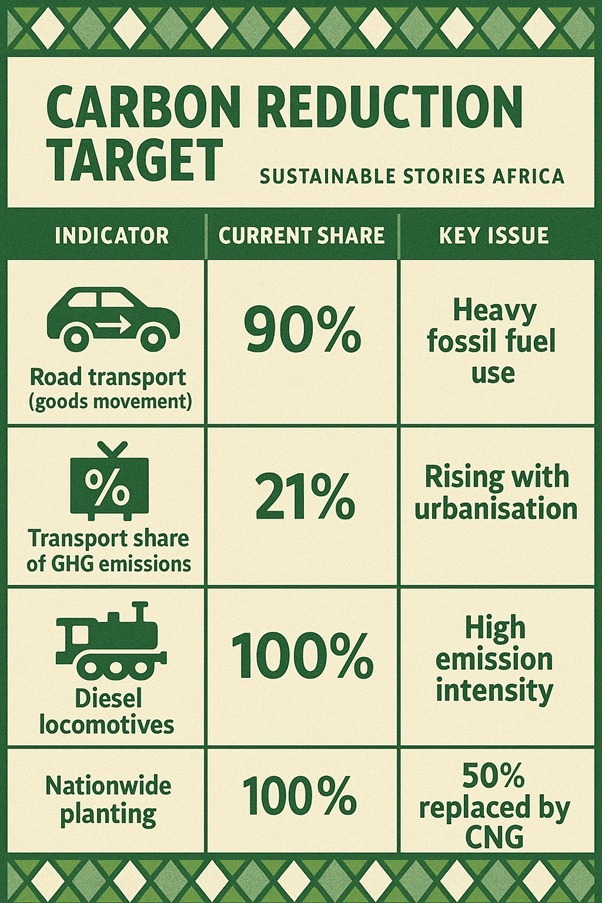
The data underscores the urgency:
| Indicator | Current Share | Key Issue | 2035 Target |
|---|---|---|---|
| Road transport (goods movement) | 90% | Heavy fossil fuel use | 30% EV adoption |
| Transport share of GHG emissions | 21% | Rising with urbanisation | 44.3 MtCO₂e reduction |
| Diesel locomotives | 100% | High emission intensity | 50% replaced by CNG |
Policies, Progress, and Pain Points
Regulation has not kept pace with ambition. Most of Nigeria's transport compliance frameworks - vehicle inspections, freight limits, or axle weight standards - focus on safety, not emissions. The National Transport Policy lacks binding sustainability targets, and fiscal incentives for low-carbon mobility remain limited.
To align with Paris Agreement goals, experts argue Nigeria must embed environmental metrics into transport compliance laws. Mandates for cleaner fuels, fiscal incentives for electric vehicles, and penalties for high-emission fleets could reshape behaviour across the sector.
Yet progress is visible. The Compressed Natural Gas (CNG) initiative, supported by the Presidential CNG Programme, aims to retrofit commercial fleets, while Lagos' Bus Rapid Transit (BRT) system continues to demonstrate scalable public mobility reform.
Still, high fuel prices post-subsidy removal have increased transport costs by over 30% dampening enthusiasm for a rapid transition. Without strategic incentives, many transport operators see sustainability as a luxury, not a necessity.
The Fork in the Road
Nigeria's pathway to decarbonisation cannot rely on a single technological leap. The country must sequence progress by starting with fuel efficiency, then cleaner fuels, then electrification.
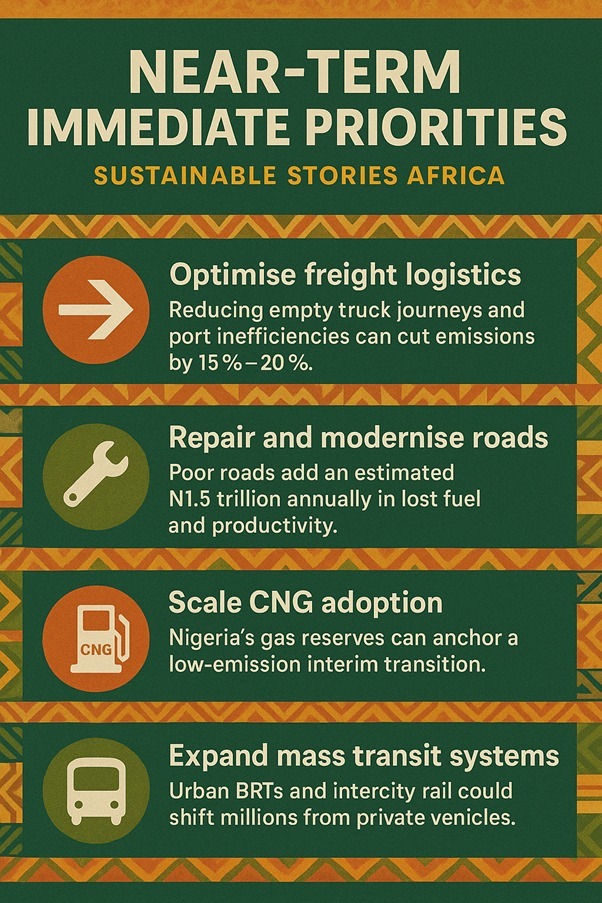
Experts point to four near-term priorities:
- Optimise freight logistics — Reducing empty truck journeys and port inefficiencies can cut emissions by 15%–20%.
- Repair and modernise roads — Poor roads add an estimated N1.5 trillion annually in lost fuel and productivity.
- Scale CNG adoption — Nigeria's gas reserves can anchor a low-emission interim transition.
- Expand mass transit systems — Urban BRTs and intercity rail could shift millions from private vehicles.
This staged approach aligns with economic realities. Electrification, though ideal, faces constraints in energy infrastructure, affordability, and policy coherence.
The goal, therefore, is progressive decarbonisation: achievable steps toward a greener system without halting economic mobility.
Beyond Corporate Tokenism
The sustainability debate extends beyond government policy. Nigerian corporations are under growing scrutiny to prove that their environmental and social commitments are more than public relations (PR) exercises.
The feature's second half, "Corporate Social Investment: Getting It Right for Best Results," reveals a troubling truth: many firms in Nigeria engage in performative CSR.
PwC's 2021 study found that fewer than 30% of Nigerian organisations use measurable indicators to track social or environmental outcomes.
Corporate actions must evolve from "charity" to "shared ownership." Companies like Access Bank, through its Green Bond initiative, demonstrate alignment with global ESG standards.
Yet smaller firms lag, limited by technical capacity, funding, and policy clarity.
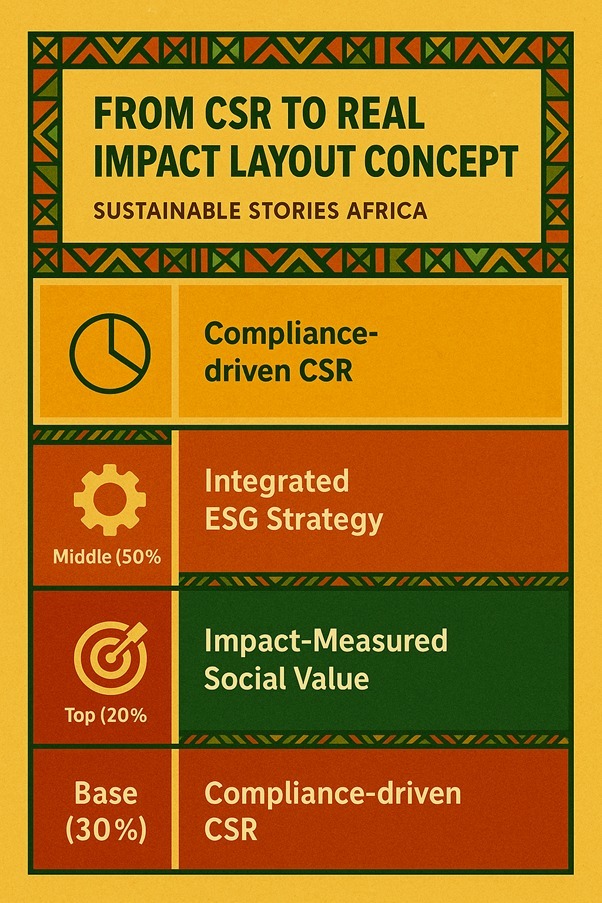
Infographic – From CSR to Real Impact Layout Concept
A three-tiered pyramid showing:
- Base (30%) – Compliance-driven CSR
- Middle (50%) – Integrated ESG Strategy
- Top (20%) – Impact-Measured Social Value
To bridge the divide, companies must measure impact transparently using Global Reporting Initiative (GRI), Social Return on Investment (SROI), International Sustainability Standards Board (ISSB) frameworks, embed sustainability in supply chains, and empower communities as partners, not passive recipients.
Path Forward – Toward a Just, Measurable Transition
Nigeria's decarbonisation journey depends on coherence between transport reform, private sector accountability, and inclusive economic planning.
The government must champion a just transition, ensuring workers in fossil fuel-dependent industries are retrained for green jobs. Policies should make sustainable transport affordable for citizens while supporting MSMEs with technical and financial incentives to embrace ESG.
The Bank of Industry's 2025 ESG Conference marks a hopeful turning point. Its report on MSME adoption identified limited funding, technical gaps, and poor policy incentives as the biggest barriers.
It also outlined solutions - capacity-building partnerships, targeted financing, and regulatory reforms that reward sustainability over compliance.
"For MSMEs to thrive in a changing economy, ESG adoption is not optional; it's essential," said Dr. Olasupo Olusi, BOI's CEO.
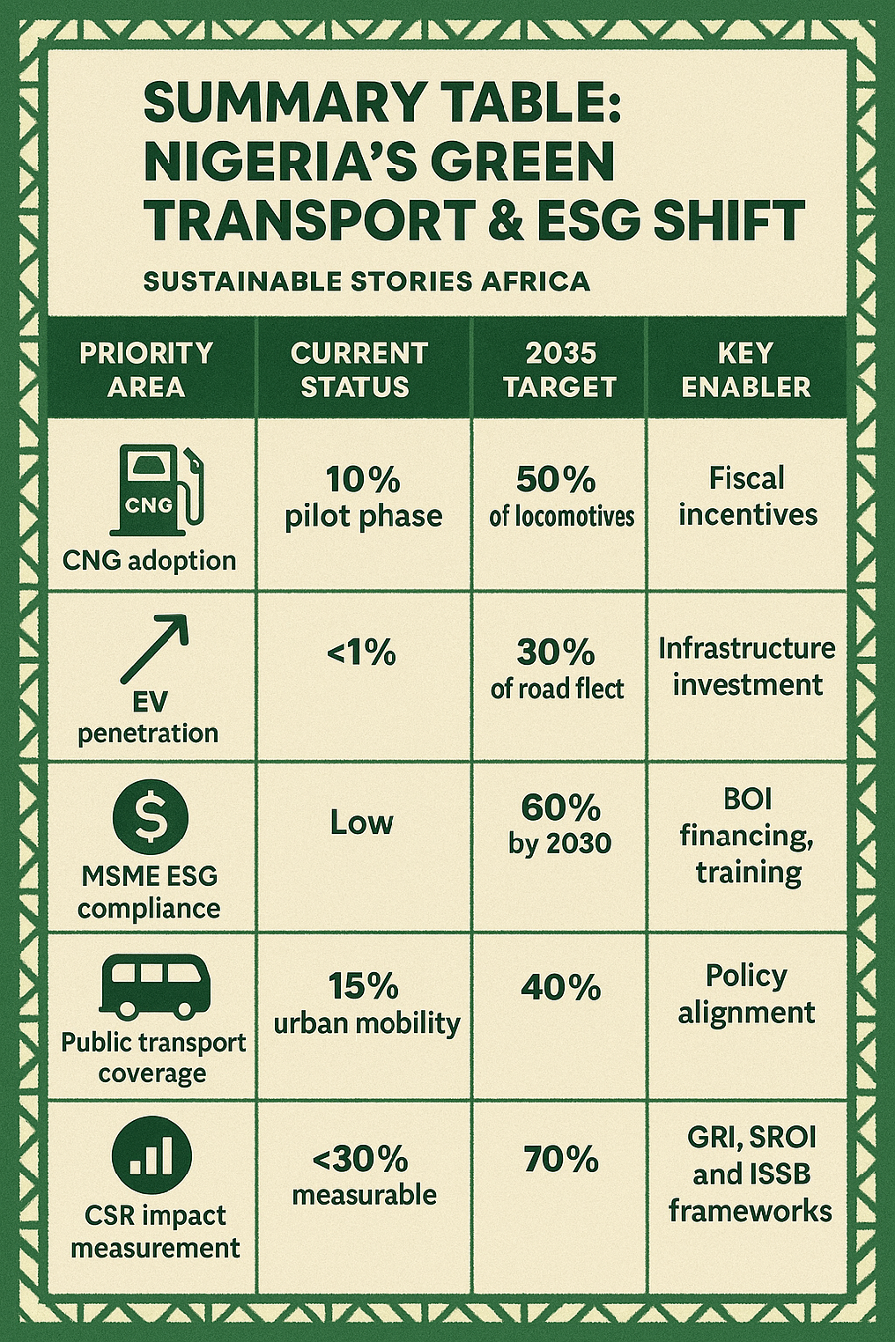
Summary Table: Nigeria's Green Transport & ESG Shift
| Priority Area | Current Status | 2035 Target | Key Enabler |
|---|---|---|---|
| CNG adoption | 10% pilot phase | 50% of locomotives | Fiscal incentives |
| EV penetration | <1% | 30% of road fleet | Infrastructure investment |
| MSME ESG compliance | Low | 60% by 2030 | BOI financing, training |
| Public transport coverage | 15% urban mobility | 40% | Policy alignment |
| CSR impact measurement | <30% measurable | 70% | GRI, SROI and ISSB frameworks |
Nigeria's transition to a cleaner, fairer transport system hinges on smart regulation, measurable corporate action, and inclusive policy design.
The synergy between public infrastructure, private ESG adoption, and local community participation will define the nation's sustainability legacy.
From roads to railways, from boardrooms to bus terminals, Nigeria's decarbonisation drive must not only cut emissions, but it must create opportunity, resilience, and shared value across its economy.
Culled From: https://www.thisdaylive.com/2025/11/05/sostainabilityweekly-7/