Nigeria's poverty challenge is deepening, not easing. New data from the World Bank's Poverty & Equity Brief provide clearer insight, showing more Nigerians falling below basic living standards despite recent macroeconomic reforms.
Extreme poverty rose sharply as labour incomes failed to keep pace with inflation, eroding purchasing power across households.
The data points to a stark reality: poverty reduction in Nigeria now hinges less on redistribution and more on restoring jobs, productivity, and human capital.
Nigeria's Poverty Numbers Worsen
More than half of Nigerians now live in poverty. According to the World Bank's Poverty & Equity Brief (October 2025), an estimated 52.5% of the population is projected to be poor in 2025, up from already elevated levels in 2022/23, an increase of 25.6%.
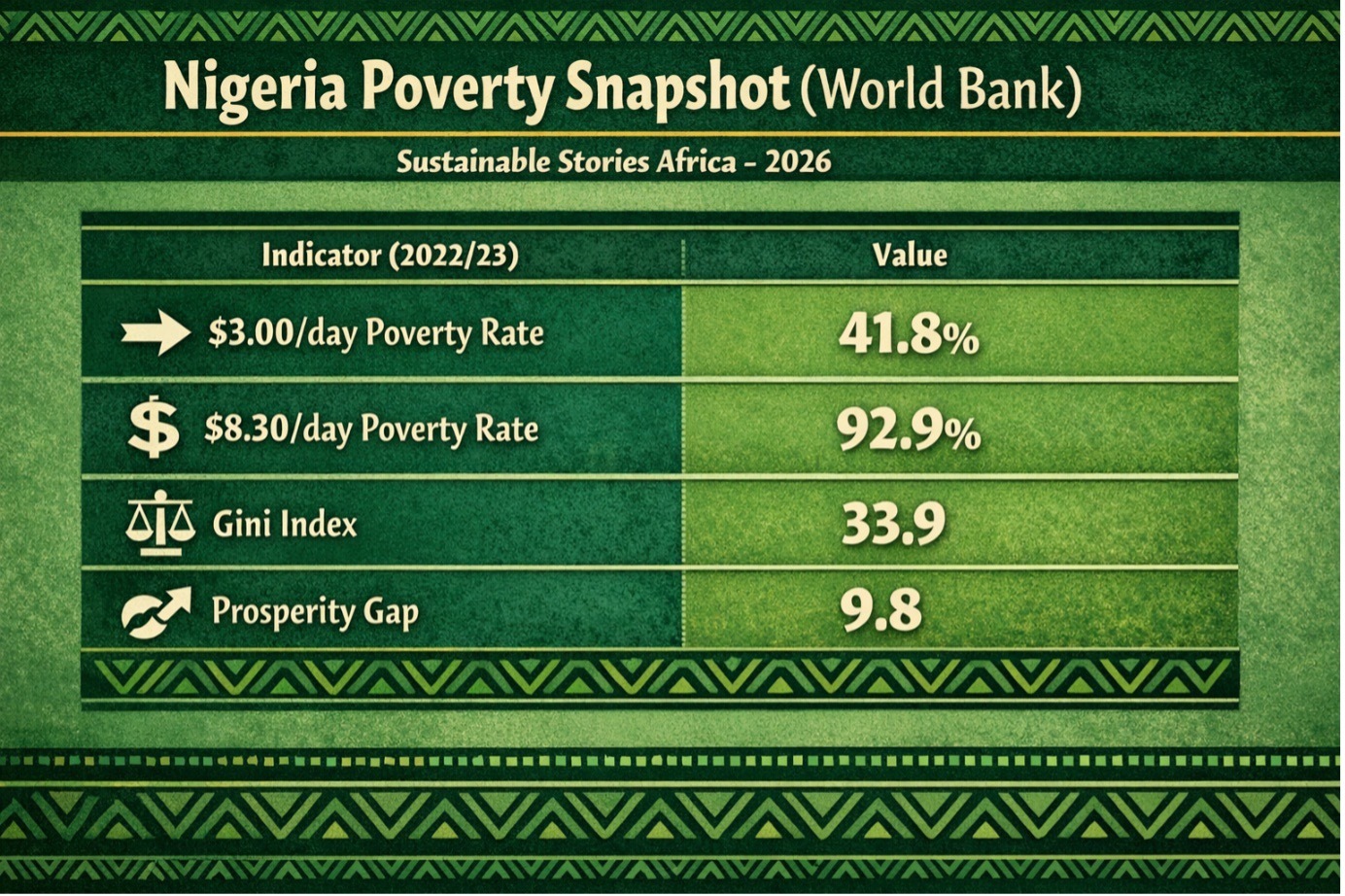
Using the international poverty line of $3.00 per person per day, 41.8% of Nigerians were poor in 2022/23, representing a n increase of 20.5%, up from 34.7% four years earlier.
This deterioration comes despite difficult macroeconomic reforms introduced in 2023 to stabilise Nigeria's economy, underscoring a critical disconnect between policy adjustment and household welfare.
Inequality Falls, But Everyone Gets Poorer
At first glance, inequality appears to be easing. Nigeria's Gini Index declined to 33.9 in 2022/23, down by 3.4% from 35.1 in 2018/19.
However, the World Bank cautions against misreading this trend. The decline reflects income losses across all households and does not mean a convergence between rich and poor.
The prosperity gap, the average factor by which incomes must rise to reach $28 per day, increase d by 12.6%, widening from 8.7 to 9.8, signalling that households are drifting further from economic security.
Nigeria Poverty Snapshot (World Bank)
| Indicator (2022/23) | Value |
|---|---|
| $3.00/day poverty rate | 41.8% |
| $8.30/day poverty rate | 92.9% |
| Gini Index | 33.9 |
| Prosperity gap | 9.8 |
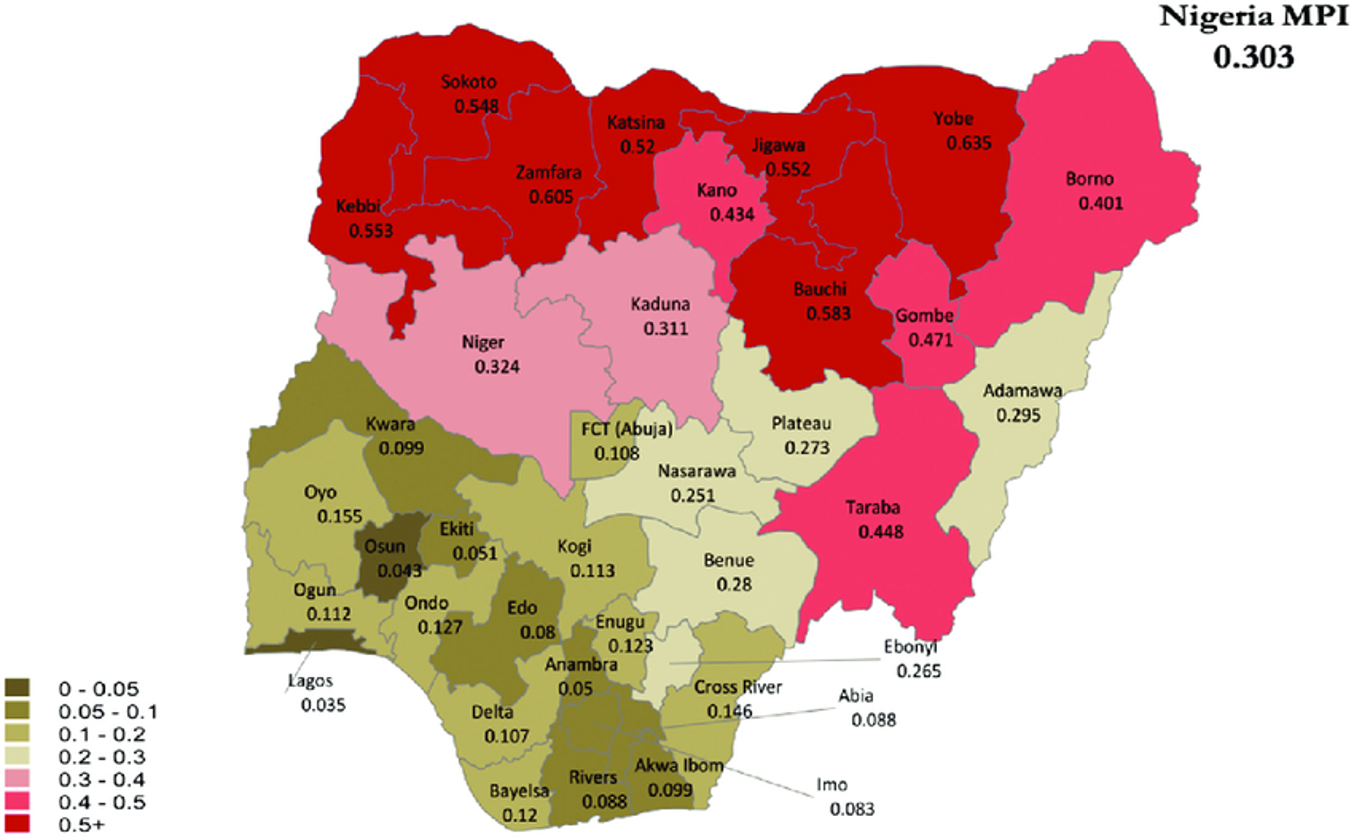
Spatial inequality remains stark. Poverty in northern Nigeria reached 57.4%, compared with 21.2% in the south, widening a long-standing regional divide.
Poverty Is Multidimensional, Not Just Monetary
Data highlights that poverty is layered, spanning income, access, and human capital. Beyond income shortfalls, 41.5% of Nigerians lack access to electricity, 34% lack basic sanitation, and 21.5% lack safe drinking water.
Nearly 19.4% of adults have not completed primary education, while 7% of school-aged children are not enrolled.
Children and the uneducated are disproportionately affected. Poverty among those aged 0–14 stands at 73%, while adults without education face an 82.9% poverty rate, compared to 26.6% among those with tertiary education.
Poverty By Group (Lower-Middle Income Line)
| Group | Poverty Rate (%) |
|---|---|
| Children (0–14) | 73.0 |
| Adults without education | 82.9 |
| Females | 64.3 |
| Males | 63.7 |

Education and infrastructure emerge as decisive buffers against poverty.
Jobs And Human Capital Matter Most
The World Bank's assessment is unequivocal: labour incomes have not kept pace with inflation, pushing millions into poverty. While recent reforms helped stabilise macroeconomic indicators, high prices and weak consumer demand continue to erode welfare.
To reverse the trend, Nigeria must prioritise job-rich growth, productivity gains, and investments in human capital.
For the ultra-poor, targeted social protection, though, remains essential; however, long-term poverty reduction hinges on more and better jobs, especially for low-income households.
PATH FORWARD – Jobs, Human Capital, Resilience Built
Nigeria's poverty crisis is no longer cyclical; it is structural. The World Bank's data points to a clear prescription: restore labour incomes through productivity, invest in education and basic services, and strengthen social protection for the most vulnerable.
Without decisive action, poverty risks becoming entrenched. With the right mix of jobs, skills, and resilience, recovery remains possible.