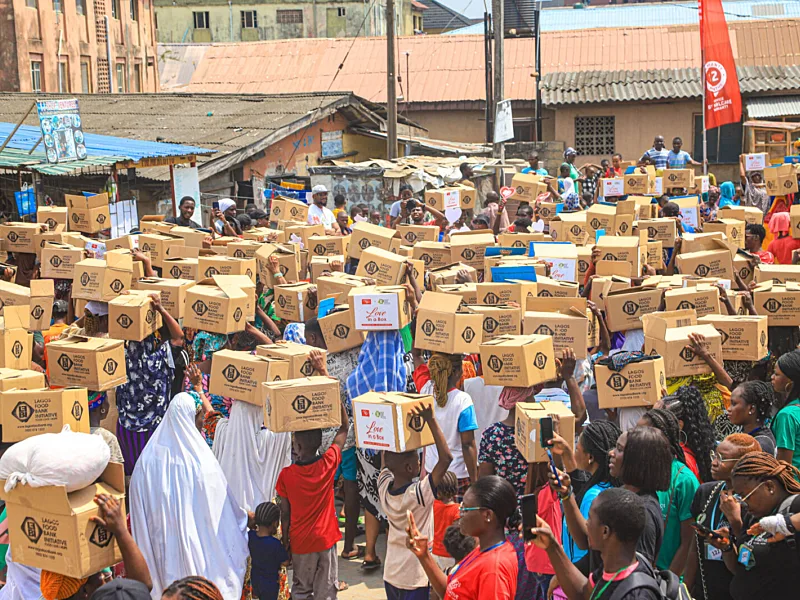
Obesity is no longer rising at the same speed everywhere.
A major global analysis finds the curve plateauing across many wealthy countries while continuing to accelerate across much of Africa, Asia and Latin America.
The shift matters because it turns obesity from a health statistic into a development warning: food prices, urban design, corporate practices and public policy are shaping who carries the next burden.
A Health Divide Moves Southward Now
The global obesity story is entering a new and more unequal phase. In many high-income countries, the rise in obesity has slowed, plateaued or, in a few cases, begun to edge downward.
However, across low- and middle-income countries, the trend is moving in the opposite direction.
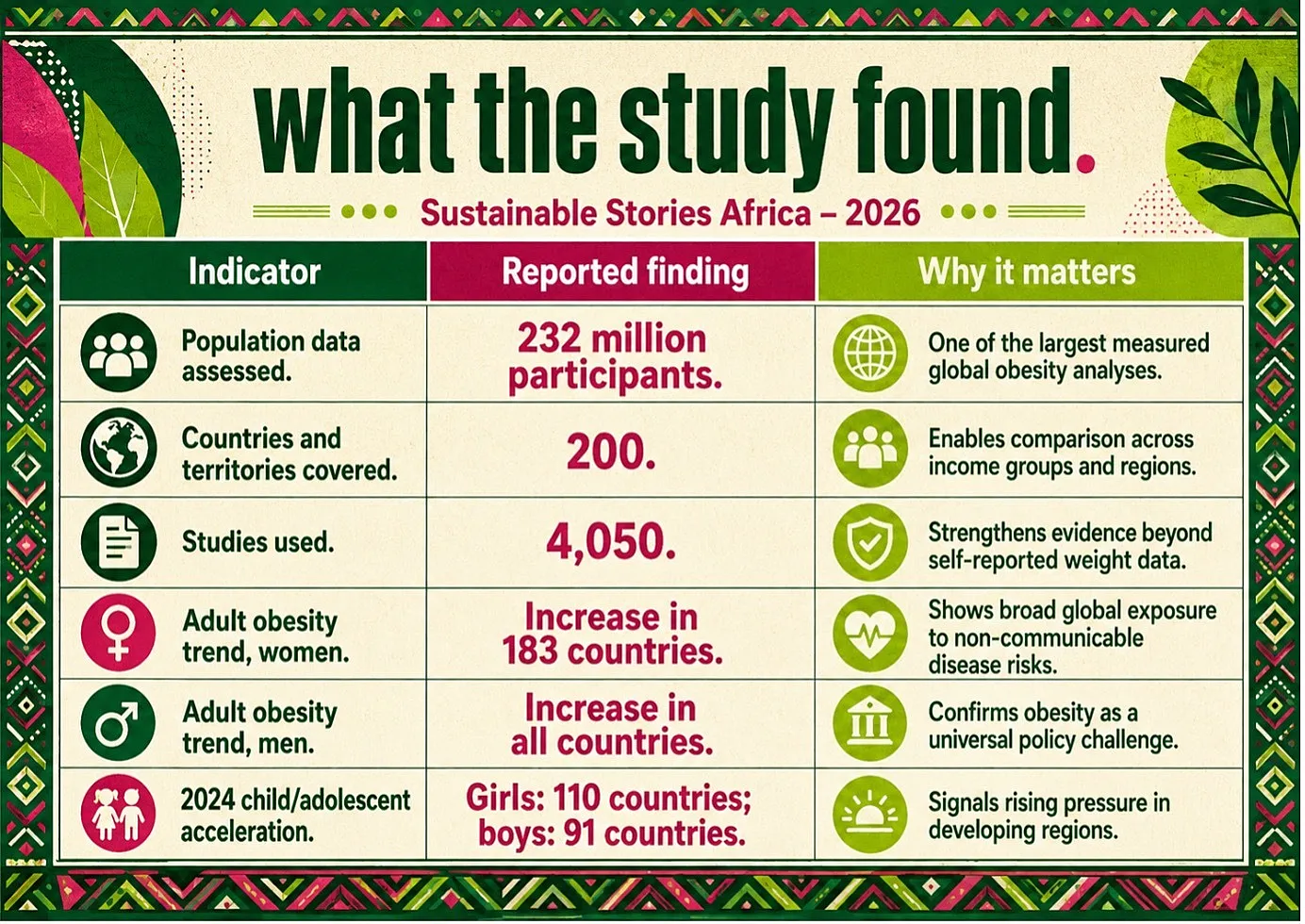
A new Nature study by the NCD Risk Factor Collaboration analysed 4,050 population-based studies that cover measured height and weight data from 232 million people in 200 countries and territories between 1980 and 2024.
The researchers tracked not only prevalence, but also the “velocity” of obesity, the annual change in prevalence measured in percentage points.
For African and emerging markets, the finding is not simply medical. It is developmental.
Obesity is now tied to the cost of healthy food, school nutrition, transport systems, urban planning, corporate food marketing, public health financing and the ability of governments to manage non-communicable disease risks before they overwhelm households and health systems.
A Global Curve Begins To Split
The central finding is stark: the obesity rise has decelerated in many developed economies, especially among children and adolescents, while it remains steady or is accelerating across much of the developing world.
Among school-aged children and adolescents, high-income countries began seeing a slowdown in the 1990s, with many reaching a plateau by the mid-2000s. In some countries, including Italy, Portugal and France, the data even suggest a small decline among young people since the 2000s.
But the plateau is not equal. In Japan, Denmark and France, obesity among girls has settled around 3% – 4%. In the United States, obesity among boys stands at about 23%, meaning countries can plateau at very different levels of health burden.
The sharper warning lies in low- and middle-income countries. The study found that obesity among children and adolescents was rising steadily or accelerating across most of Asia, Africa, Latin America, the Caribbean and Pacific Island nations.
In 2024, obesity velocity was higher than at any point since 1980 for girls in 110 countries and boys in 91 countries, most of them in lower-income regions.
Why The Plateau Is Not Universal
The study’s most important policy message is that there is no single global obesity pathway. As the authors note, “generalising the trends in obesity as a global epidemic masks” wide differences between countries, age groups and sexes.
In adults, the rise slowed in many high-income western countries around or after 2000, roughly a decade after similar shifts began among children.
Spain and Italy showed signs of adult declines for both sexes, while France showed a decline among women.
However, in many developing regions, the adult trend continued to rise, including across sub-Saharan Africa, Asia and Latin America.
The African implication is especially important. Some countries are still dealing with undernutrition, food insecurity and stunting.
Urban households are simultaneously exposed to cheaper processed foods, long commutes, limited safe public spaces and uneven access to preventive health care.
This is the double burden of malnutrition: hunger and excess weight can remain within the same economy, community or even household.
The research points to deeper systems behind the numbers. Obesity is shaped by food production, processing, storage, transport, household income, education, social norms, corporate practices and fiscal regulation.
That means the issue cannot be the reduction of personal choice. In African markets, it is also a question of whether healthy food is affordable, whether schools can provide nutritious meals, whether cities encourage physical activity, and whether regulators can respond to aggressive marketing of unhealthy products.
What Stronger Food Systems Can Deliver
The opportunity is clear: if obesity can plateau in some countries, it can be slowed elsewhere before the burden becomes more costly.
The study shows that the rise has been contained in several high-income settings and may have reversed slightly in a few.
That does not mean every country should copy the same model. It means policy can bend the curve.
For African governments, the benefits of early action are tangible. Stronger food systems can reduce future pressure on hospitals, protect household incomes, improve school attendance, support workforce productivity and lower the long-term costs of diabetes, cardiovascular disease and other non-communicable diseases linked to obesity.
For investors and development institutions, the issue also belongs inside ESG and sustainability frameworks.
Food companies, retailers, insurers, school-feeding suppliers, urban developers and public-health agencies all sit inside the same risk chain.
Markets that ignore nutrition risk may face higher health costs, lower productivity and greater inequality. Markets that act early can build healthier consumer systems and more resilient public budgets.
The Policy Shift Required Across Markets
The study does not present obesity as a problem solved by awareness campaigns alone. It points toward country-specific policy packages that address food affordability, access, physical activity and health care.
It also notes that while sugar-sweetened beverage taxes have shown measurable effects in some places, their impact has generally been small, and cannot fully explain earlier plateaus in high-income countries.
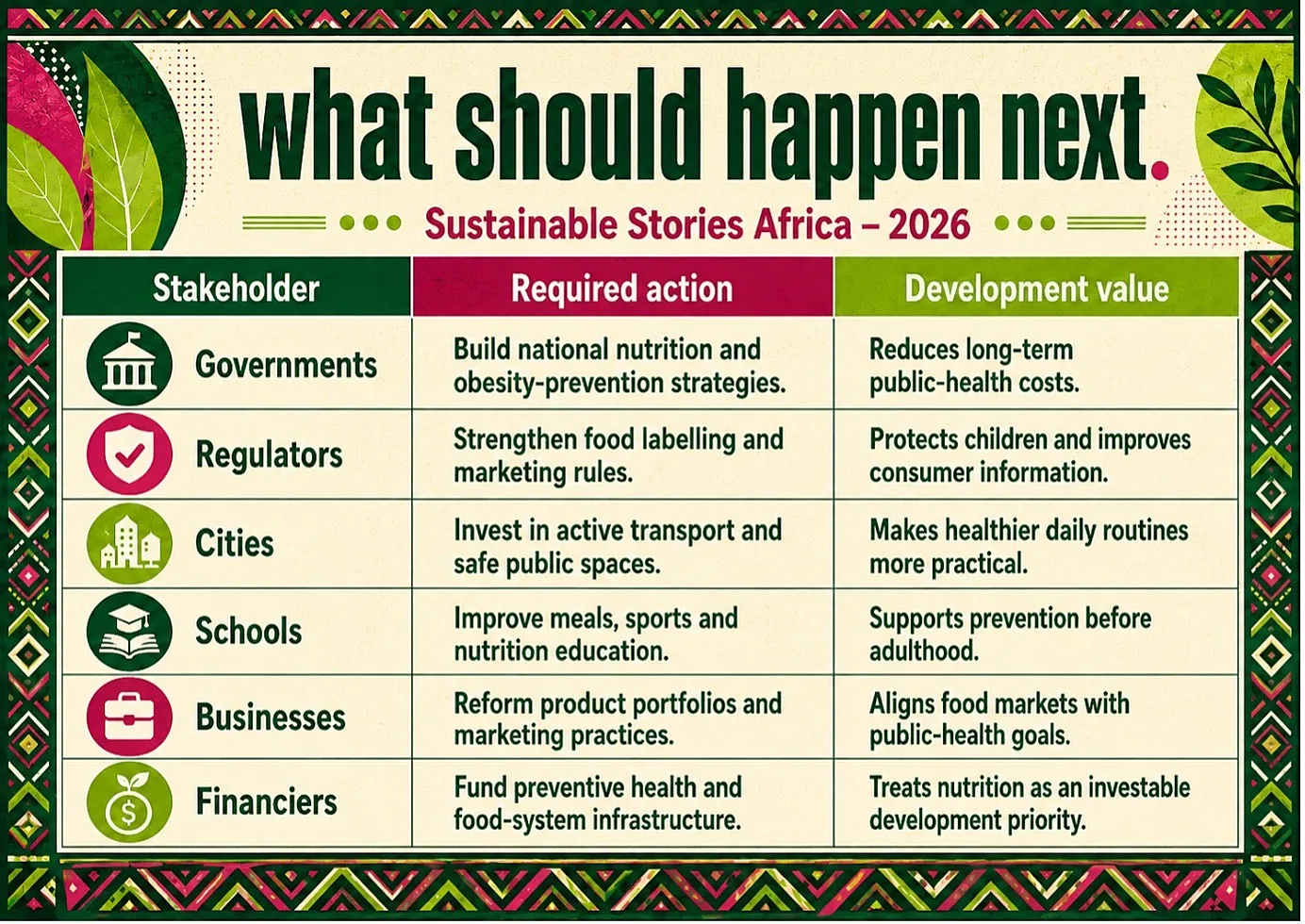
For Africa, the practical agenda is broader: healthier school meals, front-of-pack labelling, restrictions on unhealthy food marketing to children, safer walking and cycling infrastructure, better nutrition data, and fiscal policies that make nutritious foods more affordable.
Governments will also need stronger primary health systems to detect and manage obesity-related risks without pushing families into catastrophic spending.
There is also a governance lesson. If public policy focuses only on undernutrition, countries may miss the rapid growth of obesity until it has already become expensive to reverse. If policy focuses only on obesity, it risks ignoring hunger and affordability. The next generation of nutrition policy must handle both realities.
Path Forward – From Obesity Data To Prevention Systems
The path forward is prevention by design: healthier food environments, better urban planning, stronger school nutrition, fairer pricing and reliable national data.
African governments should treat obesity as a development risk, not an individual failure.
The priority now is to act before acceleration becomes entrenched. That means aligning health, agriculture, education, finance, and city policy around one objective: making healthier lives easier, affordable, and sustainable across income groups.