The world has made major health gains, but progress is too slow, uneven and increasingly vulnerable to financing shocks.
WHO’s 2026 health statistics show stalled universal health coverage, persistent disease burdens, and weak mortality data.
The core question is whether countries can protect health systems, financing and data before the final years of the SDG agenda close.
Health Progress Now Faces Harder Choices
The world is entering the final stretch of the Sustainable Development Goals with a health record that is both encouraging and deeply exposed.
The World Health Organisation’s World Health Statistics 2026 report shows that coordinated action has reduced maternal and child mortality, HIV infections, tuberculosis incidence, tobacco use and alcohol consumption over the past two decades.
These gains prove that public health investment works.
However, the report also delivers a warning with direct relevance for Africa and other emerging markets: progress is too slow to meet the 2030 targets, financing is becoming less predictable, and weak health data systems are making it harder for governments to know where deaths are happening, why they are happening, and how policy should respond.
Pandemic Setback Meets New Financing Emergency
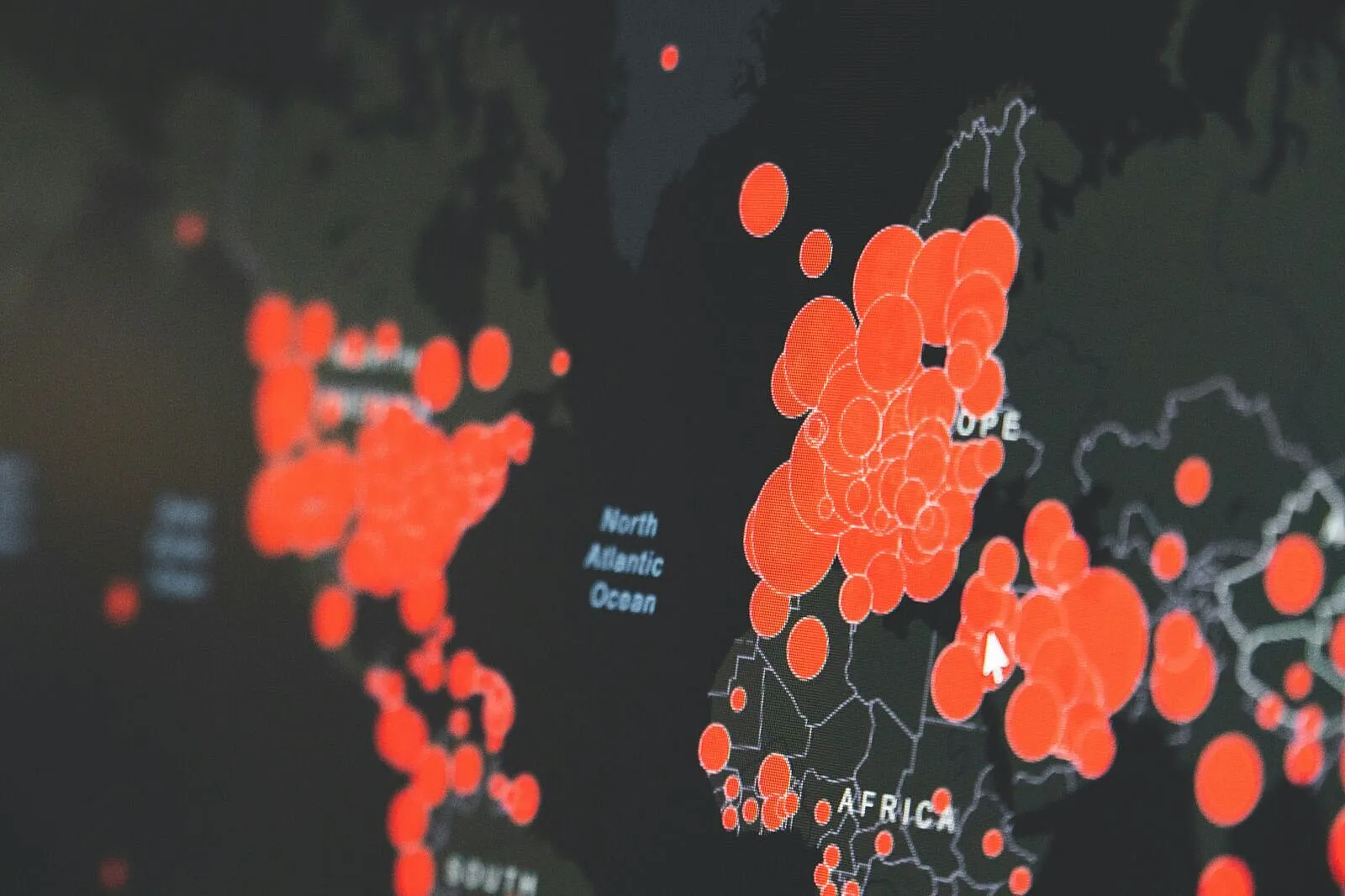
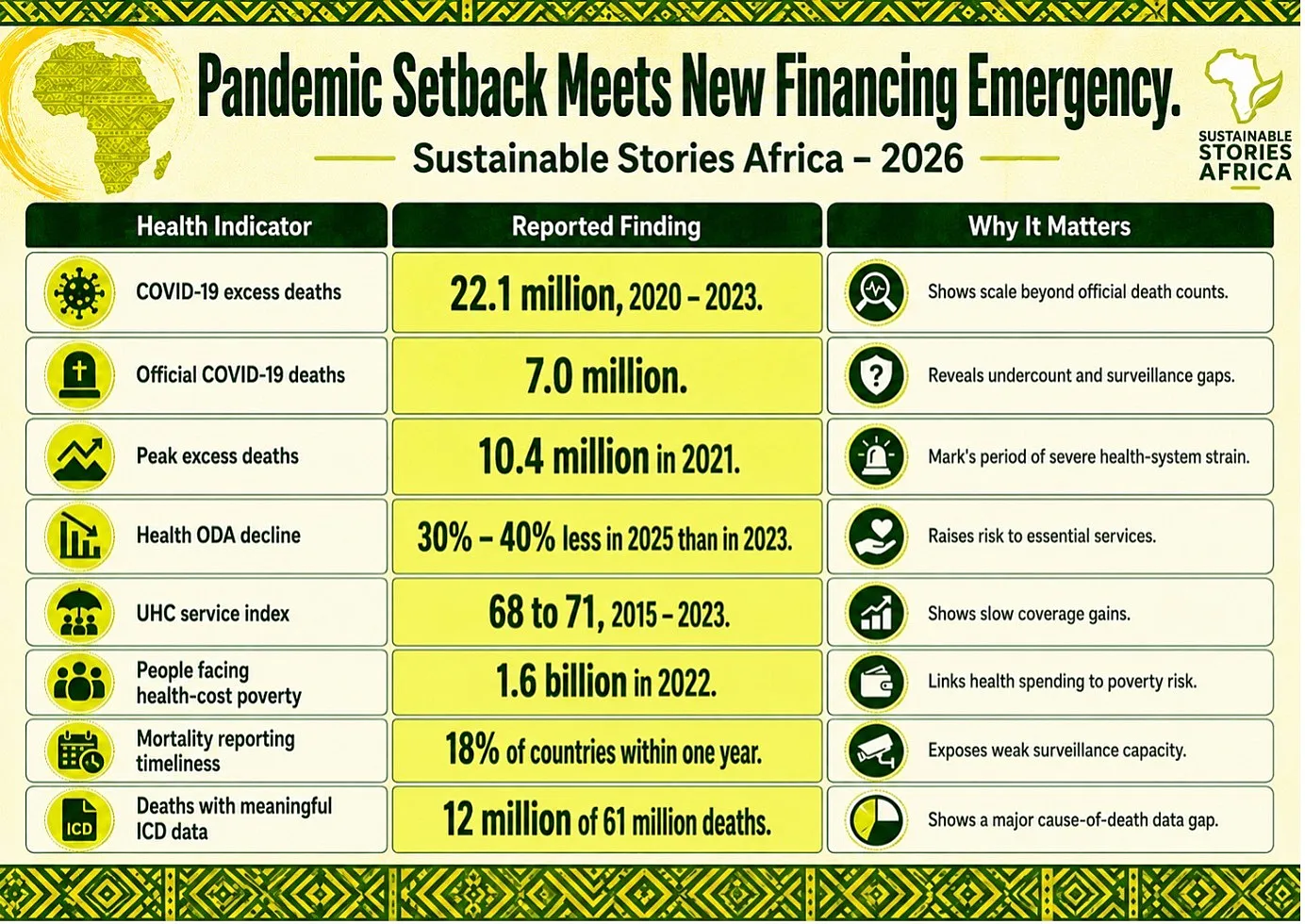
The most striking figure in the WHO's latest report is 22.1 million, the estimated number of excess deaths associated with COVID-19 between 2020 and 2023, roughly three times the 7.0 million officially recorded.
The pandemic erased nearly a decade of gains in global life expectancy and healthy life expectancy by 2021.
Recovery has begun, but unevenly. By 2023, only female global life expectancy at birth had returned to pre-pandemic levels. Male life expectancy and healthy life expectancy remained below their pre-COVID baselines.
WHO Director-General Dr Tedros Adhanom Ghebreyesus frames the moment plainly: SDG health-related progress is insufficient, uneven and increasingly vulnerable to systemic shocks.
The financing picture compounds the concern. Official development assistance for health was estimated to be 30% to 40% lower in 2025 than in 2023, a reduction that threatens essential services, medicine access and vaccine supply across low- and middle-income countries already managing debt stress, climate shocks and fragile public finances.
For Africa, these figures are not statistical abstractions. For a mother seeking skilled birth attendance, a malaria patient awaiting treatment or a family choosing between medicine and food, aid reductions determine the terms on which survival, poverty and opportunity are negotiated.
Disease Gains Hide Uneven Health Burdens
Global progress on infectious diseases is real but insufficient. Between 2010 and 2024, new HIV infections fell by 40% worldwide, tuberculosis incidence dropped 12% since 2015, and interventions for neglected tropical diseases reached 36% fewer people requiring treatment.
Africa has outpaced global averages on HIV and tuberculosis, reducing HIV incidence by 70% and tuberculosis incidence by 28% since 2015; however, it still carries 65% of the global HIV burden.
Malaria is moving in the wrong direction. WHO estimates 282 million cases in 2024, with global incidence up 8.5% since 2015. Africa's malaria incidence rate stands at 238 cases per 1,000 population at risk, nearly four times the global rate.
The continent also accounted for 68% of new hepatitis B infections globally in 2024.
Nutrition compounds the crisis. Child stunting affected 150.2 million children globally in 2024.
Africa was the only WHO region in which absolute numbers increased, rising from 55.2 million in 2012 to 59.1 million in 2024 as population growth outpaced the decline of prevalence.
Environmental health gaps remain vast. In 2024, 2.1 billion people lacked safely managed drinking water and 3.4 billion lacked safely managed sanitation.
On clean cooking, Africa recorded the lowest access globally, with 91% of rural populations still relying on polluting fuels and technologies, an equity crisis hiding in plain sight.
Universal Coverage Can Protect Fragile Households
Universal health coverage, quality care for everyone, everywhere, without financial hardship, remains the most powerful development promise in global health.
However, progress has stalled. The global UHC service coverage index rose only from 68 in 2015 to 71 in 2023, roughly one-third of the pace achieved between 2000 and 2015.
At this rate, the index is projected to reach just 74 by 2030, well short of what the SDG era demands.
The human cost of that shortfall is measurable. Approximately a quarter of the global population faces financial hardship from out-of-pocket health spending, and 1.6 billion people were living in or pushed into poverty by health expenses as of 2022.
For African households, a single hospital admission, emergency surgery or chronic disease treatment can drain savings, force asset sales or pull children out of school.
Progress on maternal and child health has also slowed. Despite a 40% reduction in maternal mortality and 51% reduction in under-five mortality since 2000, the 2023 maternal mortality ratio remains nearly three times the SDG target.
Childhood vaccine coverage for four key vaccines remains below the 90% global benchmark, leaving immunity gaps that continue driving outbreaks.
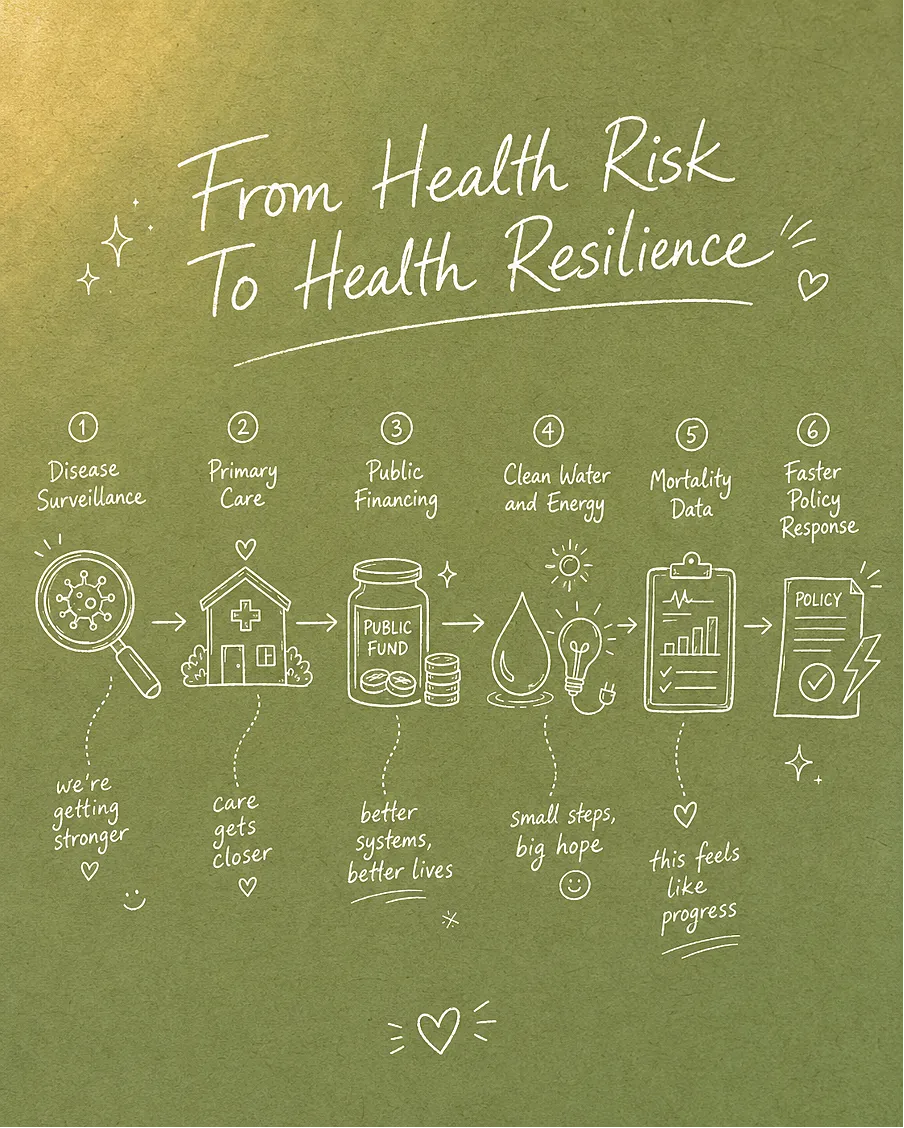
The pathway forward is not complex; stronger primary healthcare, public financing, reliable vaccine systems and skilled health workers can translate health spending into household and national resilience.
This is the health system's story behind the numbers. Countries not only need more clinics. They need systems that can detect risks early, finance care fairly, protect households and learn from every recorded death.
Data Systems Must Guide Health Investment
Health systems cannot improve what they cannot measure. One of the WHO report's most urgent warnings concerns the state of global health data and the consequences of its absence.
As of the end of 2025, only 18% of countries reported mortality data within one year. Another 32% had never submitted cause-of-death data to WHO. Of an estimated 61 million global deaths in 2023, only 21 million were reported with cause-of-death information, and just 12 million carried meaningful ICD-coded data.
Too many deaths remain administratively invisible.
For Africa, this is simultaneously a governance failure and an investment gap.
Without strong civil registration and vital statistics systems, ministries of health cannot accurately locate maternal death concentrations, track rising disease burdens, assess climate-related mortality or verify whether emergency investments are reaching the right communities.
The action agenda is practical and multi-stakeholder.
Governments must protect health budgets, expand pooled financing, reduce out-of-pocket spending, strengthen primary healthcare, invest in health workers and sustain vaccination programmes. Civil registration systems, including death registration, medical certification and timely ICD-coded reporting, require deliberate investment.
Development partners must avoid sudden cuts in financing that destabilise essential services.
Climate, health and social protection financing must also be better integrated, as disease risk, food insecurity, water access, air pollution and increasing poverty move in the same direction.
Civil society's role is equally critical: demanding transparent health budgets, monitoring service delivery and holding systems publicly accountable when they fail.
Path Forward – Finance Health, Count Every Life
The priority is to rebuild momentum with predictable financing, stronger primary health care, better disease surveillance and protection from out-of-pocket costs.
Countries must also count every life as better. Stronger mortality data, civil registration and digital health systems will help governments target resources, track inequality and prepare for future shocks before progress is lost again.