Renewable energy is no longer just a mitigation tool. New evidence from the International Renewable Energy Agency (IRENA) shows it is fast becoming a measurable pillar of climate adaptation, reshaping how countries assess risk, resilience, and investment priorities.
Using a rigorous metrics-based framework, the report reframes renewables as adaptation infrastructure, which is capable of lowering climate exposure, reducing vulnerability, and narrowing the widening adaptation finance gap, particularly across climate-exposed African economies.
When Adaptation Finally Gets Measured
Climate adaptation has long suffered from a credibility gap. While mitigation outcomes can be expressed in clear metrics, such as tonnes of emissions avoided or megawatts of installed capacity, adaptation benefits, including resilience, avoided losses, and reduced vulnerability, have remained difficult to quantify. This ambiguity has left adaptation persistently under-funded, under-prioritised, and weakly embedded in national planning frameworks.
An International Renewable Energy Agency (IRENA) report challenges that imbalance. Its 2025 publication, Renewable Energy in Climate Change Adaptation: Metrics and Risk Assessment Framework, proposes a structured, indicator-driven approach that positions renewable energy not only as a mitigation solution, but as a measurable and investable adaptation asset.
For African countries facing accelerating climate hazards, fragile infrastructure, and constrained public finances, the implications are material. The framework highlights ways to integrate renewable energy into adaptation strategies with the same analytical rigour already applied to mitigation, bringing climate resilience into the language of risk, metrics, and capital allocation.
Adaptation Finance Is Dangerously Mispriced
The scale of the adaptation challenge is widening faster than the response. Climate-related disasters have increased fivefold globally since 1970, while economic losses from climate impacts are projected to reach tens of trillions of dollars by middle of this century if current trajectories persist. However, adaptation finance remains a marginal share of global climate fund flows.
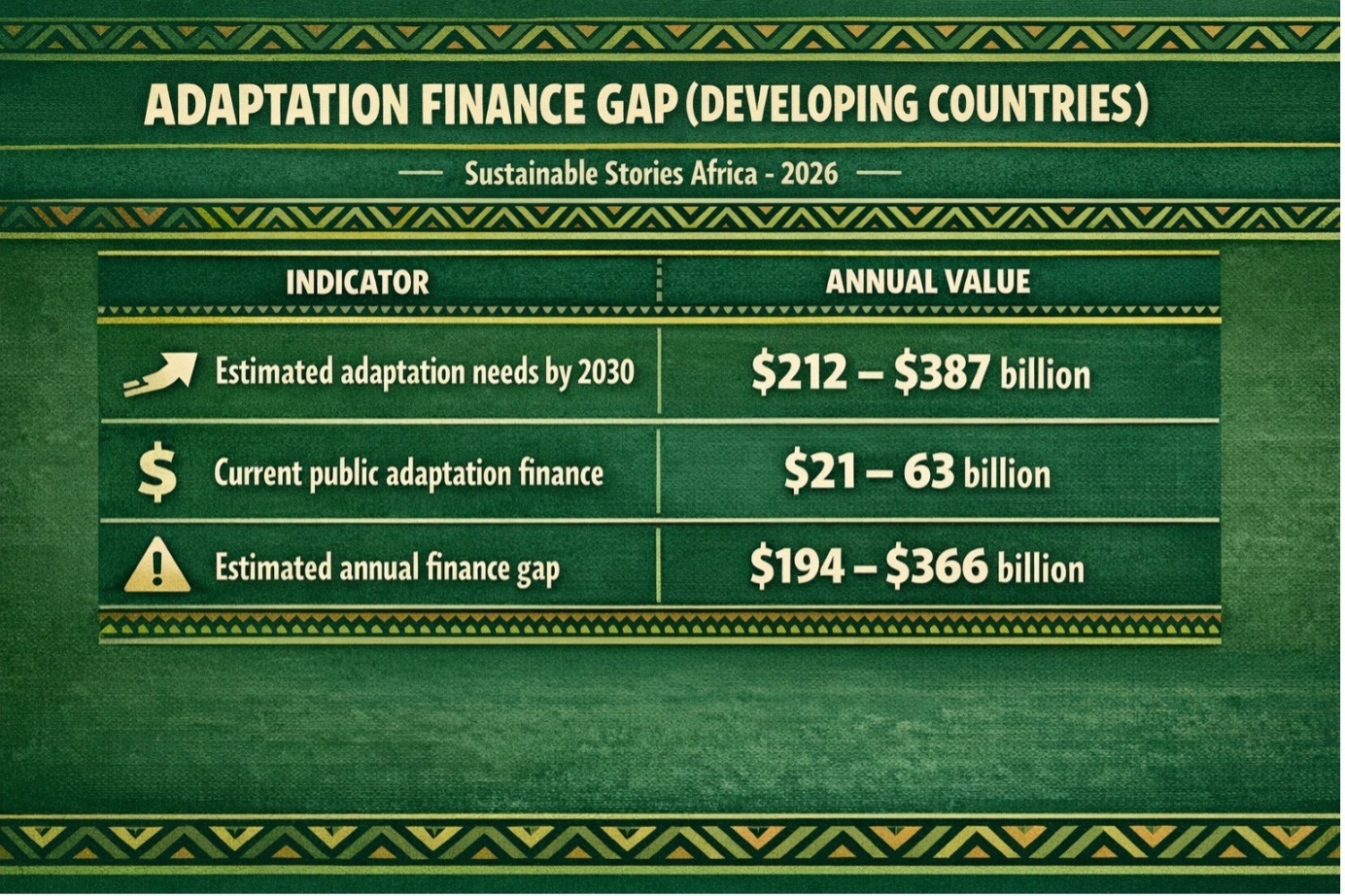
In 2021–2022, total climate finance nearly doubled to about $1.3 trillion annually. Adaptation finance, however, amounted to just USD 63 billion, which represented either 29.72% or 16.28% of the estimated $212 – $387 billion per year required by 2030 for developing countries alone.
The resulting adaptation finance gap, now estimated at up to $366 billion annually, exposes a systemic failure in how resilience is valued, measured, and funded.
IRENA's central argument is that this gap is not only financial, but methodological. Adaptation struggles to attract capital because its benefits are poorly quantified. Without credible metrics, adaptation remains difficult to compare, prioritise, and defend within budget processes increasingly shaped by fiscal stress and competing development needs.
Turning Climate Risk Into Measurable Variables
The report's core contribution is its risk-assessment framework, grounded in the Intergovernmental Panel on Climate Change (IPCC) definition of climate risk as the interaction of three elements: hazards, exposure, and vulnerability.
IRENA operationalises this through the impact-chain method, translating complex climate risks into standardised, unit-free indicators.
Each indicator is normalised on a scale between 0 and 1, allowing policymakers to compare risks across sectors, regions, and scenarios. This approach transforms adaptation from a qualitative aspiration into a measurable planning exercise, one that can be monitored, reported, and verified over time.
To demonstrate the framework in practice, IRENA applied it to a detailed case study of seawater desalination, an increasingly critical adaptation strategy in water-stressed regions.
Desalination is highly energy-intensive, creating a risk feedback loop: climate stress increases water demand, which raises energy demand and emissions if powered by fossil fuels.
The analysis showed that integrating renewable energy into desalination systems significantly lowers overall climate risk scores by reducing greenhouse-gas exposure, stabilising energy costs, and avoiding maladaptive pathways that lock countries into carbon-intensive infrastructure.
Adaptation Finance Gap (Developing Countries)
| Indicator | Annual Value |
|---|---|
| Estimated adaptation needs by 2030 | $212 – $387 billion |
| Current public adaptation finance | $213 – 63 billion |
| Estimated annual finance gap | $194 – $366 billion |
Why Renewables Strengthen Adaptive Capacity
Beyond finance, the framework shows how renewable energy directly supports climate adaptation.
It tackles risk on several fronts: decentralising supply, thereby reducing reliance on climate-vulnerable fuel chains, stabilising essential services such as water pumping, cooling, healthcare, and communications, and boosting adaptive capacity by lowering operating costs and exposure to fossil-fuel price shocks.
Though tested with European island data, IRENA stresses the methodology is transferable to Francophone and Sub-Saharan Africa, where water stress, agricultural losses, and energy insecurity converge.
This enables governments to anchor renewables in NAPs and NDCs, and to meet stricter, results-based climate finance criteria.
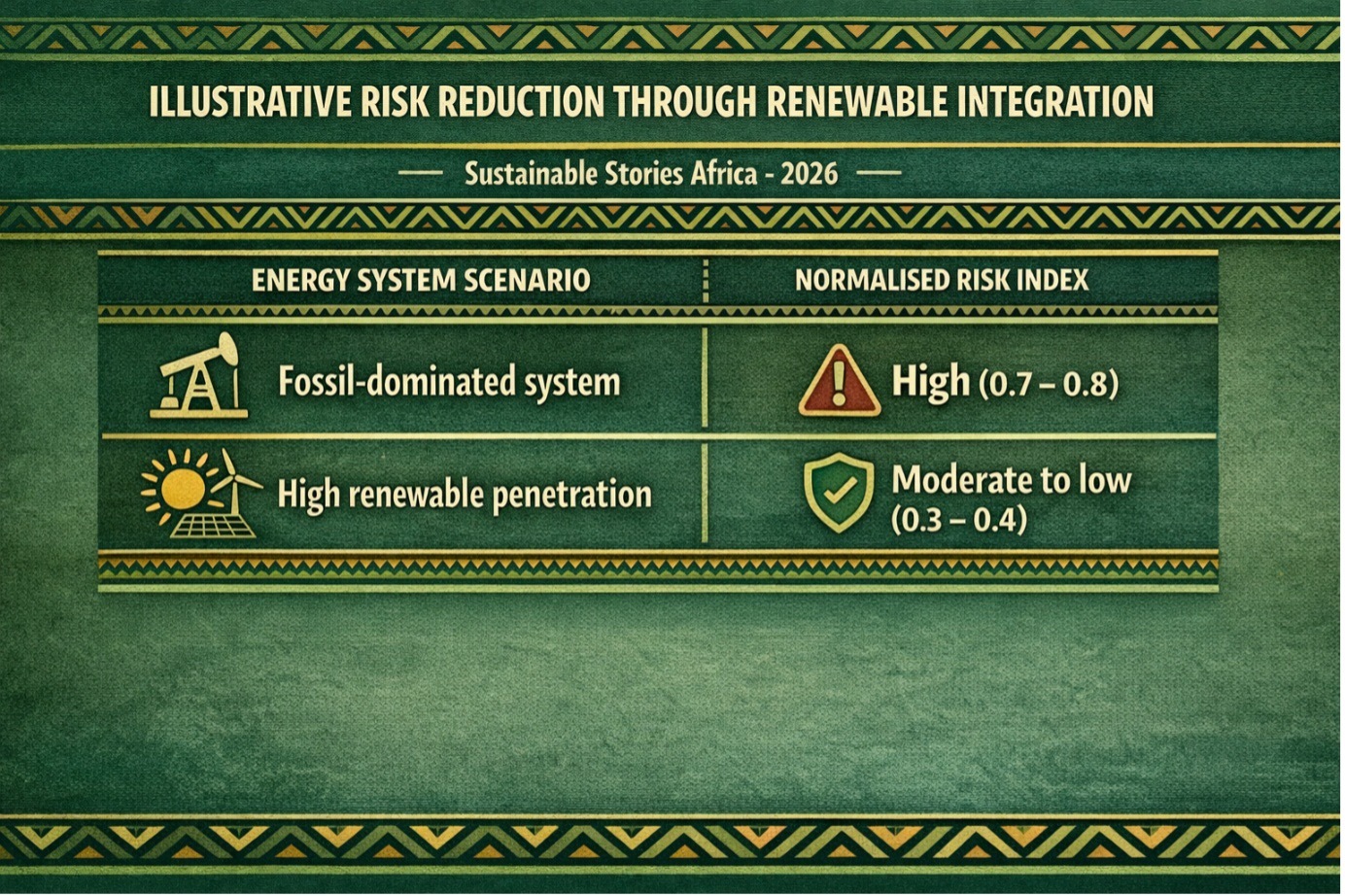
Illustrative Risk Reduction Through Renewable Integration
| Energy System Scenario | Normalised Risk Index |
|---|---|
| Fossil-dominated system | High (0.7 - 0.8) |
| High renewable penetration | Moderate to low (0.3 - 0.4) |
From Pilot Projects To Policy Scale
IRENA's message to policymakers is clear: adaptation must move from narrative to numbers. Governments are encouraged to adopt risk-based metrics in national planning, integrate renewable energy into sectoral adaptation strategies, and align adaptation indicators with the financial frameworks used by development banks and climate funds.
Without this shift, adaptation risks remain reactive, fragmented, and politically vulnerable, particularly in African economies already balancing debt pressures, social demands, and climate shocks. With it, adaptation can become a bankable, accountable pillar of development strategy.
PATH FORWARD – Measuring Resilience To Unlock Capital
IRENA's framework reframes renewable energy as climate adaptation infrastructure, offering countries a way to quantify avoided risk, justify investment, and attract capital. The priority now is scaling pilots, localising data, and embedding metrics into national institutions.
If adopted, this approach could realign climate finance with climate realities, thereby making adaptation measurable, investable, and resilient by design.