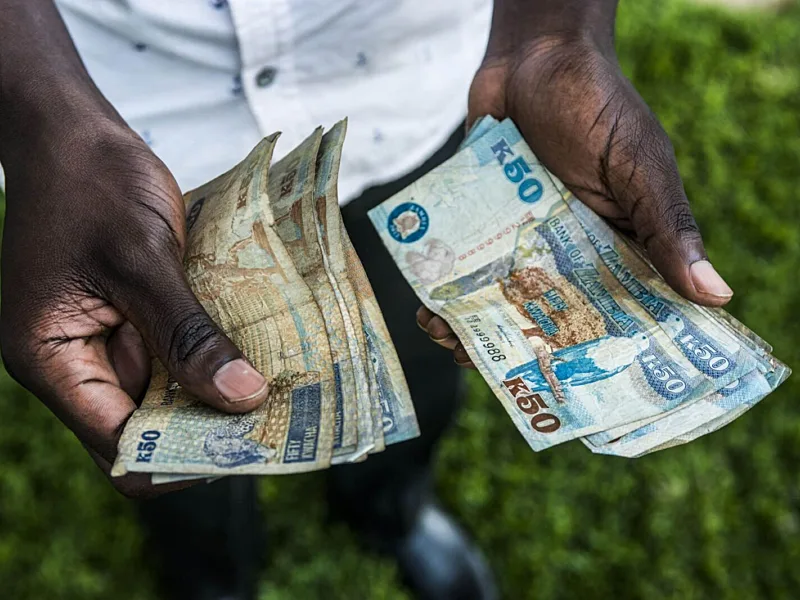
China’s zero-tariff access for 53 African countries has opened the door to one of the world’s largest consumer and industrial markets.
However, the ACCPA dialogue warned that market access alone will not transform Africa’s trade position unless governments, firms and financiers fix standards, skills, logistics, processing capacity and regional value-chain coordination.
Market Access Cannot Transform Trade Alone
China’s full implementation of zero-tariff treatment for imports from 53 African countries with which it has diplomatic relations has become a defining test of Africa’s trade strategy: can the continent move beyond selling raw materials and build export systems that create jobs, technological transfer, and industrial depth?
The policy was discussed at an Africa-China Centre for Policy and Advisory dialogue convened as part of ACCPA’s broader work on Africa-China trade policy.
Paul Frimpong of ACCPA opened the session, which featured a keynote from Professor Xiao Tang, Chair and Professor in the Department of International Relations at Tsinghua University, whose work includes China-Africa economic cooperation and global modernisation.
The panel brought together Professor Wang Jie, Research Professor at Peking University’s National School of Development and Deputy Director of its Centre for African Studies; Dr Mikatekiso Kubayi, a South African international affairs and global policy expert; and Dr Rosemary Moneya, Senior Research Fellow at ACCPA and lecturer in Tanzania.
Their shared message was direct: zero tariffs are important, but the real prize is not duty-free entry.
It is whether African economies can use the opening to build productive capacity, improve standards compliance, scale agro-processing, deepen AfCFTA-linked supply chains and negotiate a more strategic position in global trade.
A Tariff Break Meets Production Reality
China's zero-tariff offer to African exports is a starting point, not a destination. That was the central message from the dialogue, where Professor Tang framed the concession as both economic and political, notably absent from the governance conditionalities often attached to Western preferential trade arrangements.
Near-term gains may emerge in agriculture, but the long-term test is whether Africa can link exports to value-chain integration.
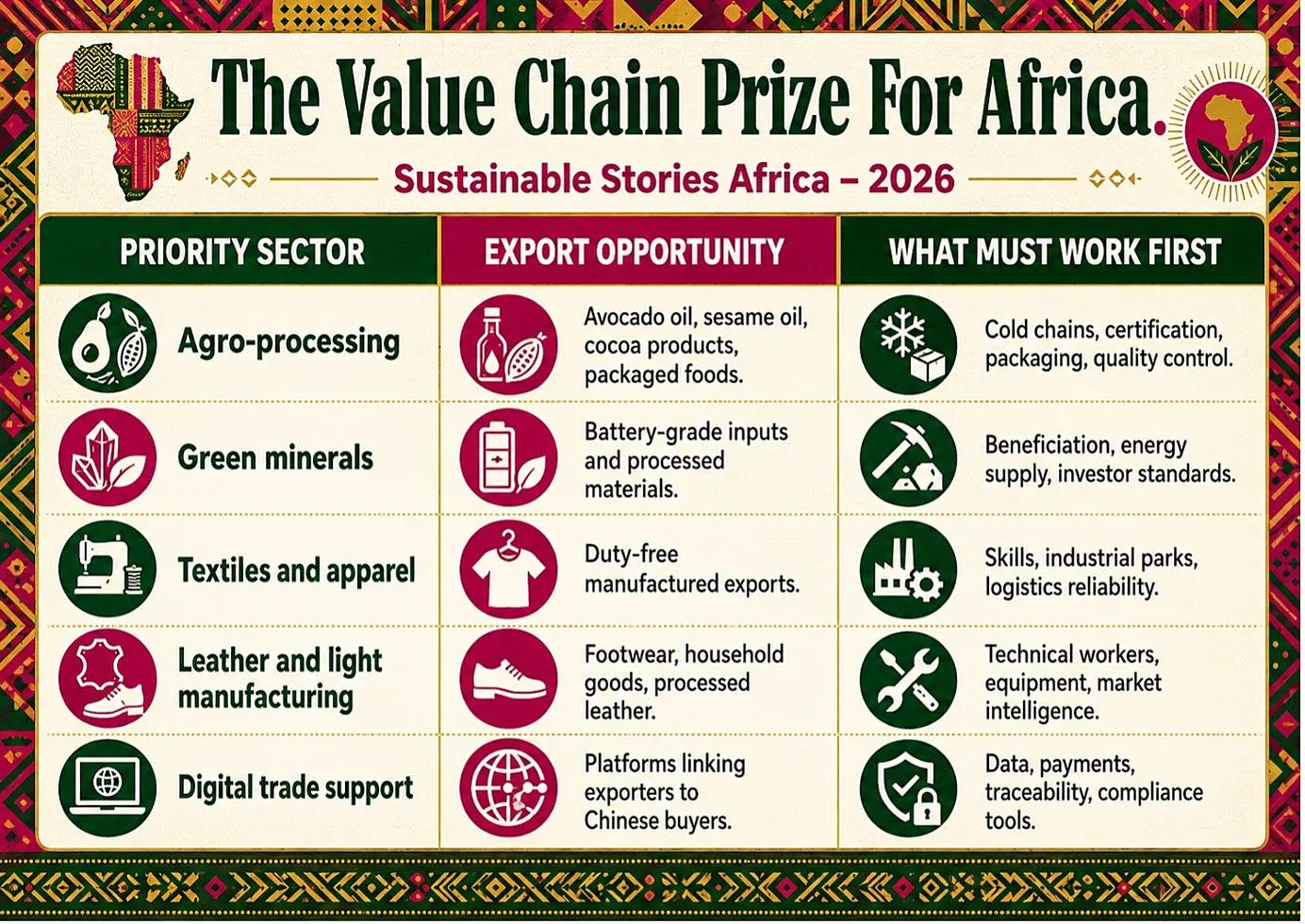
A tariff reduces market entry costs, but it cannot build cold chains, certify food products, train operators, upgrade port corridors or finance processing infrastructure. Those are the systems that convert access into competitive advantage.
Professor Wang sharpened the challenge: Do African countries have the readiness to walk through that door?
Products including coffee, cocoa, seafood, green minerals and processed agricultural goods stand to benefit, but tariff removal alone does not guarantee development outcomes.
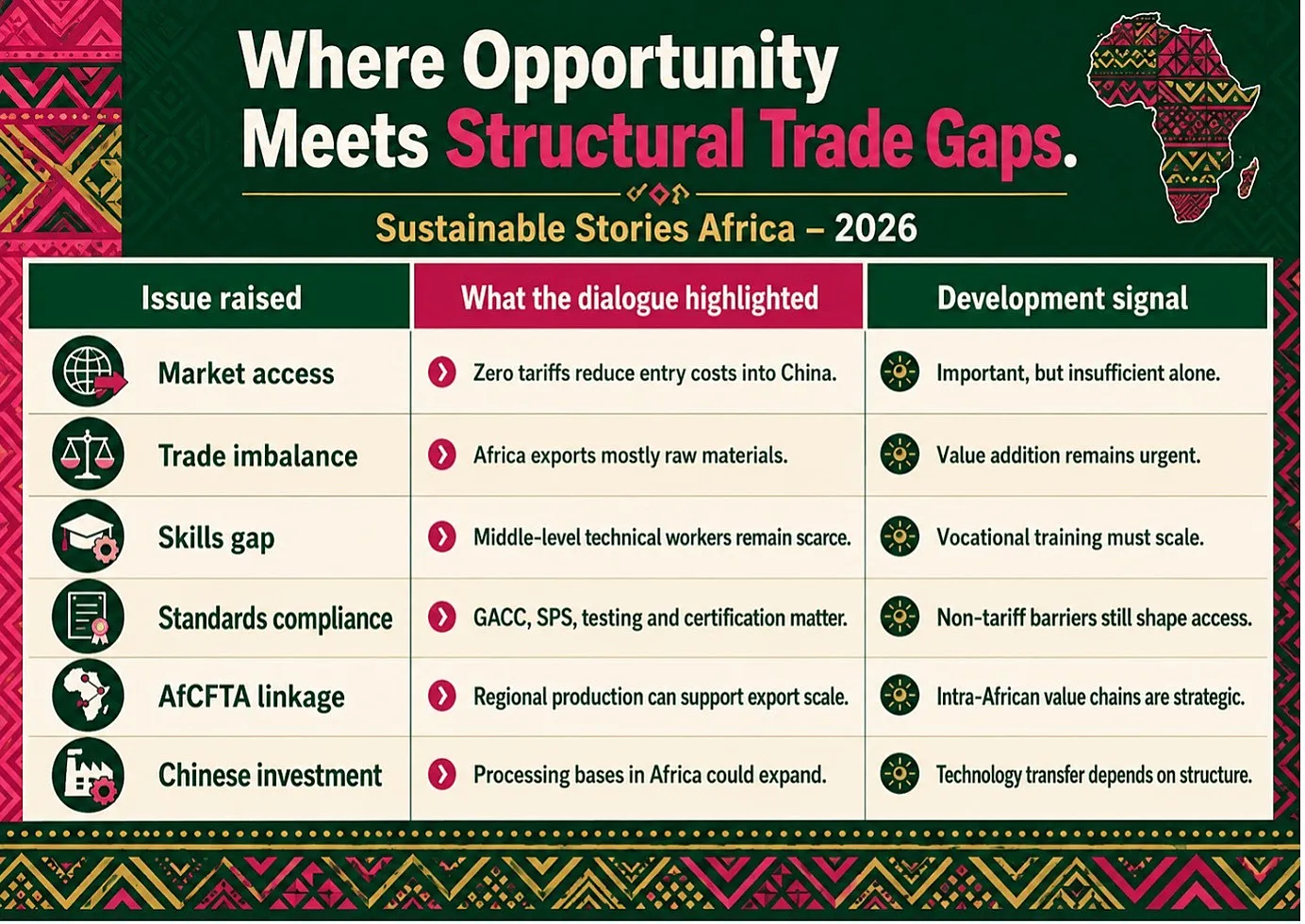
Where Opportunity Meets Structural Trade Gaps
The discussion repeatedly returned to one structural imbalance: Africa’s exports to China remain heavily concentrated in raw materials.
Chinese exports to Africa are dominated by higher-value manufactured goods, machinery, electronics and green technology equipment.
Professor Wang cited trade data showing China-Africa trade above $300 billion, with Africa’s trade deficit widening to about $100 billion.
She also noted that Chinese exports to Africa had grown much faster than African exports to China, reflecting the deeper production gap beneath the tariff debate.
For African exporters, the implication is practical.
- A cocoa farmer, sesame cooperative, avocado grower or mineral supplier may gain from tariff-free access only if the product can meet Chinese buyer requirements, quality controls, packaging standards and logistics timelines.
- A product that cannot pass inspection, arrive fresh, or meet consistent volume and traceability requirements remains commercially constrained even when tariffs fall to zero.
Dr Moneya brought this down to the policy level, arguing that African governments must shift “from access to advantage.” She pointed to the need to comply with China’s customs and sanitary and phytosanitary standards, to register through relevant Chinese systems, and to strengthen the preferential window to build permanent industrial capacity.
Her Tanzania example was instructive. Rather than exporting avocados as raw fruit, producers could process them into avocado oil. Instead of shipping sesame seeds, special economic zones could support sesame oil production.
That shift would move countries from commodity dependence toward branded, processed, higher-value exports.
The Value Chain Prize For Africa
The positive vision from the dialogue was clear: if managed well, China’s zero-tariff policy could help Africa move from commodity shipment to value-chain participation.
Dr Kubayi described the policy as a major step because China is not just a large consumer market; it is also a major industrial and technology power.
For Africa, he said, the opportunity should be read through self-reliance, innovation, knowledge production and productive capacity, not only through export volume.
That point is critical for sustainability and ESG outcomes. Value chains that process agricultural produce locally can support jobs, improve rural incomes, reduce post-harvest losses and strengthen food-sector resilience.
Green mineral beneficiation can help African economies capture more value from energy-transition supply chains. Regional manufacturing can reduce dependence on imported finished goods while improving industrial learning.
Professor Tang’s Vietnam comparison sharpened the message. He noted that Vietnam’s trade with China is large not simply because it exports to China; however, because the two economies are linked through deeper two-way value-chain integration.
Africa, he argued, should not think only about what to export to China, but about how trade, cash, technology and capital flows can become more integrated.
That is where AfCFTA becomes important. Dr Moneya suggested that African countries should use continental trade arrangements to combine production strengths, for example, cotton from one country feeding textile manufacturing in another before exports reach China duty-free.
This would turn the zero-tariff offer into a regional industrialisation tool rather than a country-by-country export race.
From Market Access To Export Advantage
The dialogue produced a clear action agenda. African governments must develop export-readiness plans tied to specific products, identifying what can enter China immediately, what requires upgrading and what needs processing investment before becoming competitive.
- Standards infrastructure must move to the centre of trade policy. Testing laboratories, certification systems, traceability platforms and customs documentation are now as critical as tariff negotiations. Without them, non-tariff barriers will neutralise duty-free access.
- Vocational and technical training must align with export strategy, covering logistics, agribusiness, electronics and green products.
- Professor Wang specifically highlighted Luban Workshops as models requiring significant expansion.
- On investment, Chinese firms facing domestic market pressure may have stronger incentives to establish African processing bases, creating potential pathways for technology transfer and local entrepreneurship if structured well.
Governance remains the underlying test. Dr Kubayi identified contract management, illicit financial flows, logistics governance and institutional coordination as factors that could either unlock or undermine the opportunity.
The next step is not celebration; it is the implementation discipline across governments, regional blocs, development finance institutions and training systems.
Path Forward – Build Capability Before Volume
Africa’s success should not be measured by export volume alone. It should be measured by value added, jobs created, standards met, firms upgraded, and regional supply chains strengthened.
The zero-tariff opening can advance sustainable development only if access becomes capability.
That means processing more at home, training workers, enforcing standards, linking AfCFTA to China trade, and building institutions strong enough to turn opportunity into long-term industrial advantage.