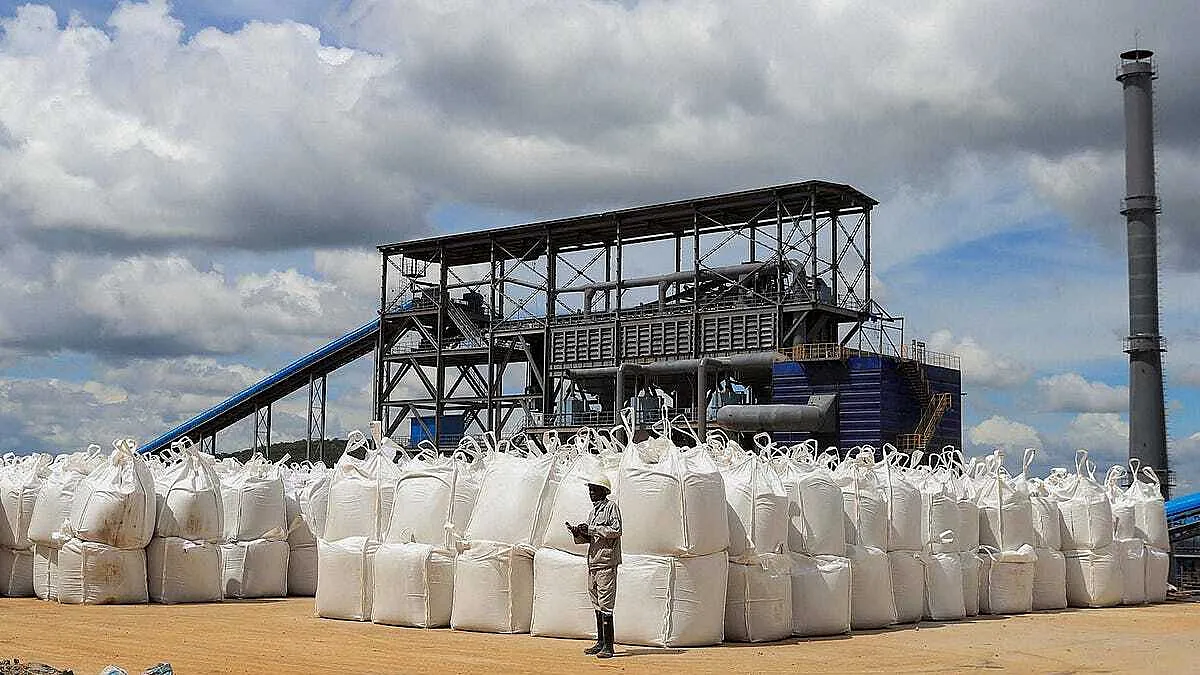
Zimbabwe holds Africa’s largest lithium reserves and has become a strategic frontier in the global battery race, driven largely by Chinese investment and rising demand for electric vehicles and energy storage.
However, a report warns that the boom will not automatically translate into jobs, infrastructure, community benefits or industrial upgrading unless governance, ESG oversight and value-addition policies move faster than extraction.
Lithium Boom Tests Zimbabwe’s Development Promise
Zimbabwe’s lithium boom is becoming a defining test of whether Africa’s transition minerals can power local development, not just global decarbonisation.
A March 2026 report by the Boston University Global Development Policy Centre argues that Zimbabwe is well-positioned to lead Africa’s lithium economy; however, only if it moves from extraction and bulk concentrate exports toward processing, manufacturing, infrastructure investment and stronger community benefit-sharing.
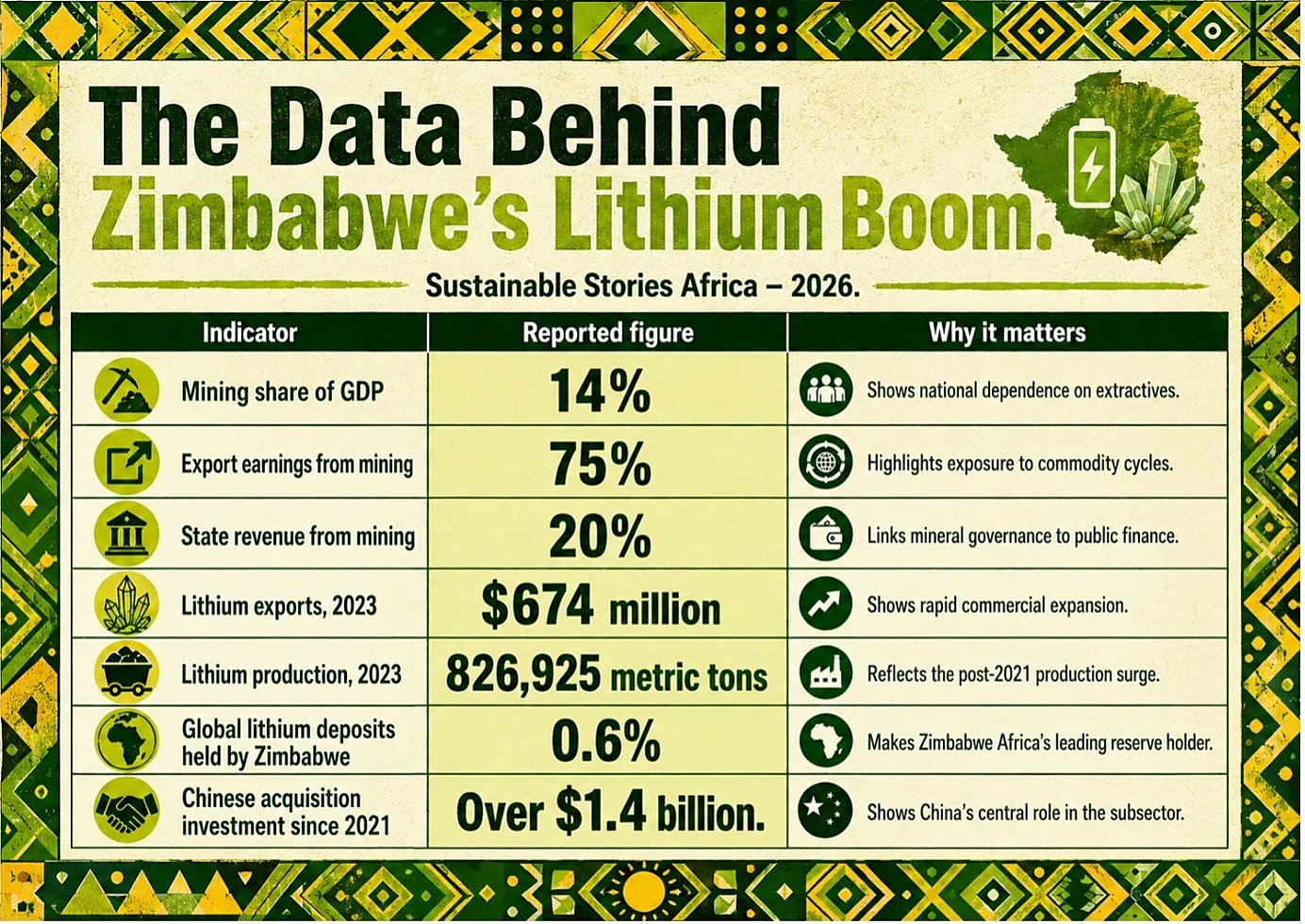
The mining sector already accounts for 14% of GDP, 75% of export earnings and 20% of state revenues, while lithium contributed $209 million to mining exports in 2023.
The stakes reach beyond Zimbabwe. As electric vehicles, battery storage and renewable energy systems expand, lithium has become one of the minerals at the centre of the global energy transition.
The question is whether Zimbabwe can convert this strategic resource into a durable industrial base, or whether communities near mines will relieve the dust, road damage and social disruption in the wake of most of the value leaving the country.
A Green Mineral Becomes Governance Test
Zimbabwe’s lithium sector has advanced faster than most of Africa’s; however, the report’s central warning is clear: the country’s policy framework is not yet strong enough to capture the full value of the boom.
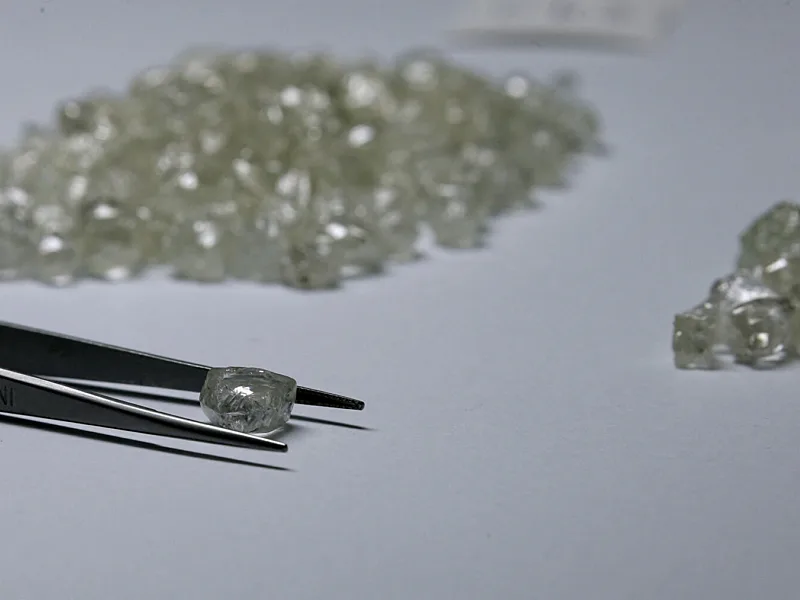
Zimbabwe holds 0.6% of global lithium deposits, making it Africa’s largest lithium reserves. Its lithium production has expanded sharply since 2021, driven mainly by Chinese mining companies and global demand for battery materials.
The International Finance Corporation identifies lithium mining as one of three sectors with strong potential for private investment and structural transformation in Zimbabwe.
However, the current model remains heavily extraction-led. Zimbabwe’s primary lithium export is bulk concentrate with about 6% lithium content.
The country banned raw lithium exports in 2022; however, the report says those measures are automatic to guarantee meaningful beneficiation or local manufacturing.
Until the new Mines and Minerals Bill is enacted, the sector remains governed by the colonial-era 1961 Mines and Minerals Act.
For communities, the governance gap is not theoretical. It shows up in poor roads, limited consultation, dust, concerns over land use, weak grievance systems and frustration that mining profits are not visibly changing local livelihoods.
The Data Behind Zimbabwe’s Lithium Boom
Zimbabwe's lithium sector has grown rapidly, but the human and environmental costs at the community level tell a more complex story.
Lithium production rose from 76,517 metric tons in 2018 to 826,925 metric tons in 2023, with export values climbing from $18.2 million to $674 million over the same period.
Chinese companies have invested over $1.4 billion in lithium projects since 2021, with licenses awarded in 2023 that will enable a further $2.79 billion in investment.
However, a survey of 230 community members across six operational sites, including Arcadia, Bikita Minerals, Sabi Star, Zulu, Kamativi and Sandawana, reveals deep governance failures.
- 91% of respondents said no consultative meetings were held before projects commence
- 94% felt their feedback was not valued
- 95.5% found grievance mechanisms ineffective.
Socioeconomic outcomes are equally weak.
- Only 3% said Chinese companies reinvest profits locally
- Fewer than 10% rated community development positively.
- Environmental concerns are pervasive: 84% identified air pollution
- 72% cited noise
- 42% flagged land appropriation.
- Poor communication was raised by 90% of respondents.
The scale of investment and the depth of community grievance sit in sharp contradiction, and that gap is Zimbabwe's real minerals governance challenge.
From Extraction To Shared Industrial Value
Zimbabwe's lithium boom carries genuine industrialisation potential; however, realising it requires a deliberate shift from extraction to value addition.
The Africa Mining Vision framework points the way: downstream linkages into beneficiation and manufacturing, upstream linkages into mining goods and services, and sidestream linkages into infrastructure, skills, power, logistics and water.
Zimbabwe's current development remains concentrated in upstream extraction, leaving significant value on the table.
The economics are compelling.
- Stakeholders indicate that lithium sulphate commands six to seven times more per ton than concentrate, with manufactured lithium-based components worth considerably more.
- Retaining greater value domestically could generate higher revenues, better employment and stronger technical capabilities.
Infrastructure is the binding constraint.
- Over 100 heavy trucks daily transport lithium along road routes to Beira or local crushing facilities, while Zimbabwe's rail system remains effectively non-functional, despite rail being more efficient and sustainable for bulk freight.
Strategically, the lithium boom could catalyse rail rehabilitation, power investment and processing zone development that serves both mines and surrounding communities.
Without integrated planning, however, the same boom risks accelerating road deterioration, water stress and energy insecurity, trading one extraction problem for another.
Policy Choices That Can Shift Outcomes
The report’s recommendations are practical and urgent.
Zimbabwe needs a comprehensive lithium strategy that connects mining law, industrial policy, ESG enforcement, infrastructure finance and community development.
The Mutapa Investment Fund is central to this agenda. The report argues that MIF is strategically positioned to drive infrastructure and broad socioeconomic development, including through partnerships with multinational mining companies.
Its role could include transport, energy and water management, as well as support for midstream refining, downstream manufacturing and sidestream infrastructure.
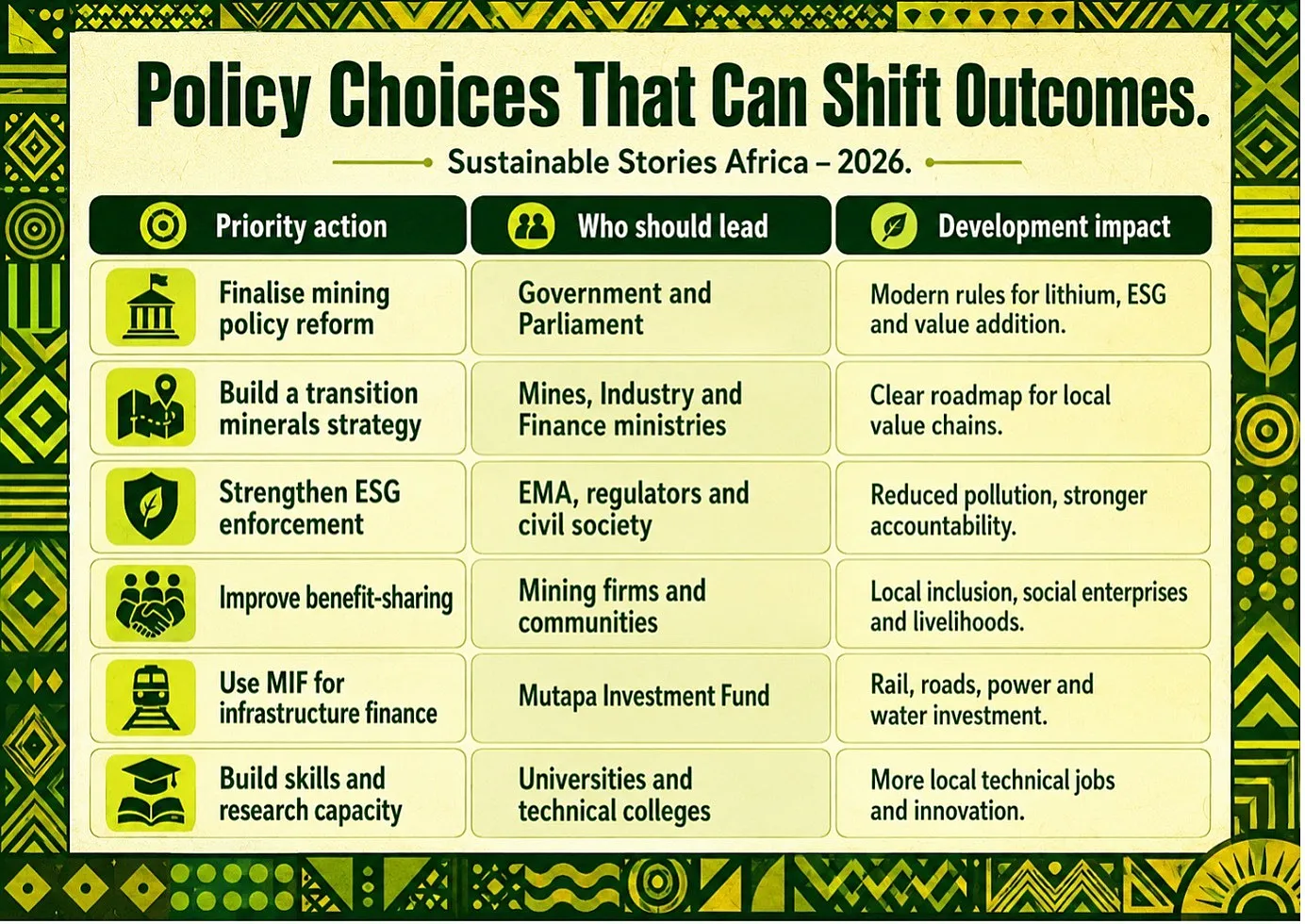
The report also calls for an independent grievance and monitoring platform administered jointly by the Environmental Management Agency and civil society organisations.
Such a platform would allow communities to report violations, corruption or non-compliance with benefit-sharing commitments.
For investors, the signal is equally clear.
- Zimbabwe’s lithium sector needs capital that goes beyond mine acquisition. The next wave should finance refining, renewable energy, water systems, rail logistics, technical training, environmental monitoring and local supplier development.
For companies, social licence must become more than a slogan.
- Community consultation should begin before operations start, continue throughout mining activity, and include transparent reporting on jobs, procurement, compensation, pollution control and local investments.
Path Forward – Build Value Before The Window Closes
Zimbabwe’s lithium advantage is real, but it is not permanent. Battery technologies can change, prices can fall, and global investors can move elsewhere.
The country’s best option is to move quickly from extraction to value addition, stronger ESG oversight and community benefit-sharing.
Well done, lithium can support jobs, infrastructure and industrial resilience.
Properly done, it risks leaving environmental damage, trust deficit, and another missed resource opportunity.