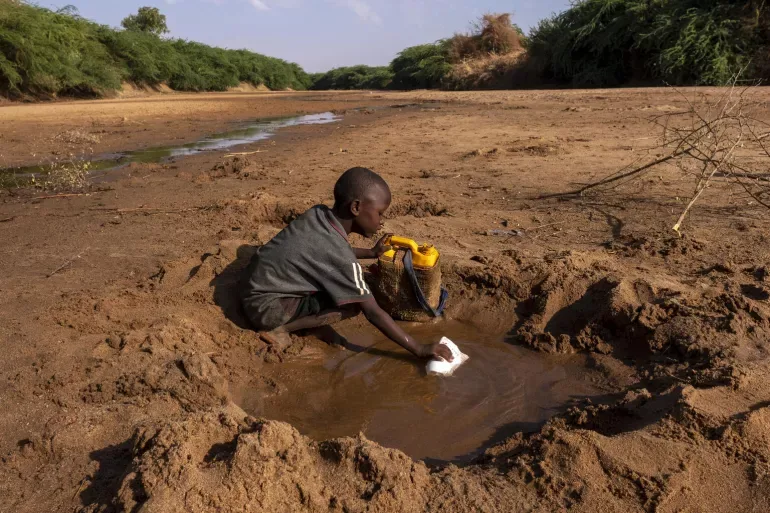
Africa’s progress in water, sanitation and hygiene is not reaching children evenly, the African Union Commission and UNICEF report.
The 2026 publication uses earlier observations, including 2024 service coverage, to show a substantial rural disadvantage and continuing population pressures.
Its central challenge is translating infrastructure spending into reliable services for children, schools and health facilities while directing resources towards communities most likely to be left behind.
Children remain exposed despite service gains
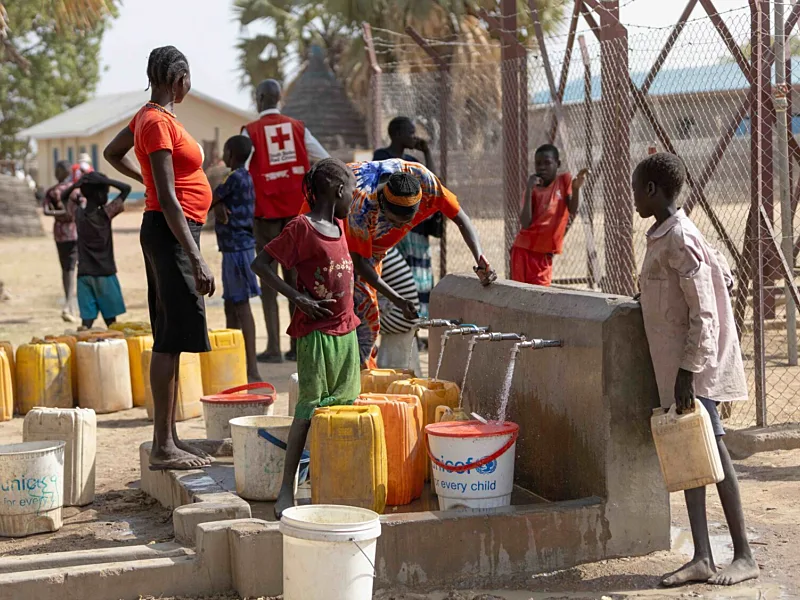
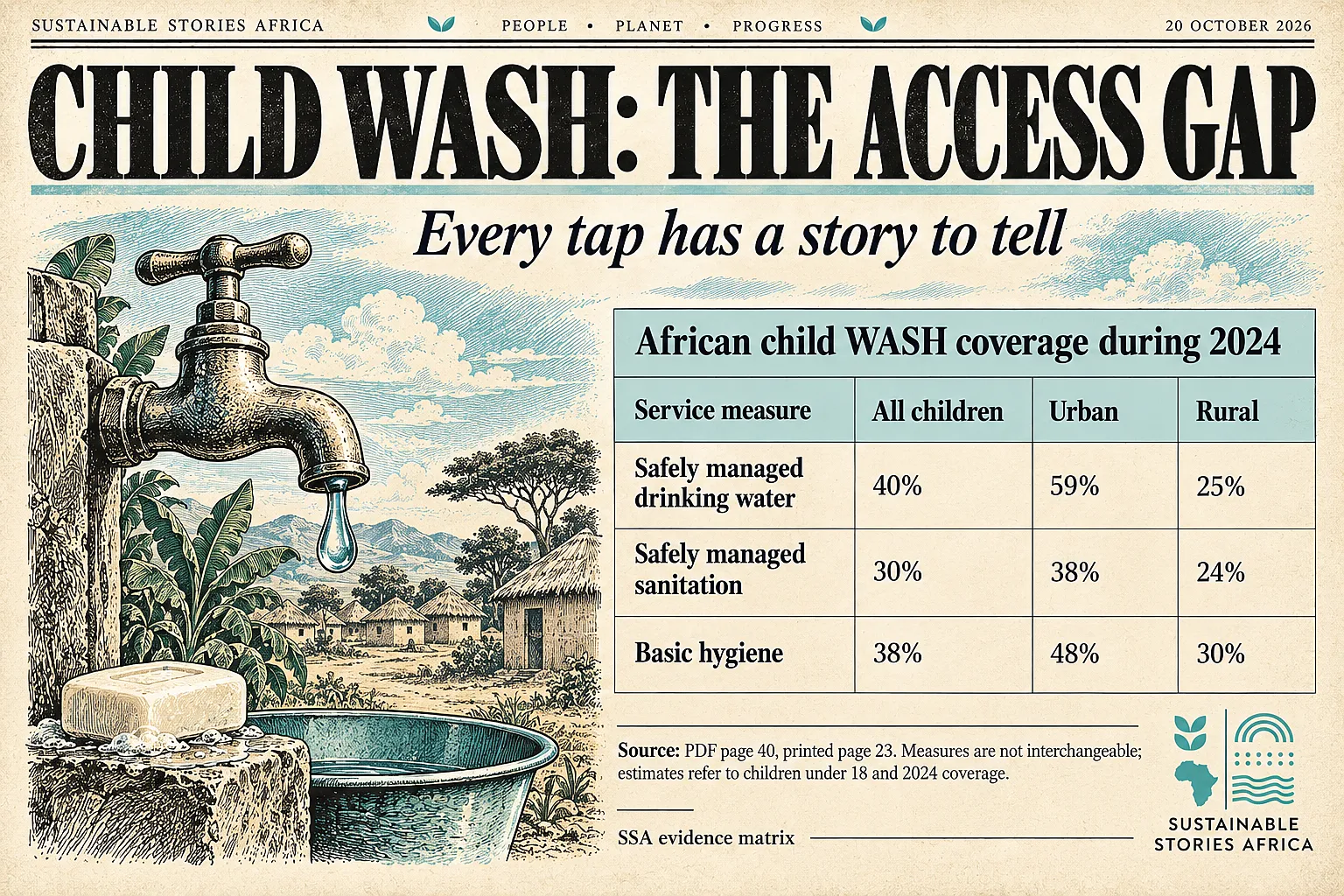
Only 40% of African children used safely managed drinking water in 2024, according to the African Union Commission and UNICEF’s State of Africa’s Children 2026 report.
- The publication places water and sanitation at the centre of child rights, health and development, warning that progress has not eliminated deep inequalities.
The report records substantial gains since 2000 but shows how population growth and uneven provision continue to stretch services.
- Its data describe specified observation periods; the publication year should not be mistaken for the year every indicator was measured.
For policymakers, outcome is a demanding definition of success.
- More infrastructure and a higher percentage of people served can coexist with large numbers still excluded.
- National progress must therefore be assessed alongside who has access, whether the service works reliably and which children remain beyond its reach.
Rural disparities cut across essential services
The report’s 2024 estimates show clear urban–rural differences in drinking water, sanitation and hygiene.
- The accompanying table keeps those measures separate: safely managed water and sanitation describe different service standards from basic hygiene.
Between 2000 and 2024, 161 million children gained access to safely managed drinking water and 129 million to safely managed sanitation.
- Since 2015, 65 million gained basic hygiene services. Yet 92 million children still practised open defecation in 2024.
Those figures show why progress and unmet need should be reported together.
- The report says Africa had 691 million people younger than 18 in 2024, with the child population projected to approach 956 million by 2063.
These are demographic context and a projection, rather than a claim that service systems will necessarily expand at the same rate.
Reliable WASH supports health and learning
The human implications extend beyond the household water point.
- Children need usable toilets, safe water and handwashing facilities where they learn and receive care.
- A service that is absent, unsafe or difficult to use can affect attendance, dignity and the ability to protect health.
The report highlights the vulnerability of rural communities, schools and primary healthcare facilities, as well as risks facing displaced populations and those affected by crisis and climate change.
- It calls for stronger governance, financing and data to guide priorities. [1, PDF p12]
SSA assesses that planning should begin with the child’s full service environment.
- A water connection at home cannot compensate for a school without a usable toilet.
- Equally, a new school facility will not provide lasting benefits if maintenance and water supply are unfunded.
- A coordinated approach would make responsibilities across ministries and local authorities visible, helping prevent essential tasks from falling between institutions.
Public investment needs equity and accountability
The report draws primarily on secondary sources and notes that findings are not validated with AU member states.
- That limitation should encourage careful use of the evidence, not disregard for the scale of the problem.
- Country teams can combine the regional picture with current local information to identify where intervention is most urgent.
SSA recommends that investment plans publish service baselines and explicit targets for underserved children.
- Budgets should cover operation and maintenance as well as construction, with clear responsibility for repairs and water-quality monitoring.
- Progress reports need to distinguish facilities installed from facilities functioning.
Data should also be disaggregated where possible.
- A national average can conceal exclusion linked to rural location, poverty, disability or displacement.
- Where information is missing, the gap should be reported rather than filled with an assumed estimate.
The African Water Vision 2063 provides a longer-term framework discussed in the report.
- Its relevance will depend on implementation choices made now: financing resilient systems, protecting essential services during disruption and creating routes for communities to report failure.
- Children’s access should be a test of whether those institutions work, rather than a secondary benefit expected to emerge automatically from broader infrastructure programmes.
Local monitoring should include feedback from children and caregivers where appropriate, with accessible routes for reporting unusable facilities.
Their experience can reveal whether a service counted in an administrative record is available and safe in everyday use.
Path Forward – Put children first in service planning
African governments and partners should translate the report’s evidence into locally verified priorities, with rural and crisis-affected children receiving explicit attention.
New assets need lasting operating support.
Transparent budgets, functioning school and health-facility services, and better disaggregated data can help turn regional commitments into measurable improvements in children’s lives.