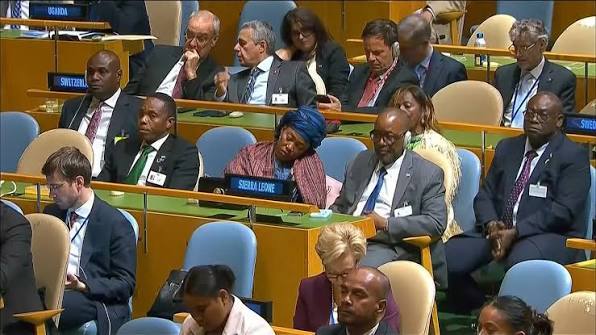
UN special adviser Ahunna Eziakonwa says African countries are increasingly shaping global agendas ahead of the 81st UN General Assembly.
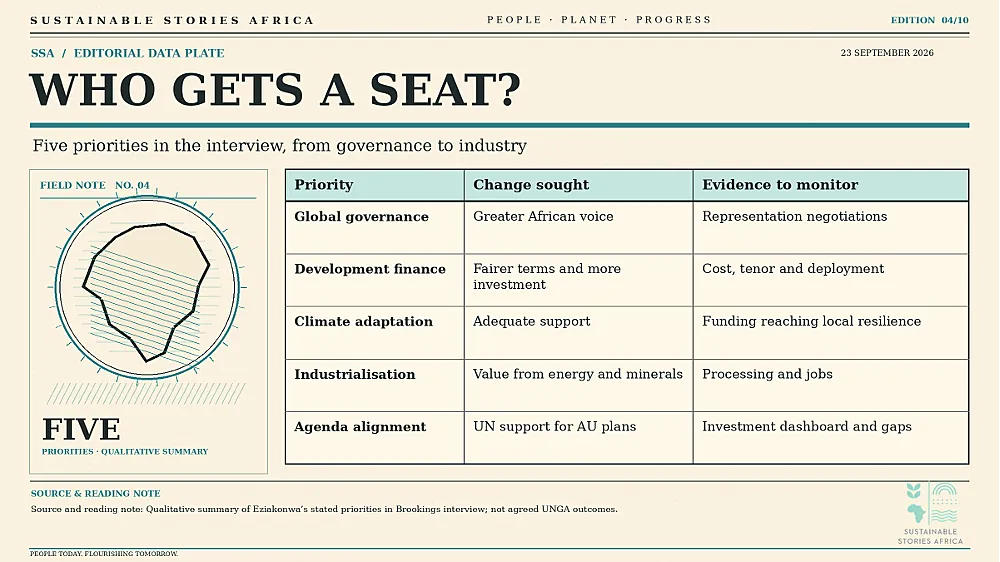
She identified governance reform, development finance, climate adaptation and industrialisation as priorities.
With aid budgets strained, progress will depend on whether representation and investment produce results aligned with African Union plans.
Africa presses for influence over global decisions
African countries are bringing a clearer set of demands to the 81st session of the UN General Assembly, according to Ahunna Eziakonwa, the UN under-secretary-general and special adviser on Africa.
In an August 28 Brookings Foresight Africa discussion with Landry Signé, she identified stronger representation in global governance, reform of development finance, climate adaptation support and industrialisation built around African energy and mineral resources as priorities.
The interview described an agenda entering the September meetings, not a list of agreed General Assembly outcomes.
Eziakonwa argued that the cooperative consensus supporting past development efforts is under strain, even as African states have grown more assertive in UN, G20 and climate negotiations.
Finance and representation drive the discussion
Eziakonwa pointed to Africa’s position as the largest regional bloc at the UN and questioned its lack of a permanent voice on the Security Council.
- She also cited financing for development talks in Seville and climate forums as places where African states have sought to shape the rules, rather than respond to an agenda drafted elsewhere.
Her priorities link governance to daily economic choices.
- The cost and terms of capital can determine whether a utility expands electricity service or a government funds flood protection.
- Reliable adaptation finance helps communities facing climate damage, while more local processing of minerals can create work beyond raw-material extraction.
Those outcomes require national policy as well as changes to international institutions.
Eziakonwa acknowledged contraction in official development assistance.
- She described a shift toward domestic revenue, trade, investment and human-capital development, while stressing the continuing importance of education and technology transfer.
The discussion did not supply a quantified financing pledge or an agreed timetable for Security Council reform.
African-led priorities can align global development
The African Union’s Agenda 2063 provides a continent-led vision, while the UN’s 2030 Sustainable Development Goals can support its implementation, Eziakonwa said.
- She described UN coordination with the AU and AUDA-NEPAD, including a dashboard being developed to show how UN investments align with AU priorities and where gaps or duplication remain.
That tool could make broad promises easier to test if it reports comparable allocations, beneficiaries and outcomes.
- Eziakonwa also pointed to the African Continental Free Trade Area, young people, women and locally led innovation as assets.
- Her argument shifts the focus from a deficit narrative toward the conditions needed to turn those assets into jobs and services.
A stronger voice in global institutions does not automatically reduce borrowing costs or deliver local adaptation projects.
- Diplomatic gains must link to terms of finance, transparent national budgets and project execution.
- Eziakonwa's emphasis on structure matters because communities experience the consequences of expensive debt, unreliable electricity and climate shocks regardless of how many resolutions mention development.
The next reporting cycle should separate announced commitments from money contracted and actually disbursed.
Track whether international commitments serve African plans
African governments and the AU can turn shared priorities into specific requests for representation, fairer financing and measurable adaptation support.
UN agencies and financing partners should publish where their spending matches Agenda 2063 implementation plans and where communities still lack investment.
- Decision-makers must make the dashboard usable for public accountability, rather than treating it as a substitute for implementation.
Eziakonwa argued that the final years before 2030 demand attention to structural obstacles, including conflict and unequal financial conditions, instead of another round of stand-alone projects.
- Progress at UNGA should therefore be judged by decisions, financing terms and delivery after the speeches.
The distinction matters most where debt burdens and climate exposure make delayed implementation expensive for households and public budgets.
Path Forward – Measure UN cooperation against African plans
Immediate priorities are stronger African representation, finance that supports adaptation and productive investment, and transparent alignment between UN activity and AU plans.
Eziakonwa’s interview sets out a direction; member-state negotiations and implementation will decide how much of it becomes lasting change