Africa’s energy transition is facing a workforce problem.
Kenyan lawmakers say engineers trained for a strategic power line are leaving for overseas jobs.
The risk is simple: without skilled workers, clean-energy investment could outpace delivery.
The Transition Needs People, Not Just Projects
Africa’s renewable energy transition is running into a skills shortage just as governments and investors are trying to scale solar, storage, transmission and regional power trade.
Renewables Rising reported on May 22, 2026, that Kenyan lawmakers warned of a weakening technical capacity after seven of 18 engineers trained to manage the Ethiopia – Kenya high-voltage power line migrated within three years.
The warning matters because Africa’s power plans are becoming more complex. New grids, battery systems, mini-grids and energy markets require technicians, engineers, software specialists and operators who can keep systems running after construction ends.
A Skills Gap Beneath The Grid
The Ethiopia – Kenya interconnector is more than a power line. It is part of East Africa’s effort to move electricity across borders, reduce supply gaps and support regional energy security.
Losing trained engineers from such a project shows how fragile the human capital base can be when global labour markets pull skilled African workers abroad.
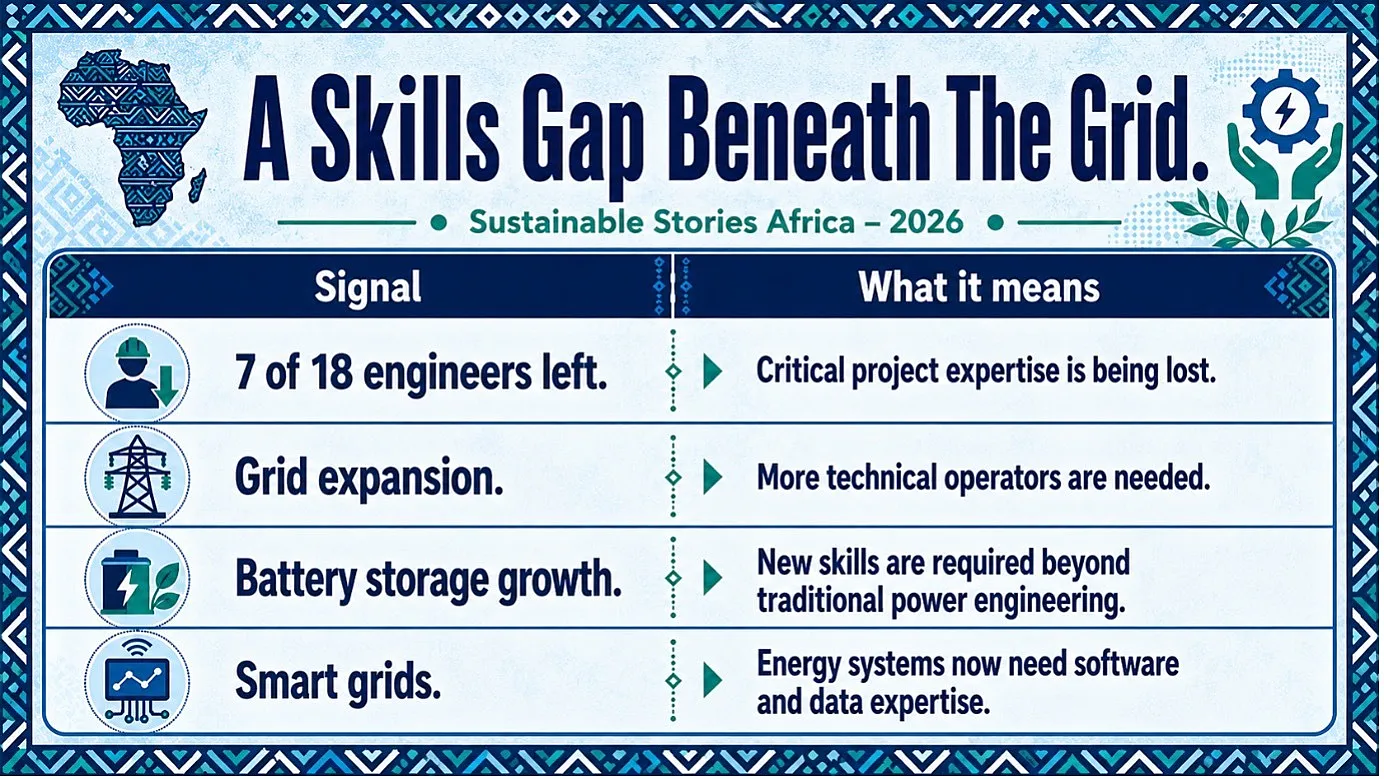
The shortage is not only caused by migration. Renewables Rising noted that many African countries face limited investment in technical training and outdated engineering programmes, even as investments in renewable energy and grid infrastructure increase.
South Africa is already responding with programmes to upskill engineers in software, battery storage, energy trading and smart grids.
That reflects a wider reality: the modern energy worker is no longer only an electrical engineer, but also a systems operator, data user and infrastructure problem-solver.
Skills Can Turn Energy Into Jobs
The opportunity is large. Mission 300, led by the World Bank and African Development Bank, aims to connect 300 million Africans to electricity by 2030.
However, access to electricity will not be delivered by financing alone. It needs trained people in substations, workshops, control rooms and communities.
A greener economy could create up to 3.3 million direct jobs in Africa by 2030, with much of the opportunity in renewable energy, especially solar, according to research by FSD Africa and Shortlist.
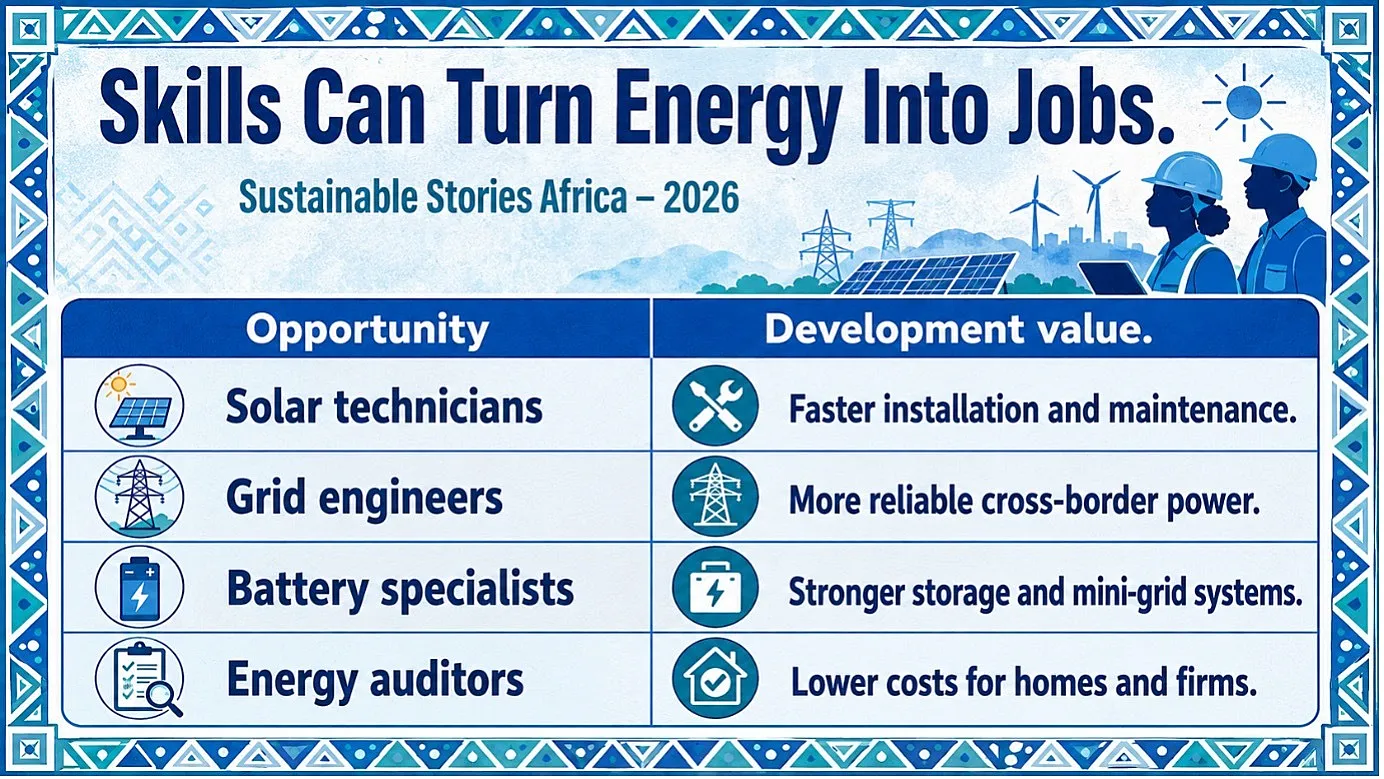
For young Africans, this should be more than an infrastructure story. It should be a pathway into decent work, technical entrepreneurship and local industrial growth.
Train Before The Projects Stall
Governments, utilities, investors and universities need to treat skills as core infrastructure.
That means modern curricula, technical colleges, apprenticeships, certification systems and stronger links between energy projects and local workforce development.
Africa’s green-energy sector faces hiring challenges because electrical, civil and mechanical skills are often scarce.
The call to action is direct: every major clean-energy project should include a skills-transfer plan, a local hiring pathway and a maintenance strategy.
Without that, Africa risks importing equipment while exporting talent.
Path Forward – Build Skills Before Projects Stall
Africa’s energy transition must become a skills transition.
The next priority is practical delivery: train workers, retain engineers, modernise technical education and link energy finance to local jobs.
That is how clean power advances ESG goals, strengthens resilience and turns infrastructure spending into inclusive development.
Culled From: Africa's energy transition hits a skill shortage