Kenyan lawmakers are scrutinising the deactivation and reassignment of inactive Safaricom numbers after subscriber complaints.
The Communications Authority has outlined notification and protection measures as mobile numbers increasingly connect people to financial and digital services.
The inquiry highlights a wider inclusion challenge: reusing a number must not expose the previous subscriber’s information or obstruct legitimate access to funds.
Number Recycling Becomes A Consumer Concern
Kenya’s Parliament is examining Safaricom’s handling of inactive mobile numbers, bringing the relationship between telecom administration and digital identity into sharper focus.
Communications Authority Director-General David Mugonyi appeared before the Public Petitions Committee on October 6, following complaints about deactivation and reassignment without adequate warning.
The issue matters beyond keeping a familiar contact number.
- A mobile number can remain linked to financial services, account recovery and private communications long after a subscriber stops making calls.
- Reassigning it therefore requires safeguards for both the previous customer and the new user.
New Safeguards Set Out Notification Duties
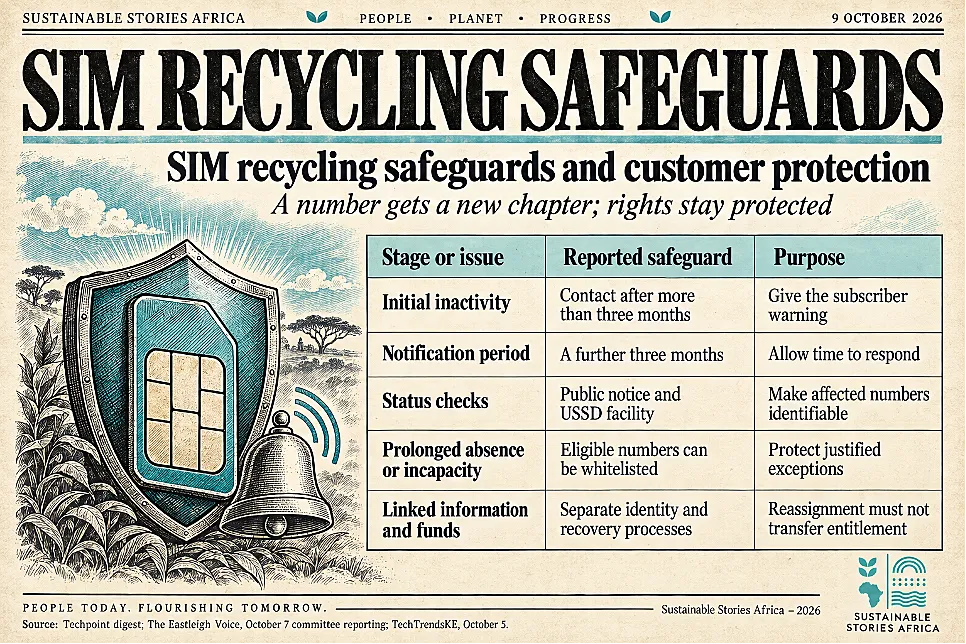
The authority’s procedures require operators to contact subscribers after more than three months of inactivity, using information collected during registration.
- The notification period runs for another three months, with public notice and a USSD method for checking number status.
The framework also protects eligible numbers from recycling during prolonged incapacity or absence.
- The authority says the measures follow a March 19 High Court direction to prevent arbitrary deactivation and reassignment.
The parliamentary inquiry concerns whether safeguards work in practice, including for deceased subscribers and their families.
- It does not mean that every recycled number has caused a loss or that the new subscriber automatically receives the former holder’s money.
Keeping those distinctions clear is necessary to understand the actual consumer protection problem.
Financial Access Depends On Clear Recovery
TechTrendsKE explains that a recycled number should not transfer ownership of the previous user’s M-Pesa balance to the new holder.
- The practical question is whether the original customer or an authorised representative can recover access through a clear process.
That matters particularly when a subscriber has died or cannot visit a service outlet.
- A protection system designed only around an active customer’s ability to respond may leave a family uncertain about the needed documents, the responsible institution, or the escalation route.
From an inclusion perspective, providers should distinguish control of a phone number from entitlement to money and personal information.
- These relationships can overlap in everyday use, but they require separate checks when a number changes hands.
The wider lesson for African digital finance is to design for interruptions in a person’s life, rather than assume continuous use.
- Illness, bereavement and other prolonged absences should not make essential account protections harder to understand.
Providers Need Auditable Protection Before Reassignment
The inquiry should establish how notice is issued, how attempts to reach subscribers are recorded and what technical steps occur before reassignment.
- Publishing a procedure is only the beginning; customers need a service they can use, and oversight bodies need evidence that it operates.
Providers should explain the options for preserving a number and the process for recovering funds or services attached to an old one.
Financial institutions and other services that use mobile numbers for authentication should also examine how they respond to changes in number ownership.
Customer education is part of the response, but it cannot carry the entire burden.
- Telling people to keep numbers active does identify those who can’t.
- A fair system needs exception handling and accessible redress alongside ordinary reminders.
For regulators, the outcome is that lines can be managed without exposing personal information or creating avoidable barriers to legitimate claims.
That requires coordination between the institutions whose services depend on the same identifier.
Path Forward – Protect Identity Before Reassigning Mobile Numbers
Operators should demonstrate effective notification, exception handling and separation of subscriber information before recycling numbers.
Regulators and financial service providers should clarify recovery routes for affected customers and authorised representatives.
The goal is to preserve trust in mobile services while responsibly managing scarce numbering resources.
Culled from: Orange reportedly in talks to acquire majority stake in Telecel Ghana