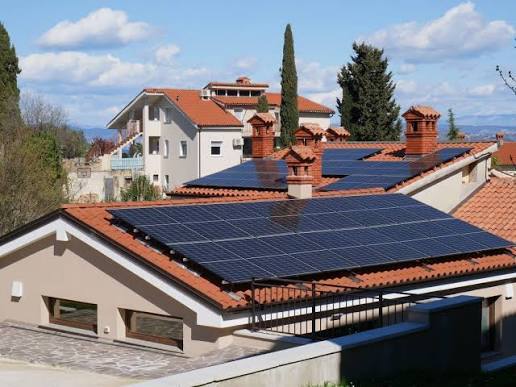
Australia has become the first country to endorse a global declaration supporting 300 million solar homes by 2030.
The initiative aims to double the estimated number of homes with rooftop solar through easier installation, financing and grid access.
For African markets, the opportunity depends on making dependable household energy affordable while extending benefits beyond homeowners who can pay upfront.
Australia Endorses A Global Household Target
Australia has endorsed a global plan to double the number of homes with rooftop solar to 300 million by 2030, becoming the first country to back the Global Rooftop Solar Declaration, according to the Global Solar Council’s October 7 announcement.
The endorsement gives the initiative a national supporter with practical experience of widespread household solar deployment.
For African policymakers and energy businesses, it raises a familiar implementation question:
- How can a clean energy technology move from an attractive option for some households to an accessible service for many?
The Declaration Identifies Barriers To Expansion
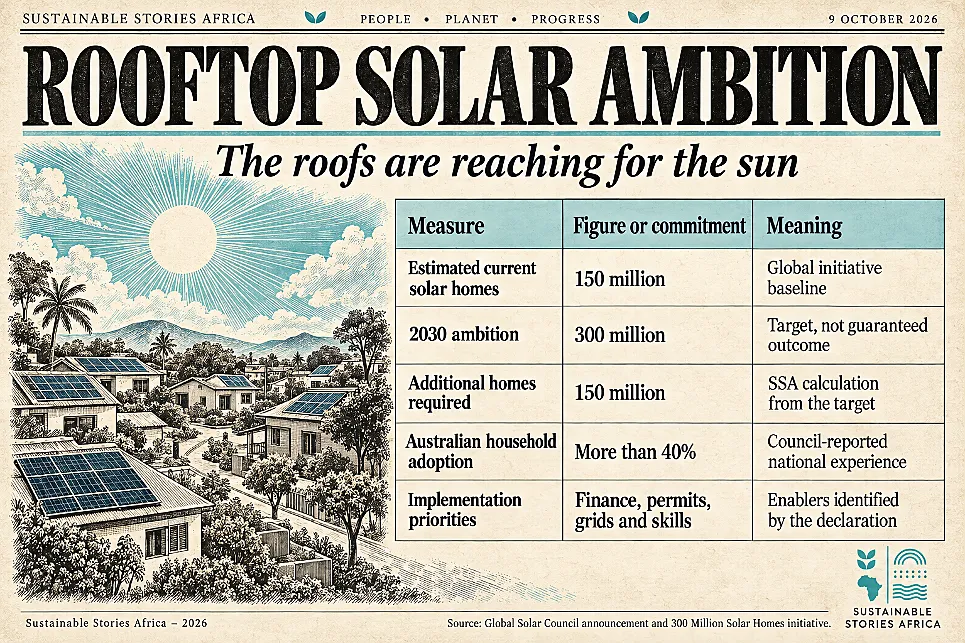
The initiative starts with an estimated 150 million solar homes worldwide.
- Reaching 300 million would require another 150 million, implying a 100% increase from that baseline.
The council says the declaration calls for simpler installation processes, affordable finance, grid upgrades and workforce training.
- It reports that more than 40% of Australian homes have solar and rooftop systems supply around one-eighth of national electricity.
An endorsement is not the same as a funded rollout, and the target is not a forecast of guaranteed delivery.
- It also concerns homes with rooftop solar; it should not be confused with the number of people connected through every form of decentralised renewable electricity.
The initiative’s value will depend on whether governments translate support into practical arrangements that allow households to buy, install and maintain dependable systems.
Access Requires More Than Affordable Panels
For African markets, the policy implications extend across the full household experience.
- A lower equipment price can help, but households also need reliable installation, clear repayment terms and a route to resolve faults.
- If any of those elements fail, the promised savings may become difficult to achieve.
Financing should be assessed against the customer’s actual ability to pay.
- A repayment plan that appears manageable at installation may become burdensome if income changes or maintenance costs emerge.
- Providers should explain what is included, how equipment is supported and what happens when a customer cannot meet an instalment.
Housing arrangements also matter.
- A rooftop programme centred only on owner-occupied homes could leave tenants and households with unsuitable roofs outside its reach.
- Shared systems, community arrangements and other delivery models may therefore be worth assessing alongside individual installations.
These are implementation considerations for African markets, rather than commitments announced by Australia.
- They illustrate why an ambitious global number needs local policies that respond to different incomes, housing conditions and electricity systems.
Public Support Should Secure Lasting Benefits
Governments considering endorsement should publish how the target fits their domestic energy priorities.
- That includes identifying which households the policy is intended to reach and how consumer protection will operate.
Utilities and regulators should clarify connection requirements and the treatment of electricity supplied to the network.
- Installers need predictable processes, while customers need safety standards and meaningful warranty support.
- Expanding deployment without those safeguards could undermine confidence in the technology.
Public finance should be evaluated by the additional access it creates.
- Subsidising households that would install solar anyway may produce deployment figures without improving inclusion.
- Programmes should therefore report who benefits, what support costs and whether systems remain operational.
The opportunity is to connect energy affordability with climate action through a service households can trust.
A successful programme would make that connection visible in customer experience, rather than rely only on the number of systems sold.
Path Forward – Make Household Solar Affordable And Dependable
African governments and financiers should examine the declaration alongside local needs, with attention to affordability, safety and access for underserved households.
Endorsements should lead to clear implementation plans and measurable outcomes.
Progress towards the global target will be more credible when reporting includes functioning systems and lasting household benefits.