MTN’s US anti-terrorism litigation is moving into discovery, while reporting has drawn attention to Cyril Ramaphosa’s former role as chairman.
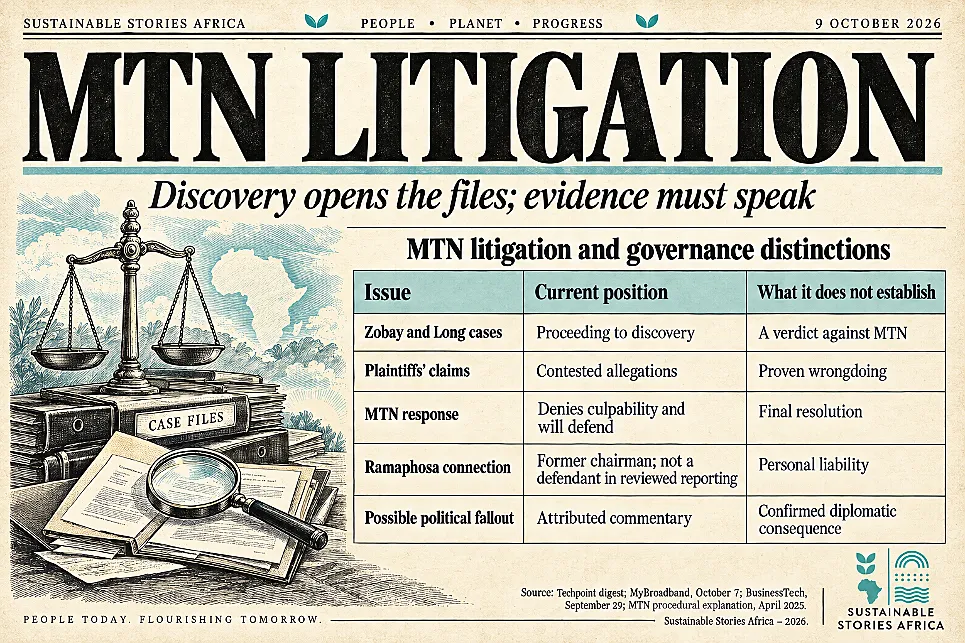
The company denies wrongdoing, and the procedural decisions do not establish liability. Ramaphosa is not identified as a defendant in the reporting reviewed.
The development highlights the importance of evidence, board oversight and careful communication when corporate disputes become politically significant.
Discovery Moves Litigation Towards Evidence Testing
MTN’s US anti-terrorism litigation has moved to discovery, raising renewed questions about governance operations in high-risk markets and the reputational implications for former leaders.
October 7 reporting by MyBroadband examined the potential political fallout for South African President Cyril Ramaphosa, who previously chaired the group.
Ramaphosa is not a defendant in the cases described by the reporting.
- The court decisions are procedural and do not establish wrongdoing or liability against MTN.
- The distinction matters because political commentary can otherwise make a former corporate role appear equivalent to a legal finding.
The Company Disputes The Plaintiffs' Claims
September 29 reporting on MTN’s shareholder update says the Zobay and related Long cases will proceed to discovery after a New York court declined reconsideration or an immediate appeal of an earlier decision.
- Plaintiffs allege that conduct linked with MTN’s activities supported groups responsible for attacks.
- MTN denies wrongdoing and says evidence will show it was not a culpable participant.
Discovery allows parties to exchange relevant information.
- It may lead to applications for summary judgment and, if necessary, a trial.
- Advancing to that stage does not resolve the factual dispute.
MyBroadband’s October 7 account links Ramaphosa’s former chairmanship with possible diplomatic pressure, attributing that assessment to commentary.
- It is a prospective political interpretation, not a court determination that he was personally involved in misconduct.
The available material does not justify predicting a verdict, a settlement or a particular diplomatic response.
Governance Implications Extend Beyond Immediate Litigation
For African companies operating across difficult jurisdictions, the dispute illustrates why board oversight must be supported by records that explain what decisions were made and on what basis.
- A broad statement of ethical intent cannot answer questions about a particular commercial relationship.
An effective governance system should help directors understand counterparties, security arrangements and material risks.
It should also allow others to revisit earlier decisions when conditions change.
- These are general implications for corporate oversight, rather than findings that MTN lacked a particular control.
The human context requires equal care.
- People alleging harm deserve to have their claims examined through the appropriate process, while defendants are entitled to challenge those claims.
- Public reporting should not turn the procedural stage into a substitute for that examination.
Maintaining these distinctions protects accountability and integrity.
It allows scrutiny to continue without assuming an allegation proves guilt, or that a denial closes the matter.
Disclosure Should Separate Evidence From Commentary
Companies facing material litigation should provide timely updates that explain the procedural position and the limits of what they can say.
- Readers need to understand whether a development concerns the admissibility of a claim, the exchange of evidence or a finding on the merits.
Boards should also consider how they communicate reputational risks to employees, investors and business partners.
- A legally accurate explanation, if not accessible, can leave stakeholders unable to distinguish between a serious unresolved dispute and an established finding.
Political leaders and commentators should preserve the same evidential discipline.
- A prior board role may be relevant context, but personal culpability requires evidence and an applicable legal determination.
- Speculation about diplomatic consequences should remain attributed and conditional.
The immediate test is therefore transparent participation in the legal process, accompanied by proportionate disclosure.
The wider governance lesson is to build oversight systems that can withstand scrutiny across borders, where expectations, legal standards and political pressures may differ.
Path Forward – Keep Accountability Anchored In Tested Evidence
MTN’s next material updates should explain the progress of discovery and any subsequent court decisions, while preserving the distinction between allegations and findings.
African boards should review oversight of high-risk operations and the quality of supporting records.
Political commentary should remain separate from conclusions about personal or corporate liability.
Culled from: Orange reportedly in talks to acquire majority stake in Telecel Ghana