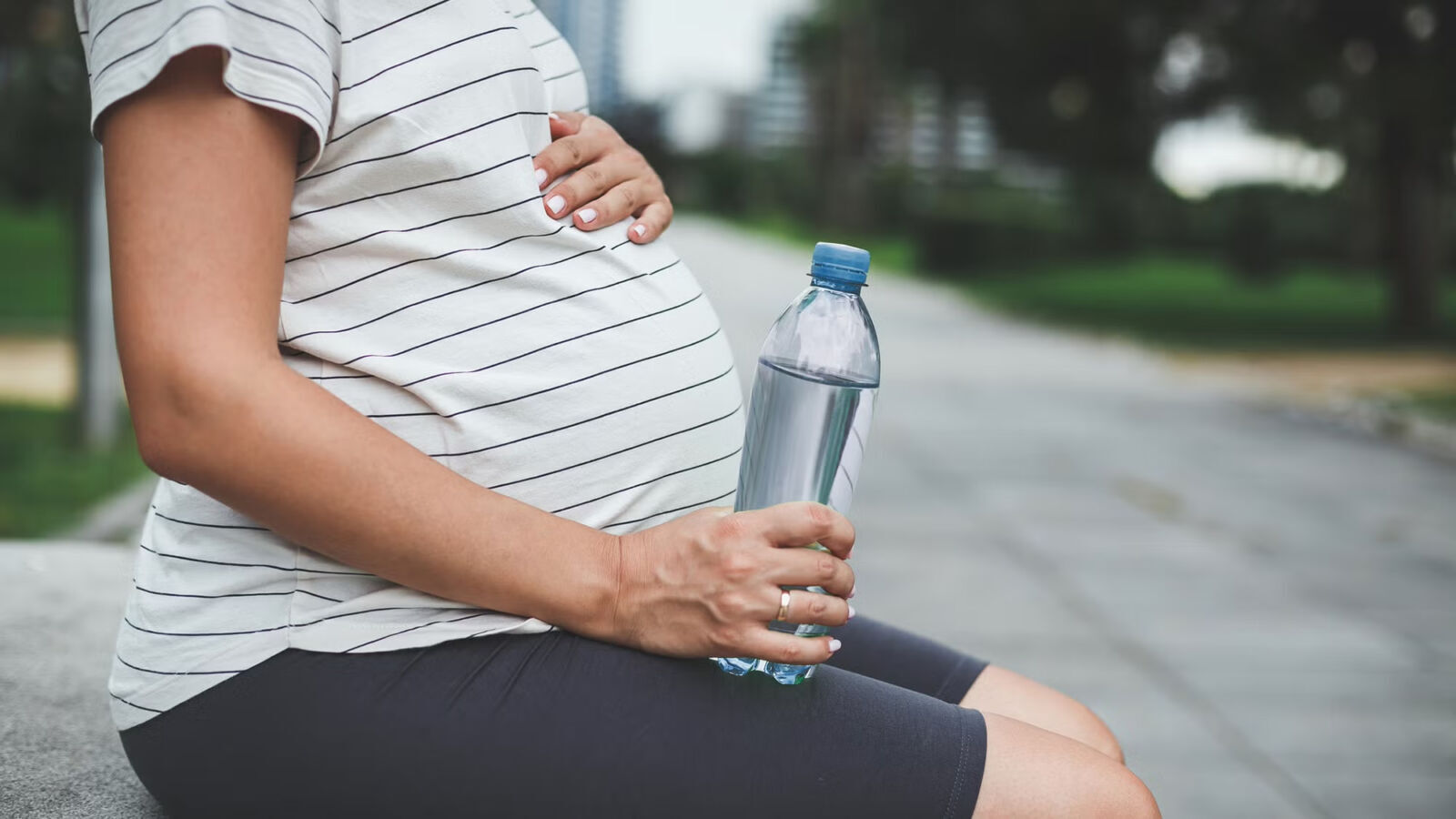
Wellcome urges the UK to recognise pregnancy consistently in heat-health policy and adapt maternity services to rising temperatures.
Its 2026 report draws on evidence linking heat exposure with adverse maternal and newborn outcomes.
For African health systems, the findings reinforce the need for local research, practical facility adaptation and climate planning that explicitly considers pregnant women.
Rising heat creates a maternity planning challenge
Wellcome’s 2026 report Pregnancy in a warming world calls for pregnancy to be consistently treated as a source of heat vulnerability and for climate resilience to be incorporated into UK maternity reform.
- The report argues that existing evidence warrants preventive action while researchers continue investigating the most effective protections.
The policy concern is that health services and public warnings may fail to respond early enough.
- Wellcome says clinically important pregnancy risks can arise below the temperatures that trigger higher-level heat alerts, making a focus on exceptional heatwaves alone insufficient.
For an expectant mother, relevant conditions include places where she lives, works and receives care.
A national warning has limited value if services and environments cannot provide practical protection.
Research identifies risk while exposing evidence gaps
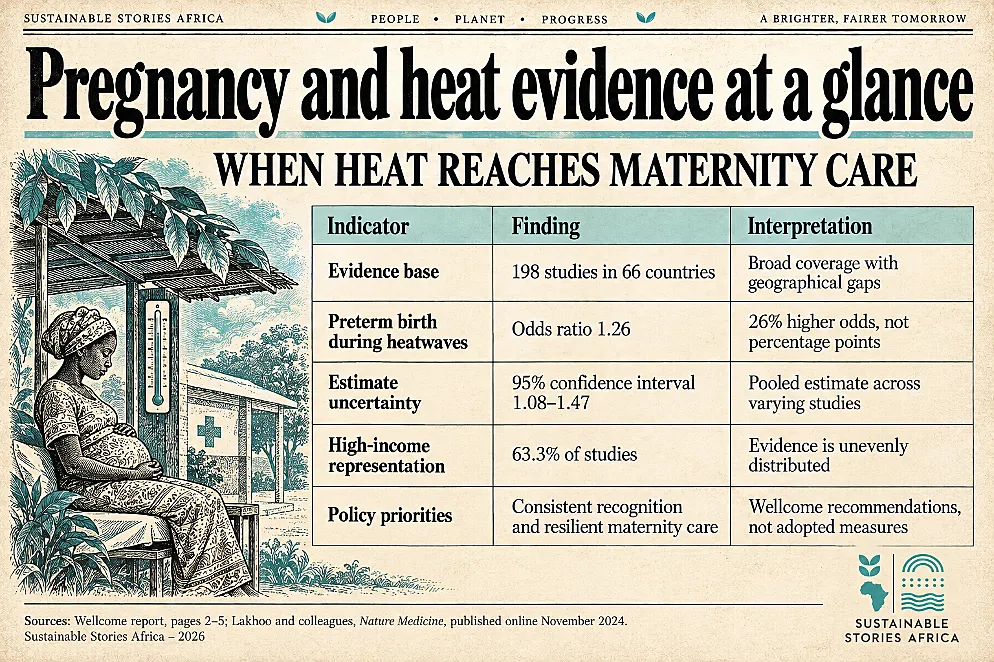
The report cites a systematic review of 198 studies across 66 countries.
- The underlying Nature Medicine paper found 26% higher odds of preterm birth during heatwaves, based on a pooled odds ratio of 1.26.
- That is not a 26-percentage-point increase in the likelihood of premature delivery.
Most included studies came from high-income countries.
- Differences in exposure definitions and study designs limit how simply the findings can be applied elsewhere.
- The paper also identifies pregnancy-related physiological changes that affect the body’s ability to manage heat.
Wellcome identifies inconsistent treatment of pregnancy across UK public guidance and adaptation frameworks.
- It recommends clearer institutional responsibility, a review of heat thresholds and explicit measures for maternity and neonatal services.
- These are recommendations for government action, rather than confirmation that reforms have been completed.
Adaptation can improve the conditions of care
The opportunity is to make maternity planning responsive to the climate in which care is delivered.
- Wellcome recommends heat-specific clinical guidance, assessment of maternity units’ resilience and attention to infrastructure when facilities are upgraded.
- It also calls for extreme-heat preparedness to be incorporated into longer-term maternity planning.
This approach treats heat as a service-design issue rather than an individual health concern.
- Information matters, but advice cannot resolve every building limitation or every operational pressure staff face.
- Facility managers and health authorities need to understand where services are vulnerable and who is responsible for addressing the problem.
For African health systems, the implication is to examine these factors locally.
- The UK findings do not provide a universal temperature threshold or a quantified risk estimate for every African population.
- Local climates, housing, work conditions and service capacity shape exposure and the feasibility of different responses.
Research should therefore ask both where risks arise and what protection can be delivered.
- Measures that cannot be maintained, funded or used consistently are unlikely to provide dependable benefits, even when their purpose is sound.
Health budgets should include practical heat preparedness
Wellcome recommends a precautionary approach in the UK’s 2027 – 28 Adverse Weather Health Plan, supported by guidance for maternity and community healthcare providers.
- It also calls for measurable actions with identified delivery partners.
African ministries and development partners can use that governance principle when assessing their own systems.
- A heat plan should identify responsibilities, connect health and infrastructure teams, and make provision for implementation.
- Maternity services should be considered explicitly when climate adaptation priorities are set.
Facility assessments could examine indoor conditions, water availability and the reliability of systems needed to maintain safe care.
- These are planning considerations, not a clinical protocol or proven prevention measures.
- Decisions should be informed by qualified health teams and evaluated as they are introduced.
Funders should also support locally relevant evidence.
- Better exposure measurements linked to maternal and newborn outcomes can help establish priorities and assess whether adaptations work.
Public communication should explain the evidence clearly while avoiding claims that every adverse pregnancy outcome can be attributed to heat.
Path Forward – Put maternity services into climate planning
Pregnancy should be considered explicitly in heat-health frameworks, with practical responsibilities and resources for maternity adaptation.
Further research should improve protection rather than become a reason to postpone reasonable preparedness.
African health authorities can apply this principle through local risk assessment, facility planning and evaluation that reflect the conditions in which women receive care.