ETK Group set out three paths for African goods exports. Its most ambitious scenario puts annual exports near $1.8 trillion by 2035.
That outcome assumes a shift towards processing more goods before they leave the continent.
For local stock exchanges, the question is whether more of the companies behind that growth will list at home.
A bigger export economy, on two conditions
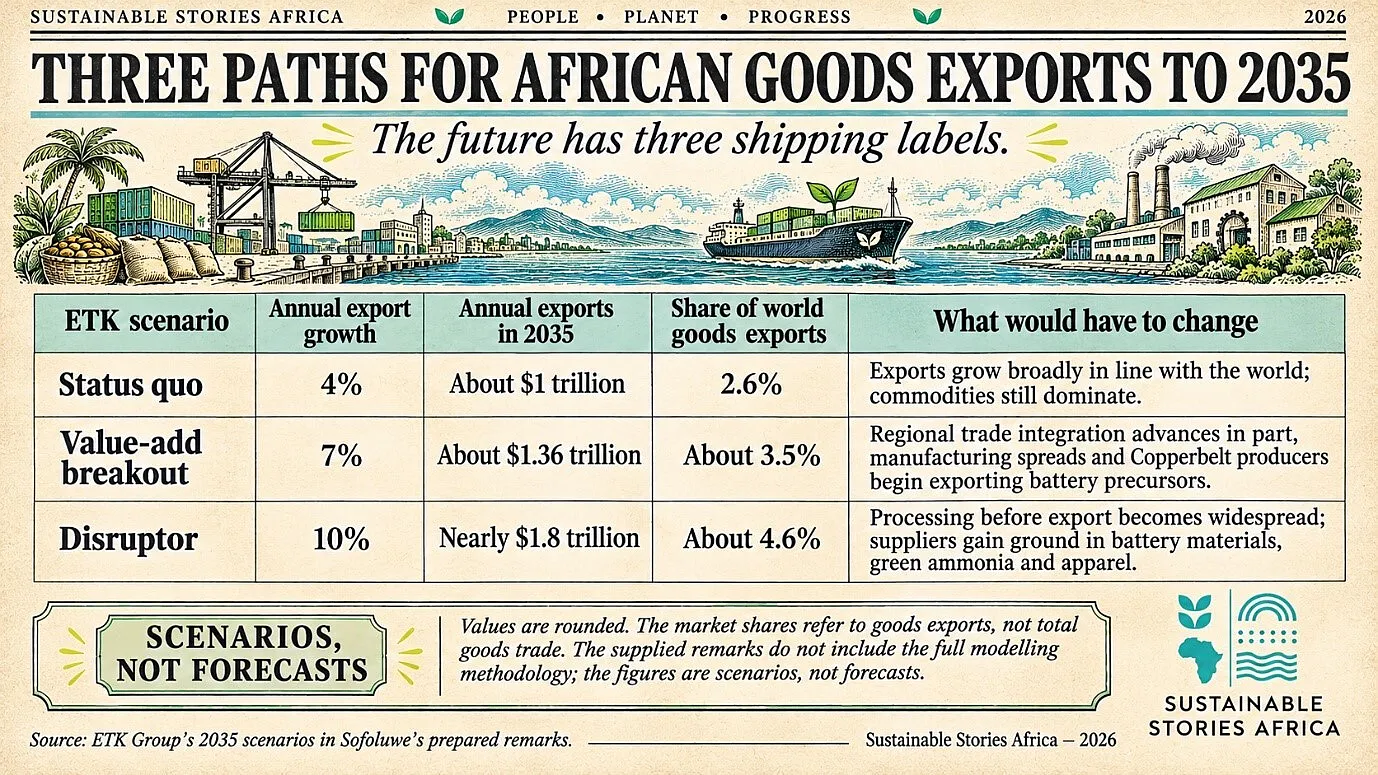
Africa’s annual goods exports could approach $1.8 trillion by 2035 if the continent processes more of what it sells and expands its manufacturing base, according to an upside scenario by ETK Group Managing Director Bolaji Sofoluwe.
The company puts exports at about $1 trillion in its status quo case.
- The gap between the scenarios reflects a change in what Africa would export, not just how much it would ship
It believes more processing and manufacturing should take place on the continent.
- ETK makes a separate argument about capital markets: local exchanges stand to capture more of that growth if the companies generating it choose to list at home.
What changes across the three scenarios
ETK’s intermediate case assumes partial implementation of the African Continental Free Trade Area, manufacturing growth in several more countries and exports of battery precursors, processed inputs used to make battery materials, from the Copperbelt.
- Its most ambitious case assumes processing before export becomes much more widespread, allowing African producers to gain ground in battery materials, green ammonia and apparel.
Export growth does not automatically deepen stock markets
The distinction is visible in ETK’s battery example.
- A producer that ships raw ore earns revenue from the mineral
- A producer that processes it into a battery input can also earn revenue in that production stage.
- Where the processing takes place determines where that part of the business is built.
- Where the company lists determines whether investors can buy its shares through a local exchange.
In its most ambitious scenario, ETK puts the potential value of African stock markets at around $2.6 trillion, against a $561 billion starting point.
- This is not an automatic result of higher exports.
This ties the outcome to more export businesses listing on African exchanges, and they do not establish when individual companies might be ready or willing to do so
From investor visibility to listing readiness
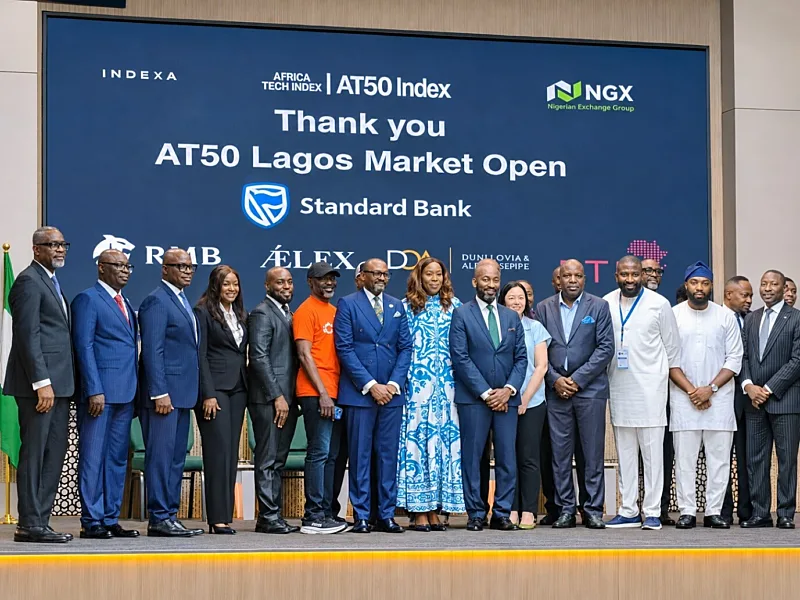
The Lagos event brought that distinction into focus.
- Indexa Exchange Group’s AT50 benchmark tracks 50 private companies, 16 of them Nigeria-linked, according to the convenor.
- Lagos was the fourth event in its exchange programme, after London, Johannesburg and Cairo.
ETK, a charter partner, play a significant role in helping companies turn investor visibility into practical steps towards entering new markets.
A place in the benchmark is not a stock-market listing or a commitment to raise public equity.
The Lagos programme focused on investment readiness, corporate governance as well as access to institutional capital.
- For a founder, that means the ability to show investors how the company makes money, who oversees its decisions and what capital would pay for as the business expands.
Path Forward – Connect Local Processing With Local Capital
The first test is whether processing projects can secure reliable power and buyers while managing their environmental and community impacts.
The second is whether promising exporters can build the governance and reporting systems needed to raise capital locally.
ETK’s upside scenario depends on progress on both fronts: creating more value before goods leave Africa, and more opportunities for investors to participate through African exchanges.