Côte d’Ivoire’s €433.3 million sustainability-linked loan offers a practical example of how African governments can connect commercial borrowing with environmental performance.
At a COP31 discussion, a country representative said World Bank Group guarantees helped secure longer repayment terms and lower financing costs.
The structure links borrowing conditions to non-hydropower renewable energy and forest outcomes, making credible targets, reporting and debt management central to its success.
Climate performance enters sovereign borrowing
Côte d’Ivoire has presented its €433.3 million sustainability-linked sovereign loan as an example of how African governments can use development-bank guarantees to improve commercial financing terms while linking borrowing costs to environmental commitments.
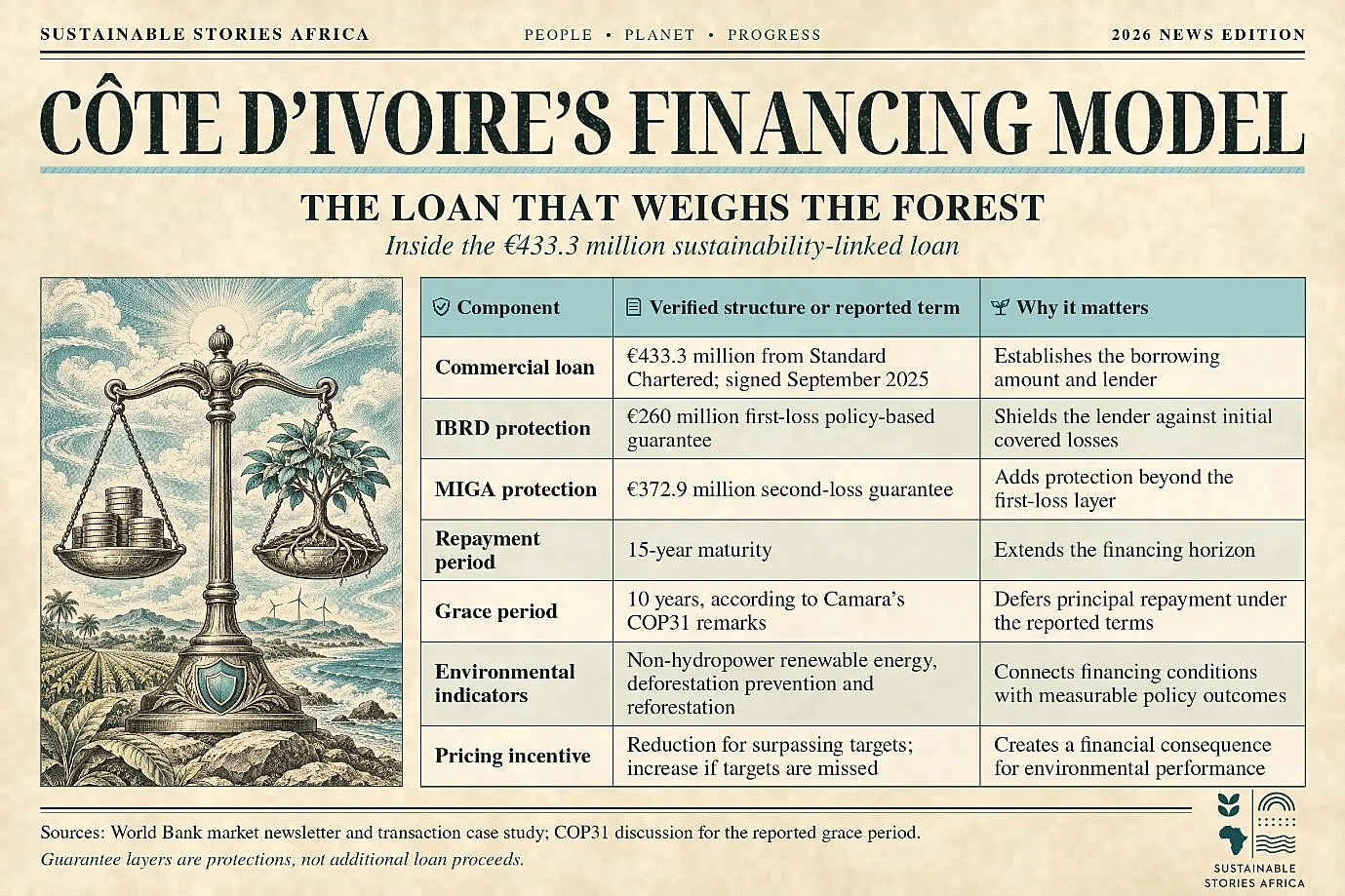
At a World Bank Group COP31 on 12 November, country representative Aicha Nabintou Camara said the transaction has a 15-year maturity, a 10-year grace period and pricing at 400 basis points below a comparable commercial external loan of the same maturity.
- These comparisons were her assessment during the session.
The loan was signed with Standard Chartered in September 2025.
How the guarantee structure works
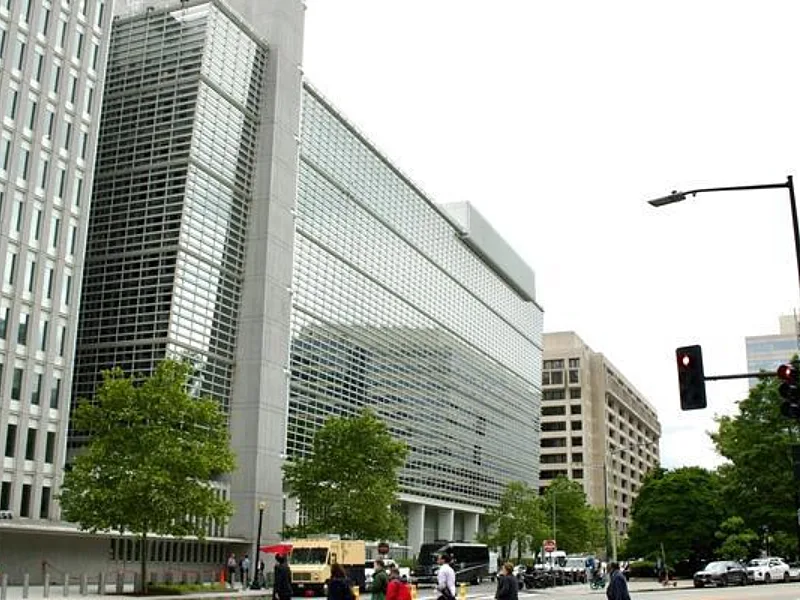
The transaction combines two distinct World Bank Group instruments: a €260 million first-loss policy-based guarantee from the International Bank for Reconstruction and Development and a €372.9 million second-loss guarantee from MIGA.
- The first-loss layer protects against initial covered losses; the second-loss layer addresses losses beyond that layer under the agreed structure.
- The World Bank’s case study describes coverage reaching up to 95%.
- The guarantee amounts should not be added together and presented as cash financing received by the government.
According to that case study, more than a dozen commercial banks expressed interest before Standard Chartered was selected as sole lender and lead arranger.
- The guarantees helped improve the financing conditions, including the loan’s 15-year maturity.
For governments seeking longer-term funding, that investor response is important.
- Camara’s account suggests the structure changed not simply the availability of finance, but the terms on which the country could borrow.
Making environmental delivery financially relevant
The loan sits within Côte d’Ivoire’s Sustainability-Linked Finance Framework, launched in 2025.
- The framework connects borrowing conditions to renewable energy production excluding hydropower, alongside forest conservation and restoration.
Its two-way pricing mechanism offers an interest-rate reduction if the country surpasses its targets and an increase if those targets are not met.
- This distinction matters: the financial incentive depends on performance, not simply on adopting a sustainability label.
The potential benefit is twofold.
- Guarantees can improve access to commercial financing, while performance-linked pricing creates an additional reason to deliver environmental commitments.
- Neither feature, however, establishes that the underlying energy or forest outcomes have already been achieved.
Camara said reporting would support monitoring and investor confidence.
For the model to retain credibility, the relationship between targets, reported progress and borrowing costs must remain understandable to lenders and the public.
Keep debt discipline at the centre
Camara’s advice to other countries began with national priorities.
- Governments should identify the sectors and projects they intend to support before selecting a financing instrument, she said.
Her second message was to make effective use of guarantees.
Her third was equally important: assess whether the debt can be repaid.
- Borrowing terms, maturities and the wider debt profile require scrutiny even when financing carries a sustainability incentive.
- “Before financing, it’s important for our countries to see if this debt can be repaid, if it’s sustainable,” she told the session.
She also called for coordination between institutions and stronger data frameworks.
For African policymakers, the transaction is consequently a financing reference, not a universal prescription.
- Its reported advantages came from a particular combination of national planning, environmental indicators, commercial lending and layered guarantees.
- Replication would require those elements to fit another country’s circumstances.
The test is whether improved borrowing conditions support credible development priorities without weakening fiscal resilience.
Path Forward – Link Better Borrowing To Verified Outcomes
Côte d’Ivoire’s experience points towards three priorities: align borrowing with national development plans, structure guarantees around identifiable financing barriers and maintain credible environmental reporting.
Other African governments considering similar instruments should assess affordability and repayment capacity alongside potential pricing benefits.
The model’s wider value will depend on whether transparent performance measurement and coordinated implementation turn favourable financing terms into sustained energy and forest outcomes.