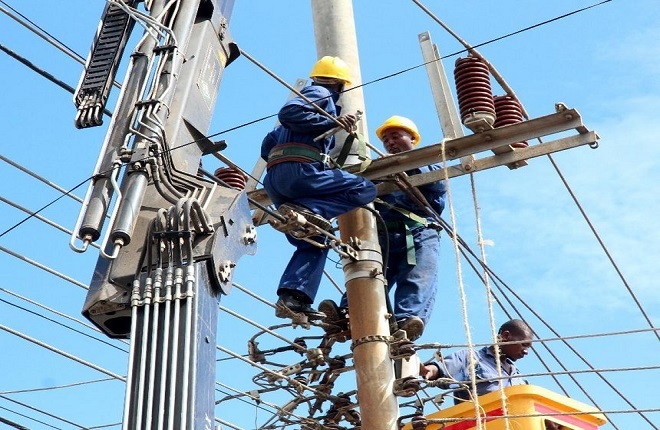
Sub-Saharan Africa recorded its largest annual reduction in the number of people without electricity access in 2025, according to the IEA.
The gains reflect stronger policy momentum and investment, but conflict, population growth and financing pressures continue to undermine progress.
The next challenge is sustaining connections and ensuring that access becomes dependable electricity for homes, public services and businesses.
Attention | A record reduction, not universal progress
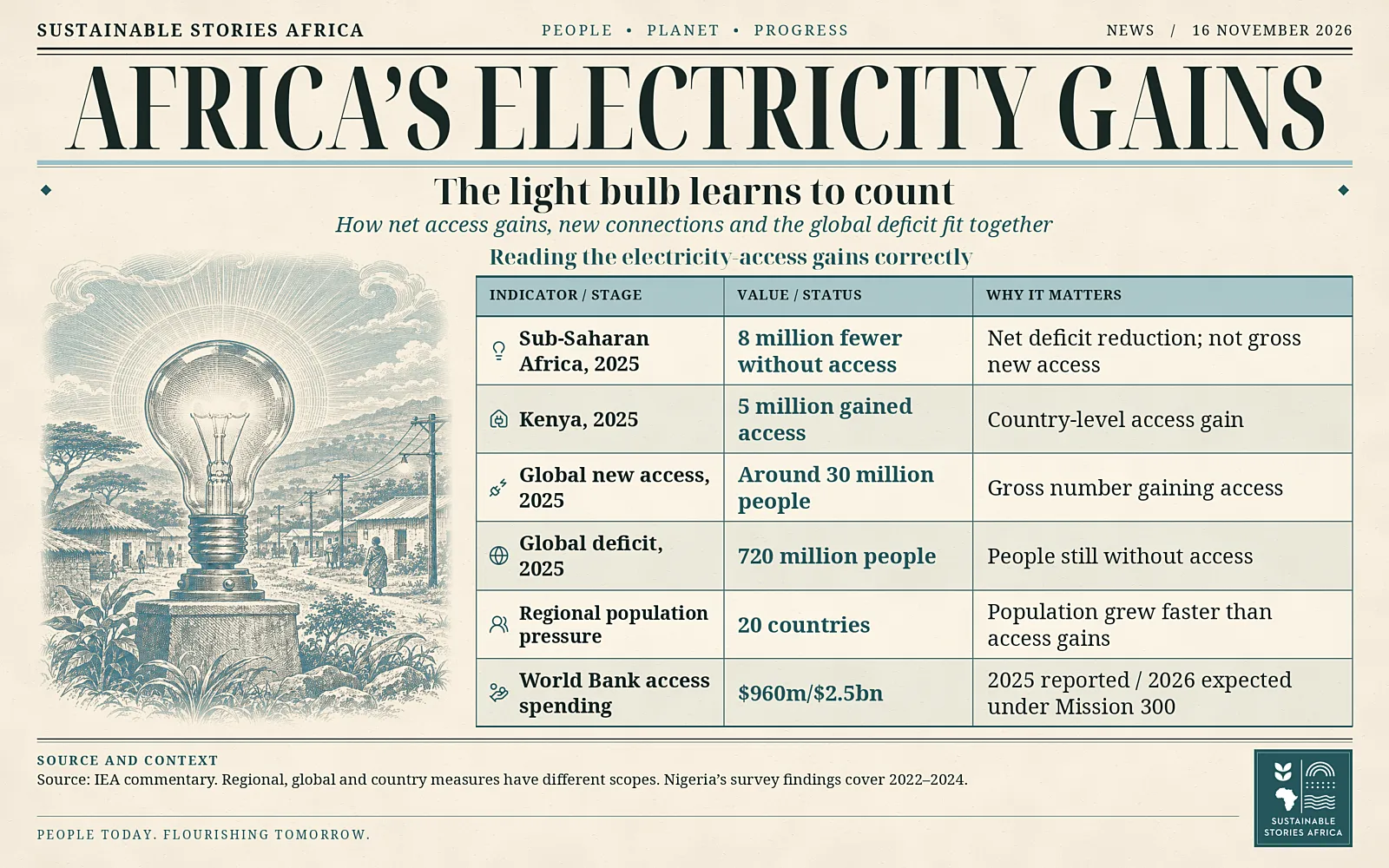
Sub-Saharan Africa reduced the number of people without electricity access by a record eight million in 2025, the largest improvement since the International Energy Agency began tracking access in 2000.
- Kenya was a major contributor, with five million people gaining access
- Mozambique, Senegal and Uganda each increased their access rates by more than five percentage points.
The improvement is significant, but the measures must be kept separate.
- The eight-million figure is the net decline in people without access across sub-Saharan Africa; it is not the total number newly connected.
- Population growth affects the balance.
The IEA’s assessment shows that faster electrification is beginning to make a larger dent in the deficit, without eliminating the underlying challenge.
Investment strengthens, but progress diverges
Globally, around 30 million people gained electricity access in 2025, while the number without access declined by around 15 million to 720 million.
- The IEA described this as the largest annual global reduction since 2020.
- Within sub-Saharan Africa, 25 of the region’s 50 countries progressed faster in 2025 than their average pace between 2010 and 2019.
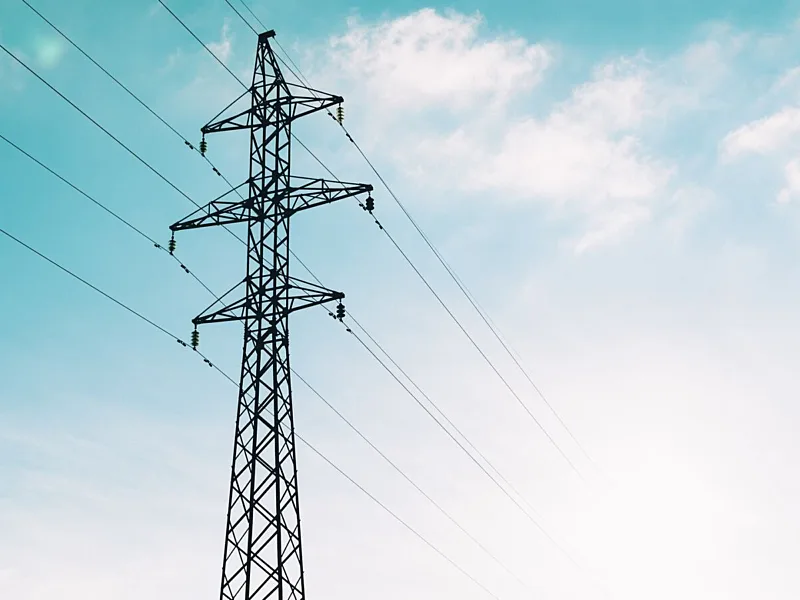
The agency linked the acceleration to stronger national electrification plans and investment in electricity infrastructure.
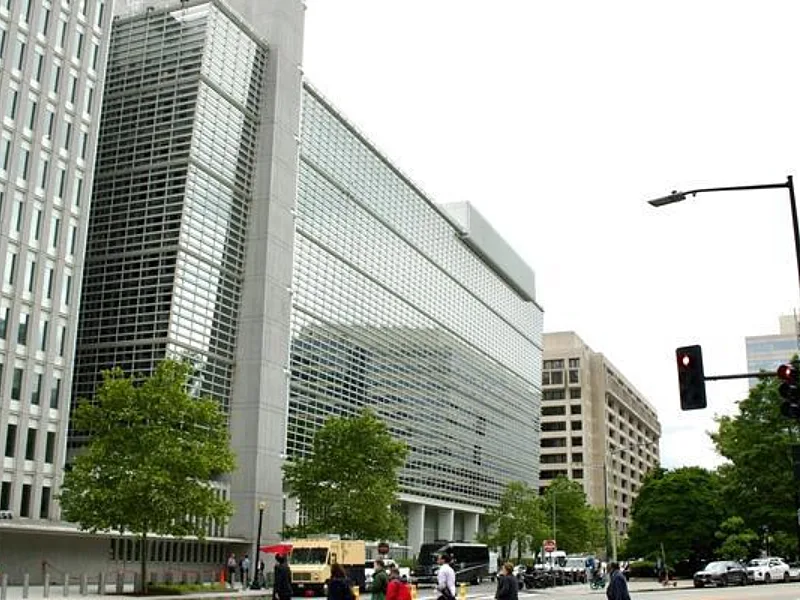
- Under Mission 300, World Bank electricity-access investment amounted to $960 million in 2025, with spending expected to rise to $2.5 billion in 2026.
- The latter is an expectation in the IEA account, not confirmation of full-year disbursement.
- Investment in generation and transmission involving Chinese and Middle Eastern actors also increased.
The regional picture nonetheless contains serious setbacks. Sudan’s access rate fell amid conflict.
- In Nigeria, the latest surveys pointed to a decline between 2022 and 2024, particularly in the northwest, where insecurity and displacement disrupted access.
- That Nigerian finding covers an earlier period and should not be labelled a measured 2025 decline.
In 20 sub-Saharan African countries, population growth outpaced the number gaining access in 2025.
Desire | Turn a connection into economic capability
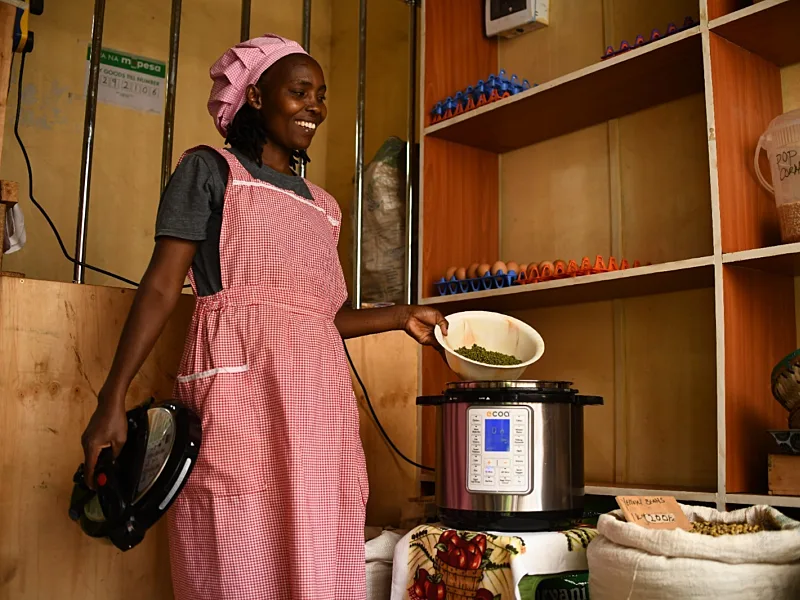
- The development significance of electricity extends beyond a connection count. For African policymakers, the intended outcome is power that enables services and productive activity, rather than infrastructure that appears complete on paper but does not meet users’ needs. The IEA’s emphasis on infrastructure investment and continuing reliability challenges reinforces the importance of evaluating access alongside the quality of supply.
This distinction should shape the next phase of electrification.
- Connection programmes need to be assessed together with generation, transmission and the capacity to maintain service.
- A household gaining initial access and a business receiving dependable electricity represent related but different development outcomes.
- Neither should disappear inside a single headline indicator.
The IEA is also using satellite observations of nighttime lights to capture changes more effectively, especially in conflict-affected areas where surveys are becoming less frequent.
- This approach matters because national averages can conceal losses in places that are difficult to reach.
- Better information can help direct attention towards communities whose access is deteriorating even as regional totals improve. [web:6]
Protect momentum against financing and security shocks
The IEA warned that sustaining the acceleration in 2026 could prove difficult.
- Higher fuel costs associated with the Middle East conflict are straining government and utility budgets, while debt-servicing pressures and declining development finance could constrain new connections.
- Continuing instability in the Horn of Africa and the Sahel adds another obstacle.
- These are risks identified by the agency, not a final assessment of 2026 outcomes.
Governments and partners should therefore report delivery against electrification plans with clear distinctions between commitments, expenditure, completed connections and service performance.
- Where population growth is still outpacing access gains, programmes need to identify whether the binding constraint is finance, infrastructure, implementation capacity or insecurity.
For Nigeria, the survey findings underline the importance of restoring services and reaching displaced or underserved populations alongside adding new infrastructure.
- The broader African priority is to make the recent acceleration durable: a record year is a platform for sustained delivery, not evidence that the access challenge has been solved.
- That distinction also matters for editorial accountability: regional progress should not erase national setbacks, and a national average should not conceal communities losing access.
Reporting both gains and reversals gives a more useful picture of the transition.
Path Forward – Sustain Connections Through Investment And Stability
Africa’s electricity gains show that stronger policy and investment can reduce a long-standing access deficit.
Protecting that progress requires financing that reaches implementation and services that remain available after connection.
National reporting should track population growth, regional inequality and reliability alongside access rates, keeping conflict-affected communities visible in the next phase of electrification.