Leaders at COP31 have called for faster investment in clean cooking ahead of a Nairobi summit scheduled for January 2027.
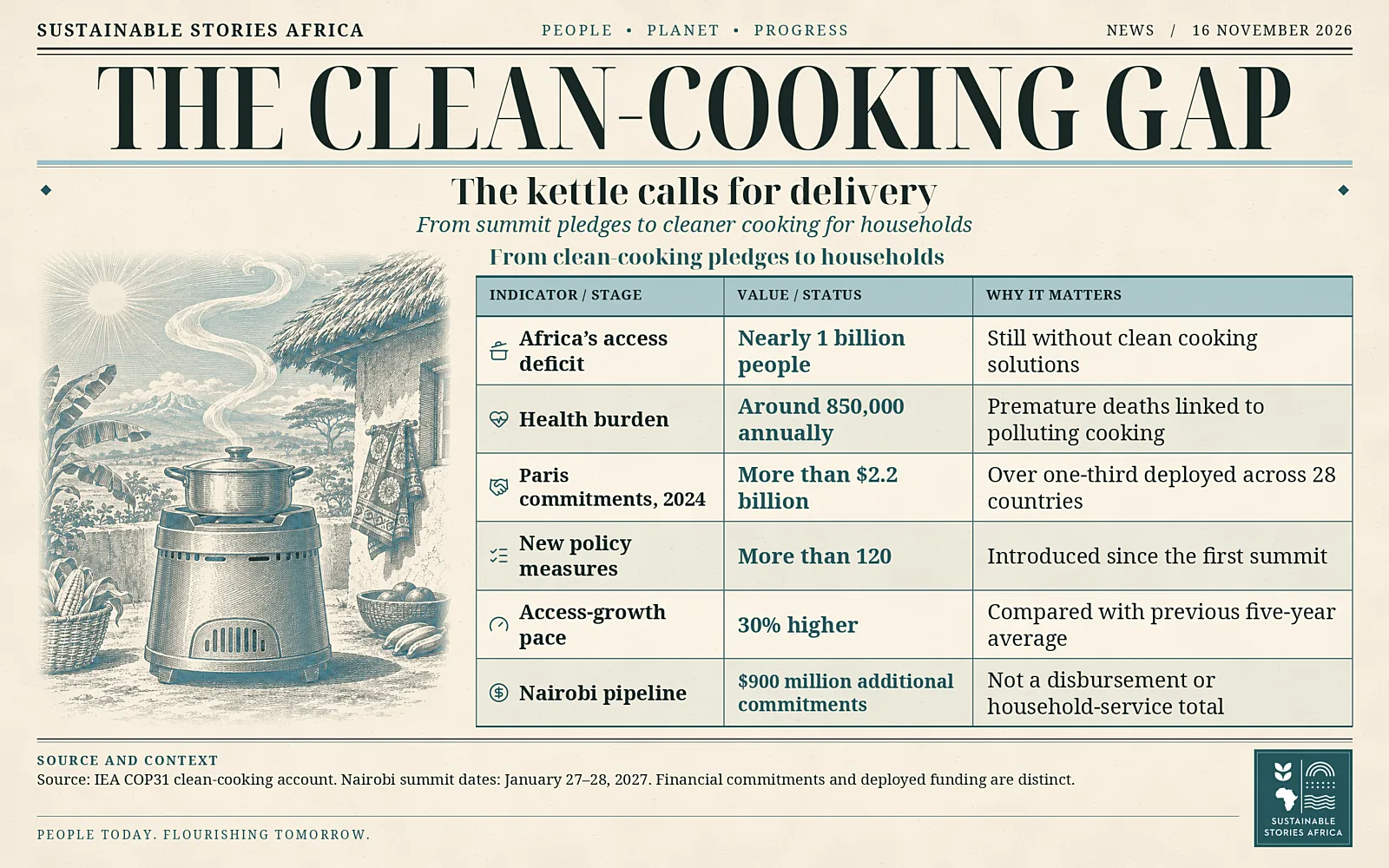
The IEA reports stronger growth in access and new financing commitments, but nearly one billion Africans still lack clean cooking solutions.
Success is moving from pledged money to affordable services that reduce the burden on families, especially women and children.
A household challenge moves up the agenda
Africa’s clean-cooking drive is gathering momentum, but leaders meeting at COP31 have been urged to turn rising financial support into faster delivery for the nearly one billion people on the continent still without clean cooking solutions.
- A roundtable convened by the IEA, Türkiye’s COP31 Presidency and Tanzania focused attention on implementation ahead of the second Summit on Clean Cooking in Africa. [web:7]
That summit is scheduled for Nairobi on January 27 – 28, 2027.
- The IEA says an additional $900 million in new financial commitments has been secured ahead of the meeting.
- The announcement strengthens the financing pipeline, but commitments should not be confused with money disbursed or households already served.
Funding begins to reach projects
The first African clean-cooking summit, hosted by the IEA in Paris in 2024, mobilised more than $2.2 billion in new financial commitments.
- According to the agency, over a third has since been deployed in projects across 28 African countries.
- Governments have also introduced more than 120 new clean-cooking policies.
The IEA says the pace of access in Africa is now 30% above the average over the previous five years.
- This is an acceleration in the rate of progress, not evidence that access coverage has increased by 30 percentage points.
- The distinction matters when policymakers assess how quickly to reduce the remaining deficit.
The roundtable included Tanzania’s President Samia Suluhu Hassan and Türkiye’s Vice-President Cevdet Yılmaz, alongside other African leaders, ministers and development institutions.
- Discussions extended beyond households to schools, hospitals and public institutions, while highlighting local and women-led enterprises.
- The account therefore presents clean cooking as a public-service and enterprise challenge as well as a household energy issue.
Put health and women’s time first
The human stakes remain substantial.
- Reliance on polluting cooking fuels and technologies contributes to around 850,000 premature deaths annually across Africa, according to the IEA.
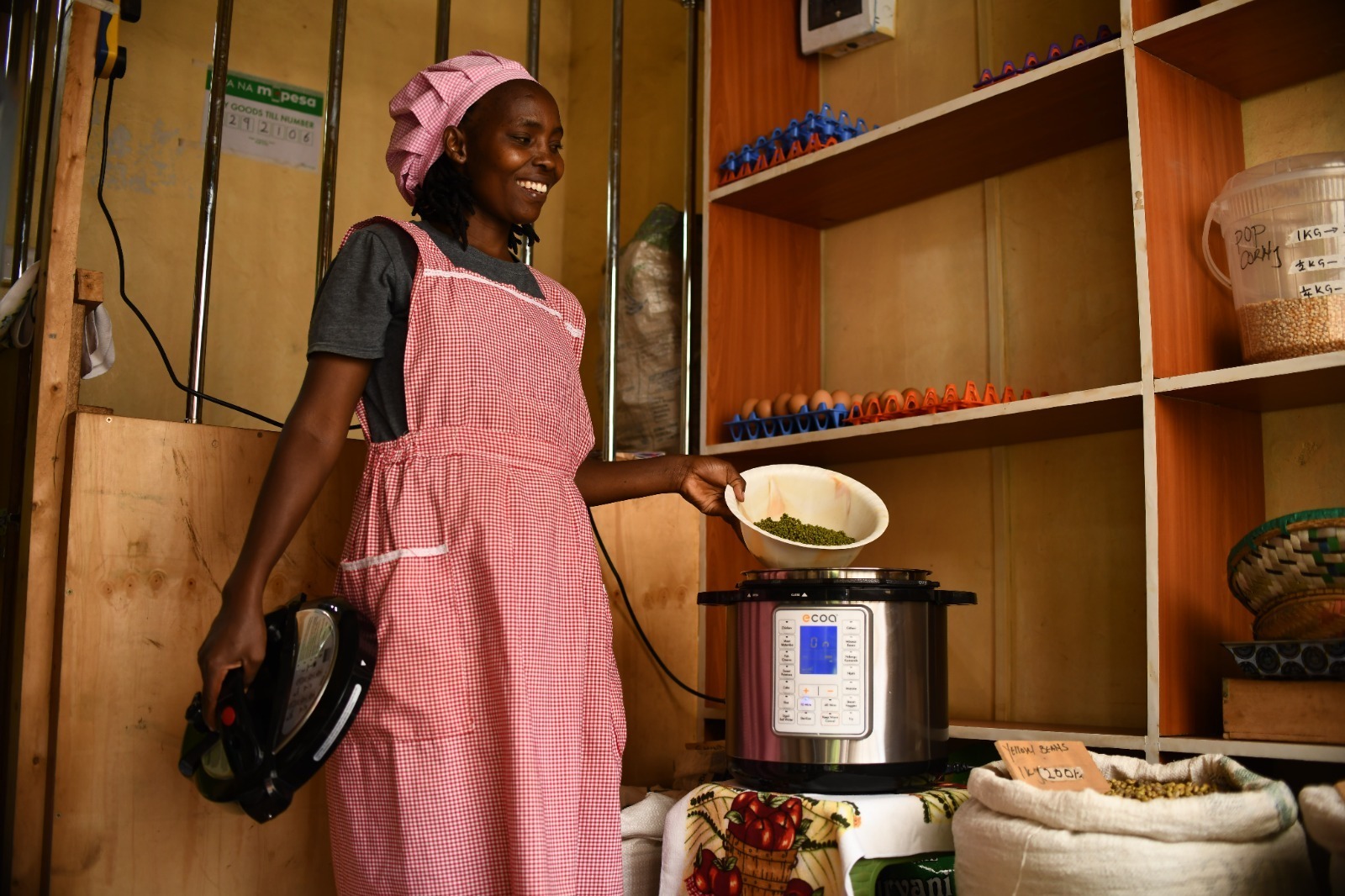
- Women and children bear much of the burden, including time spent collecting fuel and cooking.
- These impacts help explain why clean cooking belongs within health, development and gender policy rather than being treated as a narrow energy-sector intervention.
“Our success must be measured not only by the resources we mobilise, but by the number of families gaining access to affordable, reliable and sustainable clean cooking solutions,” President Hassan said.
- Her statement sets a more demanding test than the headline value of a funding announcement: support must result in services families can obtain and continue using.
That framing has direct implications for investment design.
- A programme should show how its financing reaches users and enterprises, what makes its service affordable, and how to measure results.
- Access gains are more meaningful when reported alongside continued availability and use.
- These are implementation priorities arising from the delivery challenge, rather than outcomes established by the new pledges.
Make Nairobi a delivery checkpoint
Kenya, Norway, the United States and the IEA will co-chair the Nairobi summit, with support from the African Union and African Development Bank Group.
- Governments, institutions and companies have been invited to match further commitments with implementation.
Ahead of that meeting, financiers should clarify which commitments are new, which have reached projects and which still require agreements or approvals.
- Governments should connect national policies with practical delivery arrangements, while project reporting should identify who is being reached, including public institutions and underserved communities.
- The existing Paris commitments and the additional Nairobi commitments must be separately tracked rather than combined into a loosely defined total.
The IEA says recent progress has continued despite disruption to energy flows through the Strait of Hormuz.
- This context strengthens the case for monitoring supply resilience alongside affordability.
- The objective is not simply to distribute more equipment, but to build services and enterprises that will continue through economic and supply shocks.
For readers across African markets, the practical accountability question is straightforward: how much of the announced support has become a dependable cooking option in the communities it was meant to serve?
A consistent public scorecard would help distinguish financing momentum from practical progress, while keeping the remaining access deficit at the centre of the discussion.
Path Forward – Turn Cooking Commitments Into Lasting Access
Nairobi should connect new funding with clear delivery milestones, transparent disbursement reporting and affordable services.
Public institutions, local enterprises and women-led businesses should remain central to implementation.
The strongest measure of progress will be sustained use by families, reduced exposure to polluting cooking practices and a smaller access deficit, not the size of the next pledge alone.