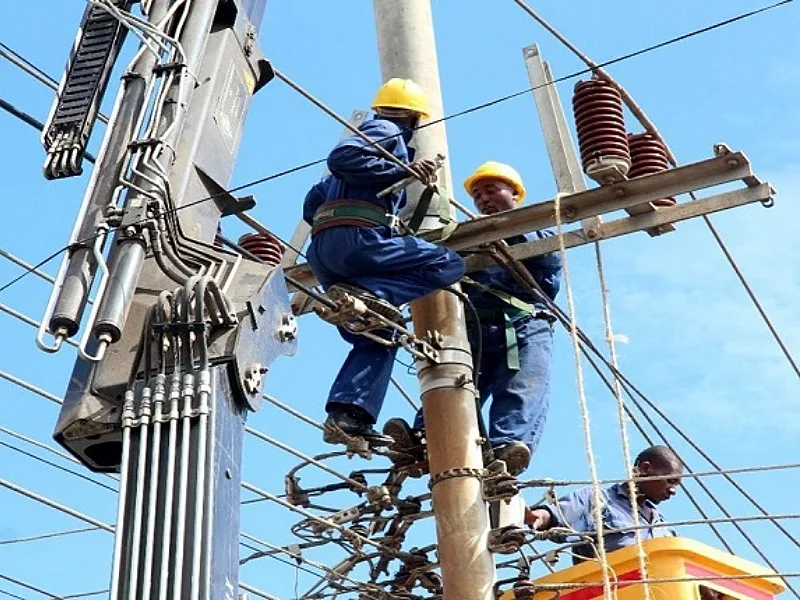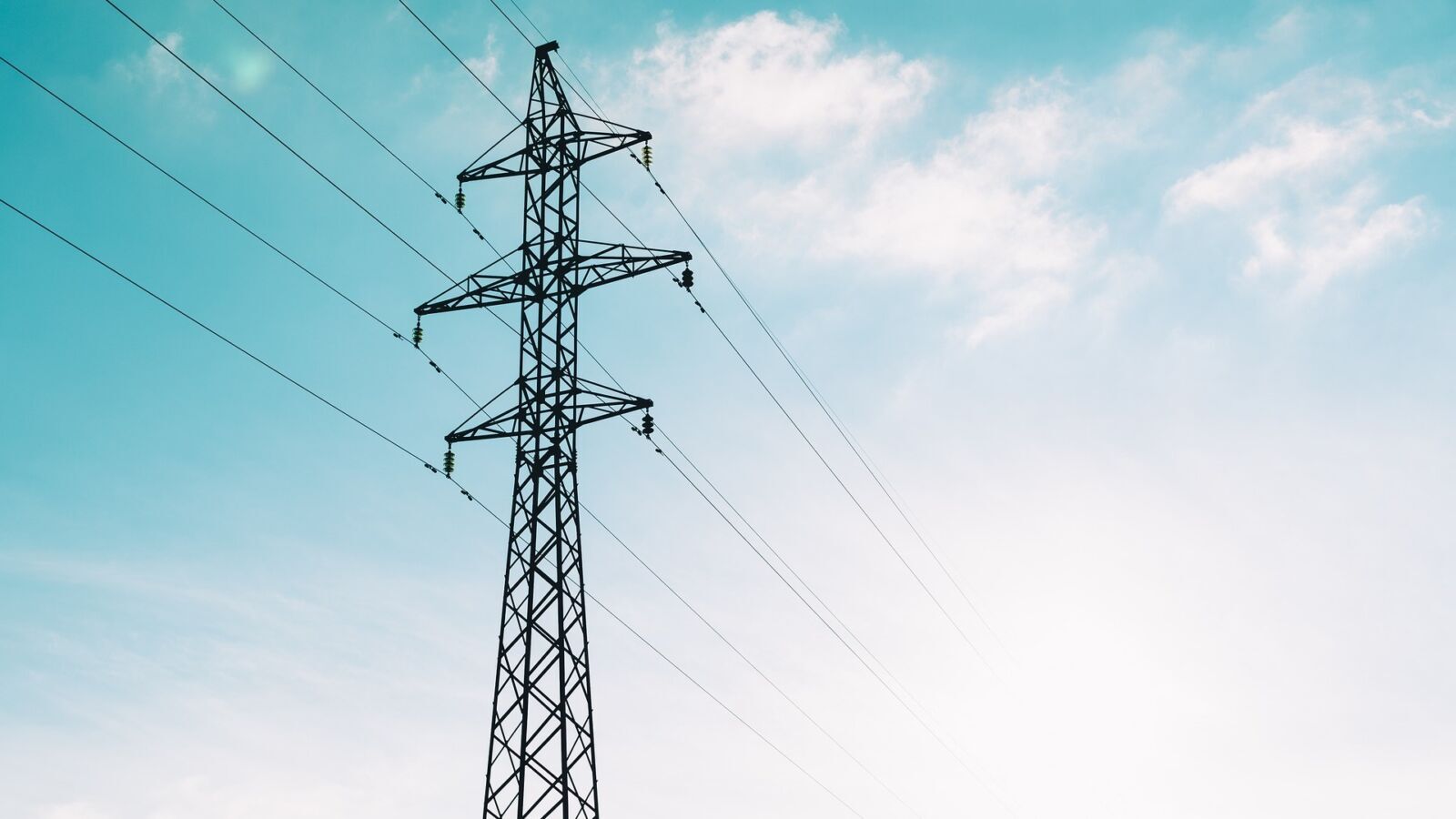
Transmission investment in developing countries needs to double to about US$70 billion annually, according to the World Bank.
A COP31 session put planning, regulation and private investment at the centre of efforts to expand electricity networks.
For African economies, the issue is whether new power projects can translate into dependable electricity where people and businesses need it.
Generation ambitions need networks that deliver
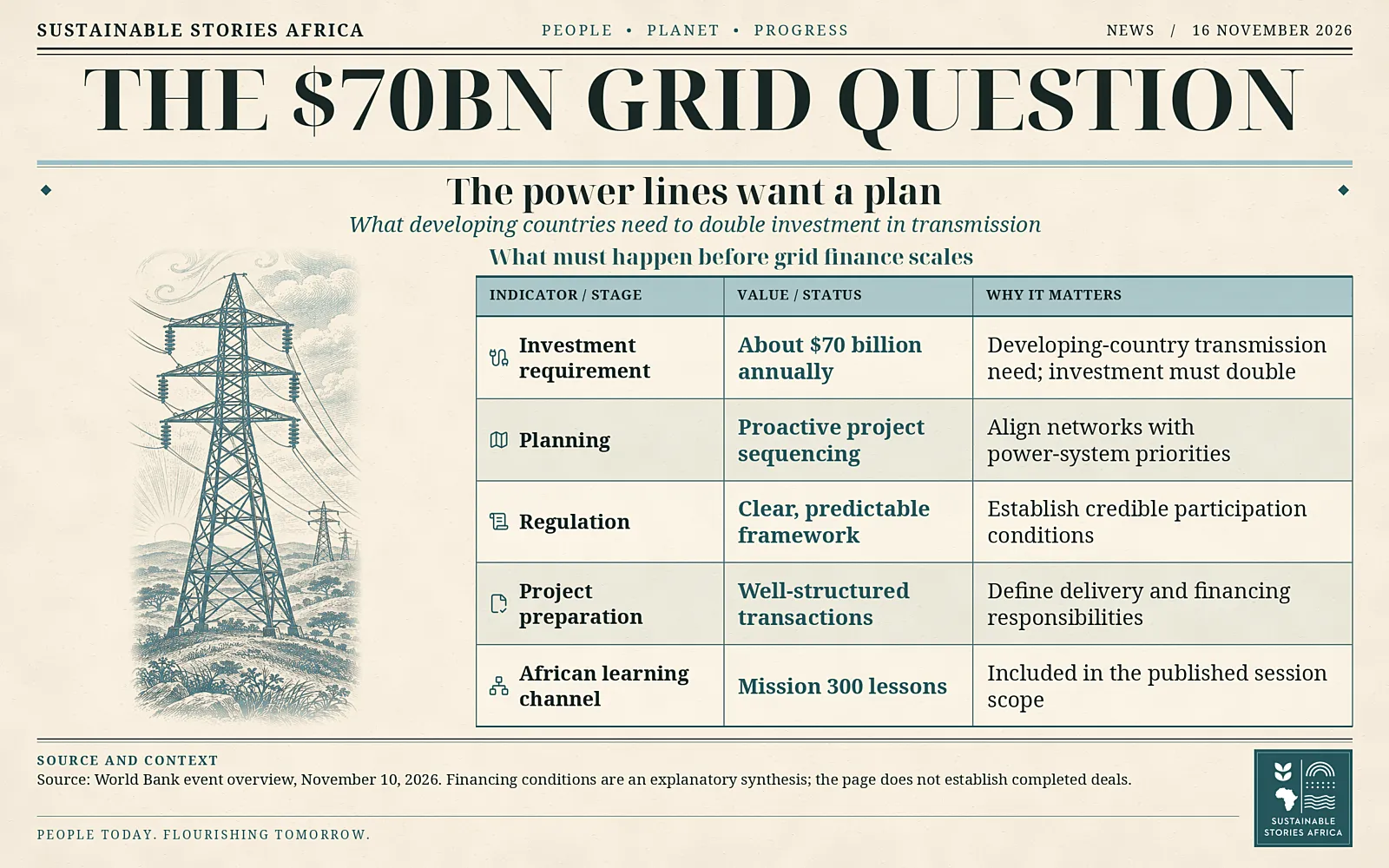
Developing countries need to double transmission investment to about $70 billion a year to meet demand, according to the World Bank’s framing for its November 10 COP31 session on financing electricity networks.
- The institution says limited transmission infrastructure is slowing electrification and restricting the connection of new power sources to the grid.
For Africa, that shifts attention from announced generating capacity to whether electricity systems can move power to users.
The World Bank session, titled “Transmission Impossible: Unlocking Finance for Electrification”, presented private participation as part of the response to a financing requirement beyond what governments and development institutions can support alone.
- This article sets out the discussion’s purpose; it does not document an agreed financing package.
Planning and regulation precede investment
The event drew on the World Bank Group report, Transmission Impossible: Success Factors for Independent Power Transmission Projects.
- It identified Brazil and India as countries from which participants would examine lessons on attracting private investment.
- It highlighted proactive planning, clear regulation, well-structured projects and innovative financing approaches.
These priorities explain why a transmission-finance discussion cannot begin and end with the availability of money.
- Investors need a defined project and a credible framework for how it will operate.
- Public authorities need to understand what service to purchase and how to manage costs and risks.
- The World Bank’s emphasis on planning and structure places the questions ahead of assumptions that private finance will automatically arrive.
Mission 300 in Africa also featured in the session’s stated scope.
- However, the overview does not provide country-level transmission allocations, named African transactions or verified speaker remarks.
- Its strongest supported message is therefore about investment conditions, not a newly confirmed continental project pipeline.
The $70 billion figure refers to the developing-country investment requirement described by the World Bank, not an Africa-only funding gap.
Connect infrastructure spending with service value
Stronger transmission networks are intended to support reliable, affordable electricity and allow new generation sources to connect.
- These are system benefits, not benefits assessed by counting kilometres of lines alone.
- The investment case should therefore connect physical infrastructure with the electricity service it is expected to enable.
For African decision-makers, this suggests evaluating generation and network plans together.
- A power project and the transmission infrastructure needed to serve it should not advance on incompatible schedules.
- Equally, an attractive financing proposal should not substitute for evidence that a particular network investment fits the country’s priorities and demand outlook.
Private participation could broaden available financing for necessary projects, but the choice of model should follow the service need.
- The event overview supports learning from international experience; it does not establish that another country’s regulatory design can be transplanted unchanged.
- Differences in institutions, utility finances and project preparation must be examined before concluding suitability.
A balanced African debate should therefore ask two linked questions:
- Can a project attract capital
- Can its contractual structure sustain an affordable public service?
Financial completion and development value are related, but neither proves the other.
Publish the terms of network delivery
Governments and development partners should translate transmission priorities into credible project pipelines with clear implementation responsibilities.
- The World Bank’s stated success factors point to early planning, regulatory clarity and well-prepared transactions, rather than last-minute attempts to finance infrastructure after generation decisions have already been made.
Public authorities should also make risk allocation understandable.
- Where a private investor is paid to make infrastructure available, citizens should understand the public obligations, performance requirements and consequences of failure.
- These are editorial accountability priorities arising from the financing model, not terms disclosed for a specific transaction on the event page.
Environmental and social assessment should accompany technical preparation, particularly where routes affect communities or sensitive habitats.
- The objective should be a project that is feasible, financeable and publicly defensible.
- A financing announcement that leaves those questions unresolved is not yet evidence of a stronger electricity system.
The immediate policy opportunity is to give networks the same strategic attention already devoted to new generation.
- Electrification ambitions depend on both, and financing strategies need to reflect that relationship.
Path Forward – Finance Networks Around Affordable, Reliable Service
African transmission programmes need coordinated planning, credible regulation and transparent contracts before private capital can support delivery at scale.
International experience can inform those choices without replacing country-specific analysis.
Success measures should be power that reaches users reliably and affordably, supported by infrastructure whose costs, risks and responsibilities remain visible throughout its operating life.