The World Bank Group has presented climate investments at COP31 that put employment and economic resilience at the centre of its development case.
The announcement connects public financing with expected private investment across productive sectors.
For African policymakers, the question is how similar approaches could deliver reliable services, stronger businesses and measurable livelihoods.
Climate investment faces a livelihoods test
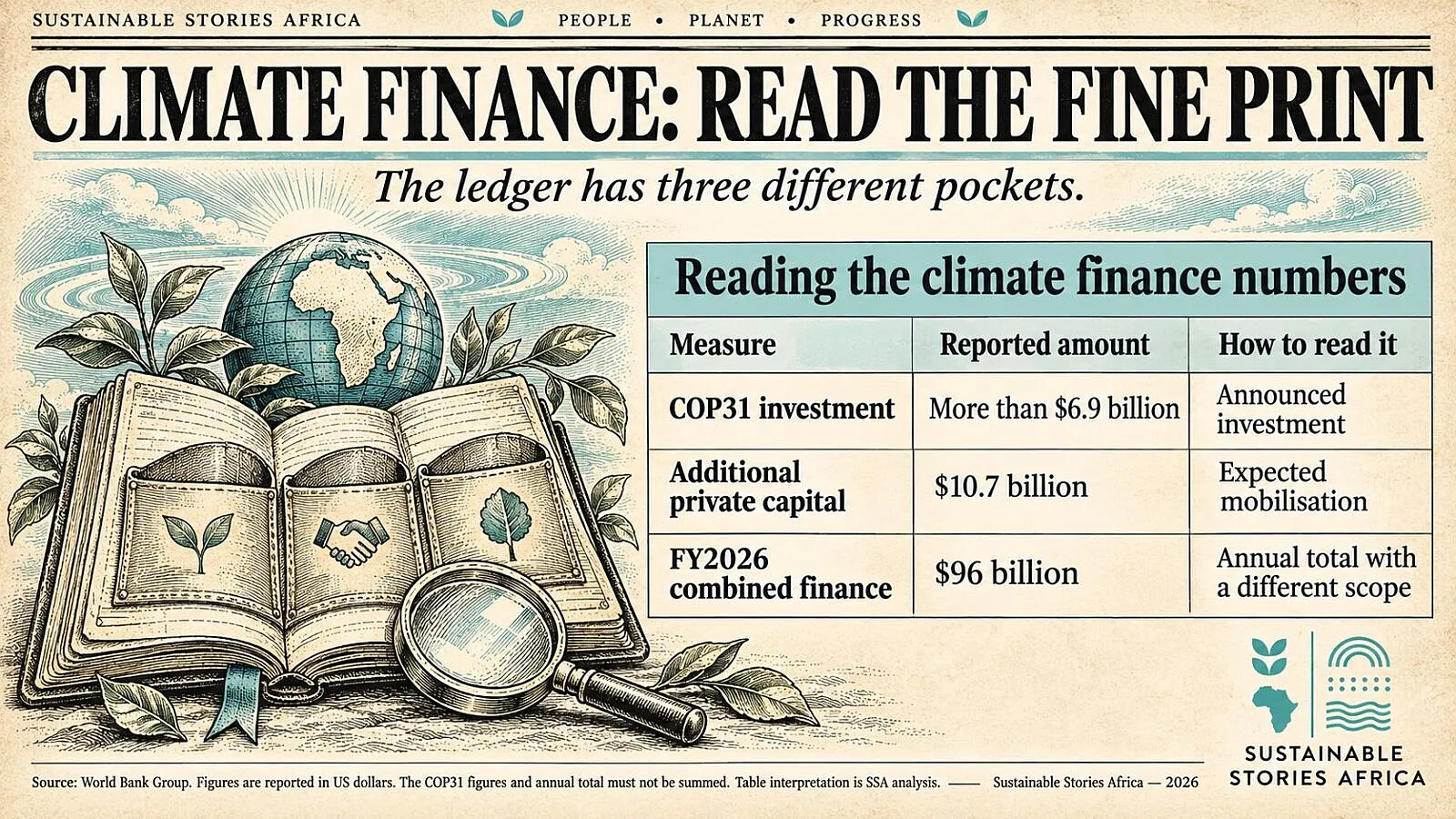
On November 17 at COP31 in Antalya, Türkiye, the World Bank Group and partners announced a package involving more than $6.9 billion in investment and an expected additional $10.7 billion in private capital.
- It focuses on development that creates jobs while strengthening resilience.
The distinction between the announced investment and capital expected matters.
- These figures describe financing ambitions and project arrangements; they do not establish that every dollar has reached a business or that projected employment has materialised.
For readers assessing climate finance, delivery remains the essential test.
The financing story behind the announcement
The Group also reported $48 billion in financing with climate co-benefits in fiscal 2026 and $48 billion in private capital mobilised, a combined $96 billion.
- These annual figures have a different scope from the COP31 package and should not be added to it as though they were separate, comparable pledges.
The announcement links climate investment to agriculture, manufacturing, infrastructure and energy.
That framing is relevant to African development debates because it asks a practical question:
- What does climate finance make possible for the people expected to use it?
Financing agreements must be assessed by the services, productive capacity and security it supports.
What better investment could make possible
SSA analysis suggests the strongest employment case would link construction work with lasting demand for skills, maintenance and local services.
- A project can employ many people during development and far fewer once operating.
- Reporting those stages separately would help communities understand the opportunity and help governments avoid overstating permanent employment.
Consider a small manufacturer evaluating an electricity-dependent expansion.
- The useful outcome is a service the firm can afford and rely on, together with finance that fits its cash flow.
- For that business, the value of climate investment would be measured in workable production schedules and sustainable orders.
- This is an illustrative decision, not a reported beneficiary account.
The same scrutiny should apply to who gains.
- Project developers could publish supplier opportunities, skills requirements and accessible recruitment processes before construction begins.
That would give smaller firms and potential workers time to prepare, rather than leaving local participation to informal networks after contracts have been awarded.
Turn the jobs promise into evidence
For African governments considering comparable investment structures, SSA identifies three practical questions:
- Which services will improve
- Who will gain access
- How will outcomes be verified?
These questions should shape procurement and monitoring from the beginning.
- Climate objectives and development outcomes are easier to assess when both have clear baselines.
Public institutions should also explain the obligations that remain with the state when private capital participates.
- A mobilisation headline alone cannot show whether risks and rewards are fairly allocated.
- Transparent contract terms, service standards and grievance arrangements would let citizens assess an investment’s public value.
Investors, meanwhile, should be asked to distinguish expected benefits from measured performance.
- Employment reporting should identify the unit being counted, the period covered and whether work is temporary or sustained.
- Similar discipline should apply to affordability, service reliability and environmental performance.
This would turn a broad development narrative into a record that can be checked over time.
A further assessment concerns the cost of sustaining the asset after the initial investment.
- SSA recommends that project appraisals explain who will pay for maintenance, how service interruptions will be handled and whether users can afford the resulting charges.
- A completed facility is only the beginning of an operating commitment.
This also provides a clearer basis for comparing proposals.
- An investment with a compelling headline total may offer less useful public value than a smaller project with dependable service and manageable obligations.
- The comparison should therefore include the whole operating period, with assumptions made visible.
- This is an appraisal recommendation, not a ranking of the projects announced at COP31.
Public reporting should therefore continue beyond financial close.
- Citizens need to see whether promised services remain available and whether the responsible institutions can maintain them through the life of the investment.
Path Forward – Make climate finance deliver lasting livelihoods
The priority is to connect financing commitments with services, productive activity and credible employment outcomes.
African institutions can use the announcement as a prompt to strengthen project preparation and public reporting.
Judge progress through delivery milestones and independently assessable results.
The financing story becomes a development story when people can see what changed.