IFAD and Türkiye’s agriculture ministry warn that El Niño could ultimately cause major global economic losses and lasting food security effects.
Their report argues for connected investments in inputs, markets and finance.
For small-scale producers, resilience depends on whether those elements work together before overlapping shocks strike.
A global warning puts rural resilience first
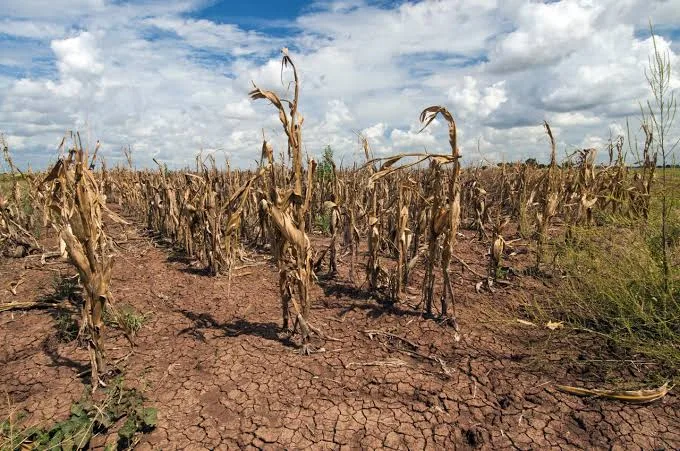
El Niño could ultimately cost the global economy up to $11 trillion, IFAD and Türkiye’s Ministry of Agriculture and Forestry warned in an analysis released on November 9.
- Their report, Food Systems Under Stress, calls for integrated investment to strengthen rural resilience.
The figure describes a potential global economic cost.
- It is not an annual African loss estimate, a confirmed damage assessment or a request for an $11 trillion aid package.
Maintaining that distinction is necessary to understand the implications' scale without misrepresenting what is being measured.
Connected support performs better in the model
The report’s illustrative modelling compares responses when drought and price shocks occur together.
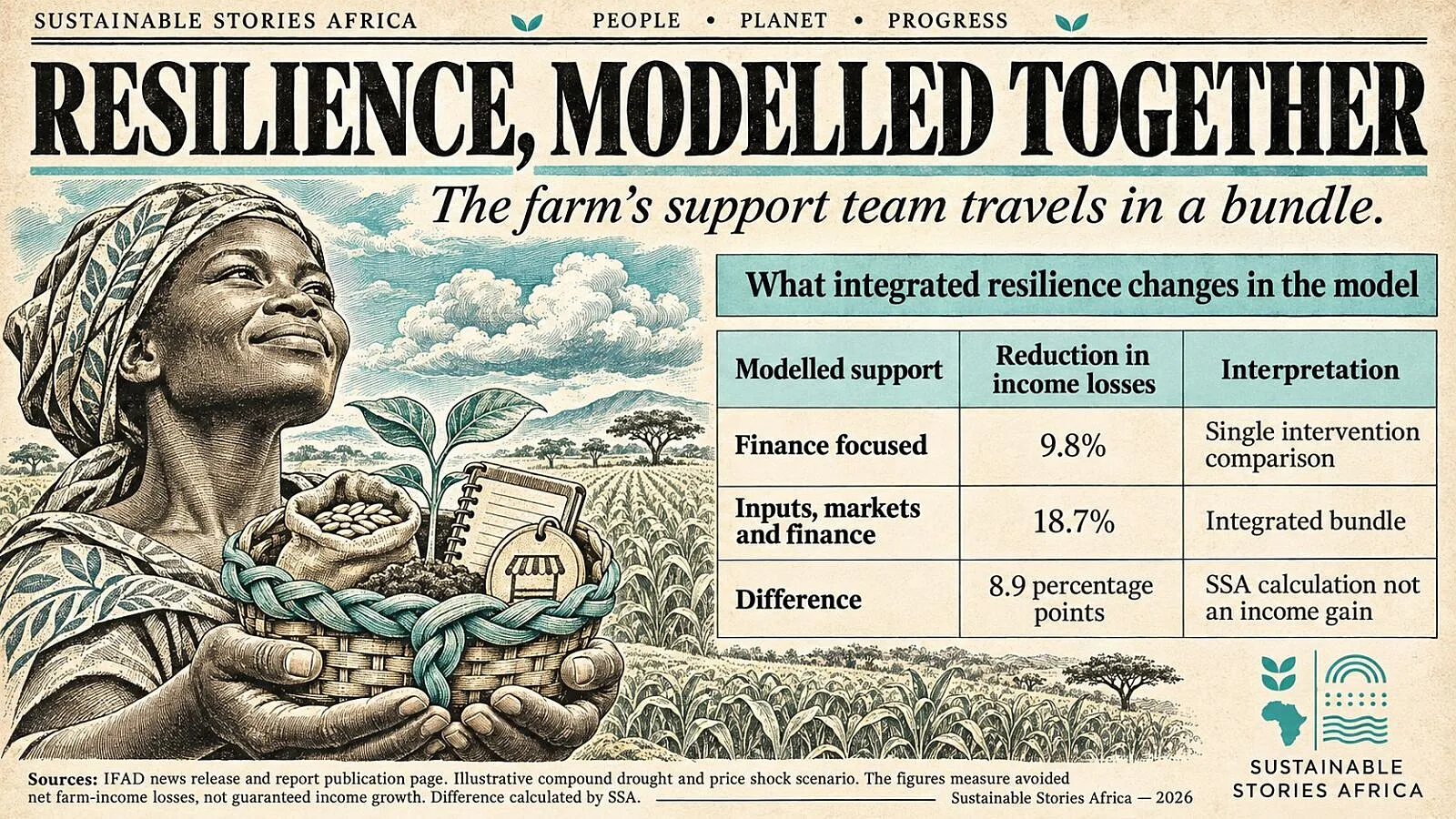
- A finance-focused intervention reduces farm-income losses by 9.8%.
- A bundle spanning inputs, markets and finance reduces losses by 18.7%.
The difference is 8.9 percentage points.
- These reductions in losses are under a modelled scenario, not guaranteed increases in farmers’ earnings.
- The report uses the comparison to argue that separate interventions can leave important vulnerabilities unresolved. [2]
The analytical importance is the unit of planning.
- Assess an agricultural investment through the producer’s complete route from obtaining inputs to receiving payment, rather than through the completion of one activity alone.
A resilient farm needs a viable route to market
Consider an illustrative farmer offered a more suitable production technology.
- The investment may still be difficult to justify if the farmer cannot finance adoption or has no dependable route to sell the resulting output.
- This example explains a planning problem; it does not describe an interviewed beneficiary or predict a universal outcome.
An integrated programme would ask how the separate pieces support each other.
- A lender would need to understand the production plan, while market arrangements would need to be credible enough to inform repayment expectations.
- Technical support would need to fit the conditions in which the farmer actually works.
- The relevant benefit is a more workable system, not simply a larger number of programme components.
Coordination also creates responsibilities.
- If several organisations deliver parts of a package, someone must identify gaps and resolve conflicting requirements.
- The farmer should not become the unpaid coordinator of a complex development programme.
Clear delivery roles and accessible support would make the promise of integration more concrete.
Design finance around interacting risks
African governments and development partners must assess agricultural proposals against overlapping pressures.
- An intervention may address one problem effectively while remaining exposed to another.
- A useful appraisal would explain those remaining exposures and the assumptions under which the proposed package is expected to work.
Monitoring should follow the same logic.
- Counting training sessions, loans or input deliveries provides information about activity, but the resilience question concerns what happens when conditions deteriorate.
- Evaluations should therefore examine the ability to continue production, maintain viable sales and recover without assuming that participation itself proves protection.
Access also needs scrutiny.
- A bundled programme could be difficult to use if its requirements exclude producers who lack documentation, collateral or time to navigate several organisations.
- These are potential design risks to examine, not findings about the programmes in IFAD’s report.
- Local consultation would help identify which requirements are necessary and which create avoidable barriers.
The call to action is to make integration a practical delivery discipline.
- Budgets, implementation schedules and review processes should show how the components connect.
- This would give rural communities and funders a clearer basis for deciding whether a proposal can support sustained livelihoods under stress.
Financing arrangements should also fit the timing of the farming activity.
- Examine when costs arise, when sales are expected and what happens if a shock interrupts that schedule.
- A technically complete package may still be difficult to use if its obligations conflict with the producer’s cash flow.
The review should consider the period after external support ends.
- Delivery partners need to explain which services can continue, who will provide them and how they will be paid for.
- This would help distinguish a temporary assistance bundle from a durable improvement in the rural economy.
Resilience requires an operating future as well as an initial intervention.
Path Forward – Connect inputs, markets, and rural finance
IFAD’s analysis advocates integrated investment before overlapping shocks deepen.
The immediate priority is to align production support, market access and finance around farmers’ needs.
Testing those connections through delivery and outcome measures.
The global warning is substantial, but the practical response begins with arrangements that allow rural producers to prepare, continue operating and recover.