The African Development Fund has approved a $26 million grant to restore essential healthcare in conflict-affected Sudan.
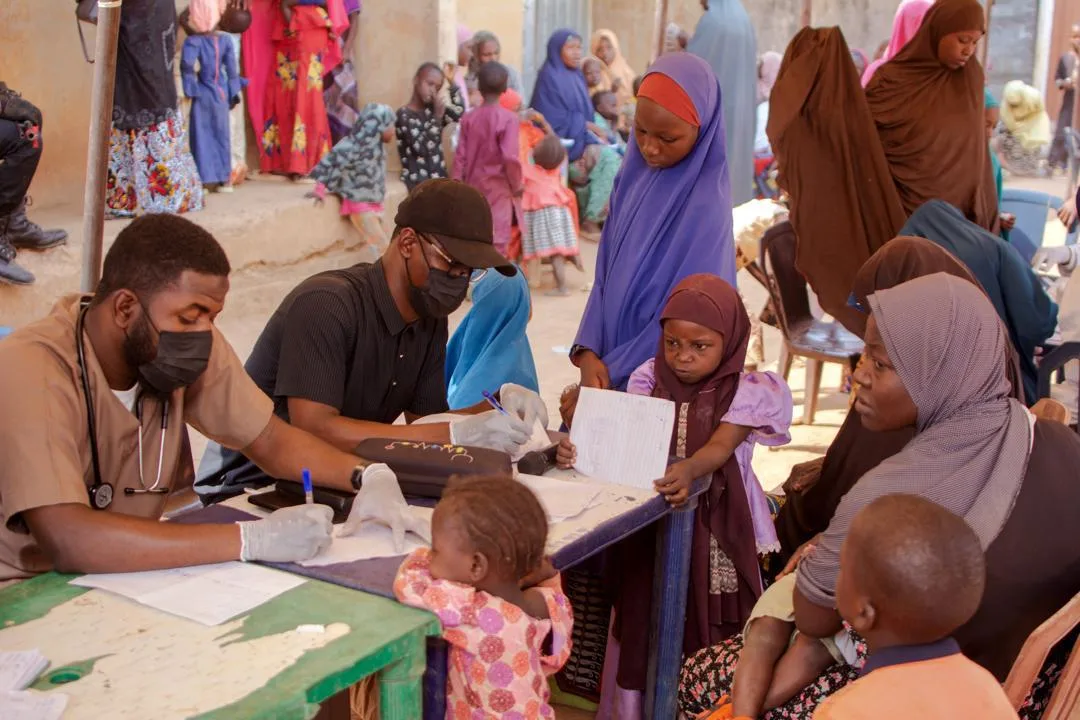
The project plans to rehabilitate community health centres and strengthen services for displaced people and host communities.
Its 3.1 million estimated beneficiaries include direct and indirect reach, making careful implementation and transparent measurement essential.
A health grant addresses disrupted care
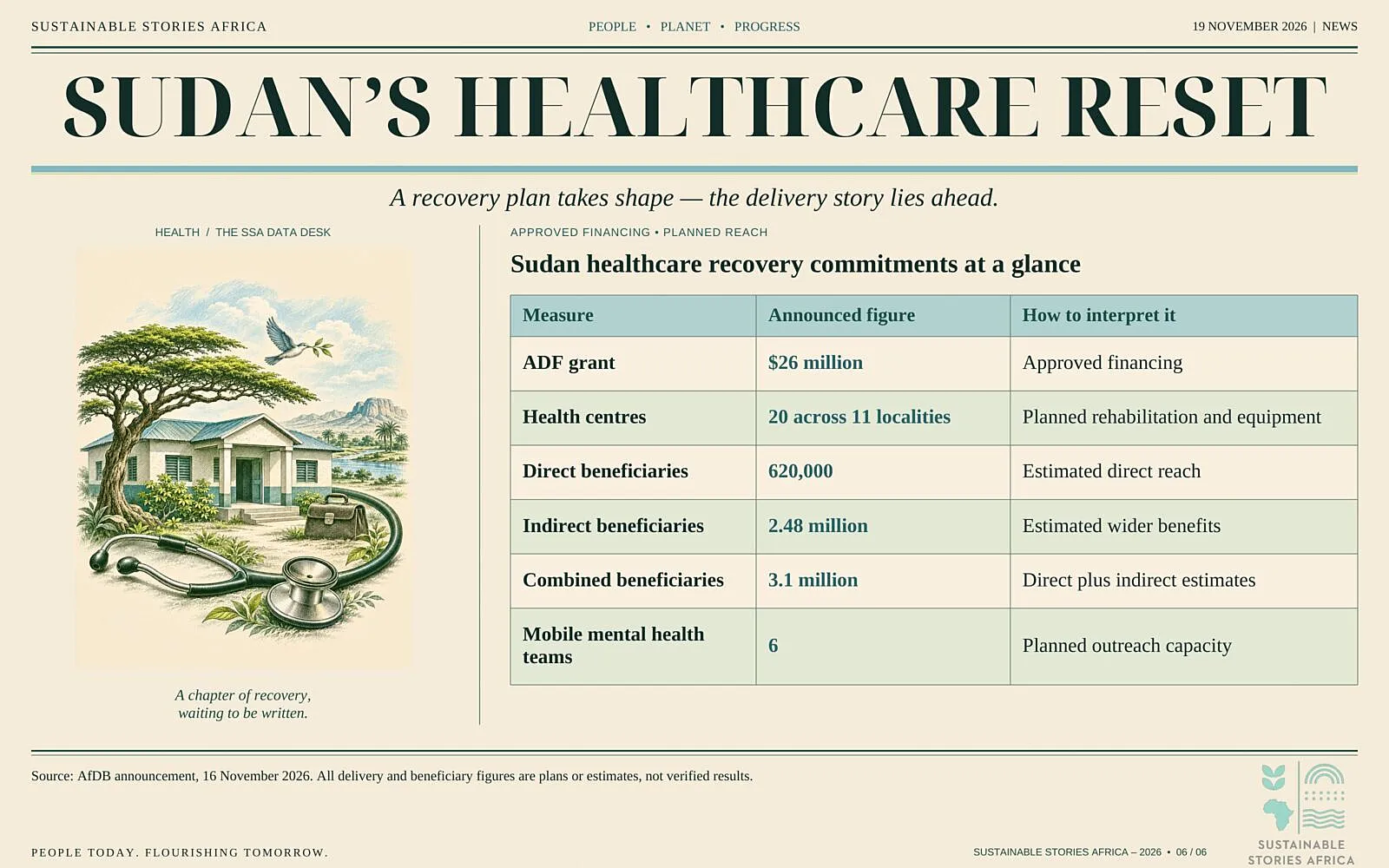
The African Development Fund has approved a $26 million grant for healthcare recovery in conflict-affected Sudan, the African Development Bank Group announced on November 16.
- The project, approved on October 30, will rehabilitate and equip 20 community health centres across 11 localities in five states.
- UNDP will implement it with health authorities and other UN agencies.
For a displaced household, the significance of a restored clinic is practical: whether care is reachable, staff are available and treatment can continue.
A financing approval creates an opportunity to address those needs. It does not establish that a centre has reopened or that a patient has already received care.
Count direct and indirect reach separately
The operation estimates 620,000 direct beneficiaries and 2.48 million indirect beneficiaries, totalling 3.1 million.
- It plans six mobile mental health teams alongside improved clinical services, solar power, water and sanitation.
- AfDB gives a total project cost of $30.06 million, including an additional $4 million from the Pandemic Fund.
- Its rounded component figures are not a detailed funding reconciliation.
The wider evidence base needs equally careful reading.
WHO’s HeRAMS Sudan report, published in June 2026, presents information on 4,809 health service delivery units using data reported through January 31.
- WHO cautions that verification continues and that the analysis is intended to inform operations.
- It is a dated service baseline, not a November assessment of project delivery.
Together, these sources show why financing totals and service availability answer different questions.
- One describes planned resources; the other helps identify where capacity and access need attention.
- Neither should be treated as evidence that the announced intervention has already achieved its targets.
Restore a service patients can depend on
A rehabilitated building becomes a meaningful health investment only when services function consistently.
- Equipment, staff, supplies, referral arrangements and basic utilities need to work together.
- If one essential part fails, patients may still face a journey that ends without treatment.
For displaced people and host communities, continuity deserves particular attention.
- A service must be usable beyond its opening day. Planning should consider how routine costs are met, how maintenance is organised and how staff can report emerging gaps.
- These are questions for implementation scrutiny, rather than assurances contained in the grant approval.
Mental healthcare also requires more than counting a mobile team.
- Its usefulness depends on safe access, suitable referral options and confidentiality.
- People seeking support need confidence that information will be handled carefully and that care is appropriate to their circumstances.
The indirect beneficiary estimate should be read with similar care.
- It may describe wider community benefits, but it is not a count of patients treated.
- Publishing a clear definition would help readers understand how indirect reach is estimated and what relationship it has to observed service use.
Make delivery visible at community level
Implementers can strengthen accountability by reporting the status of each centre, the services available and the obstacles affecting delivery.
- A facility should be counted as functioning against explicit criteria.
- Reporting only construction completion would leave the central question of healthcare access unanswered.
Community feedback should inform those assessments.
- Patients and local representatives can identify barriers that administrative records miss, including the practical difficulty of reaching a service.
- Feedback needs a safe route for raising problems and a visible process for acting on them.
- Participation would then support service quality rather than serve as a ceremonial milestone.
Financial reporting should also preserve the distinction between the grant, the wider project budget and other contributions.
- The announcement presents component amounts in rounded millions, so they should not be treated as a complete detailed funding schedule.
- More precise reporting would allow readers to understand expenditure and remaining financing needs.
The strongest future account will connect expenditure with operating services and verified reach.
- This does not require pretending the setting is predictable.
- It requires stating what was delivered, what remained inaccessible and what changes were made when assumptions proved unrealistic.
For communities waiting for care, the decisive measure will be dependable treatment.
For funders, that means maintaining attention beyond procurement and rehabilitation.
- A centre’s continuing ability to serve patients should remain the reason the investment is tracked.
Path Forward – Rebuild care around functioning local systems
The next steps are rehabilitation, equipment provision and service delivery, supported by clear monitoring and community feedback.
Implementers should distinguish operating centres, patients reached and wider estimated benefits.
Transparent financial reporting and attention to staffing, supplies and utilities will help turn the grant into healthcare that displaced families and host communities can depend on.