A corporate laptop can disappear from an asset register while retaining useful working life and commercial value.
A OneStop ESG analysis examines the financial, environmental and data risks that persist after equipment is collected.
For African businesses, responsible retirement offers a chance to protect information, preserve resources and support access to affordable technology.
Value survives the final entry
Companies retiring computers risk surrendering resale value and losing visibility over sensitive equipment when disposal is treated as a collection exercise.
A November 15 analysis by OneStop ESG highlights a governance gap between removing devices from corporate records and establishing what happens to them afterwards.
For an African employer replacing its office equipment, the practical question is straightforward:
- Which machines have actually stopped working, and which have simply stopped meeting the organisation’s requirements?
- The answer should shape the next decision.
Treating both groups identically can turn a recoverable asset into an avoidable cost.
The evidence behind the waste problem
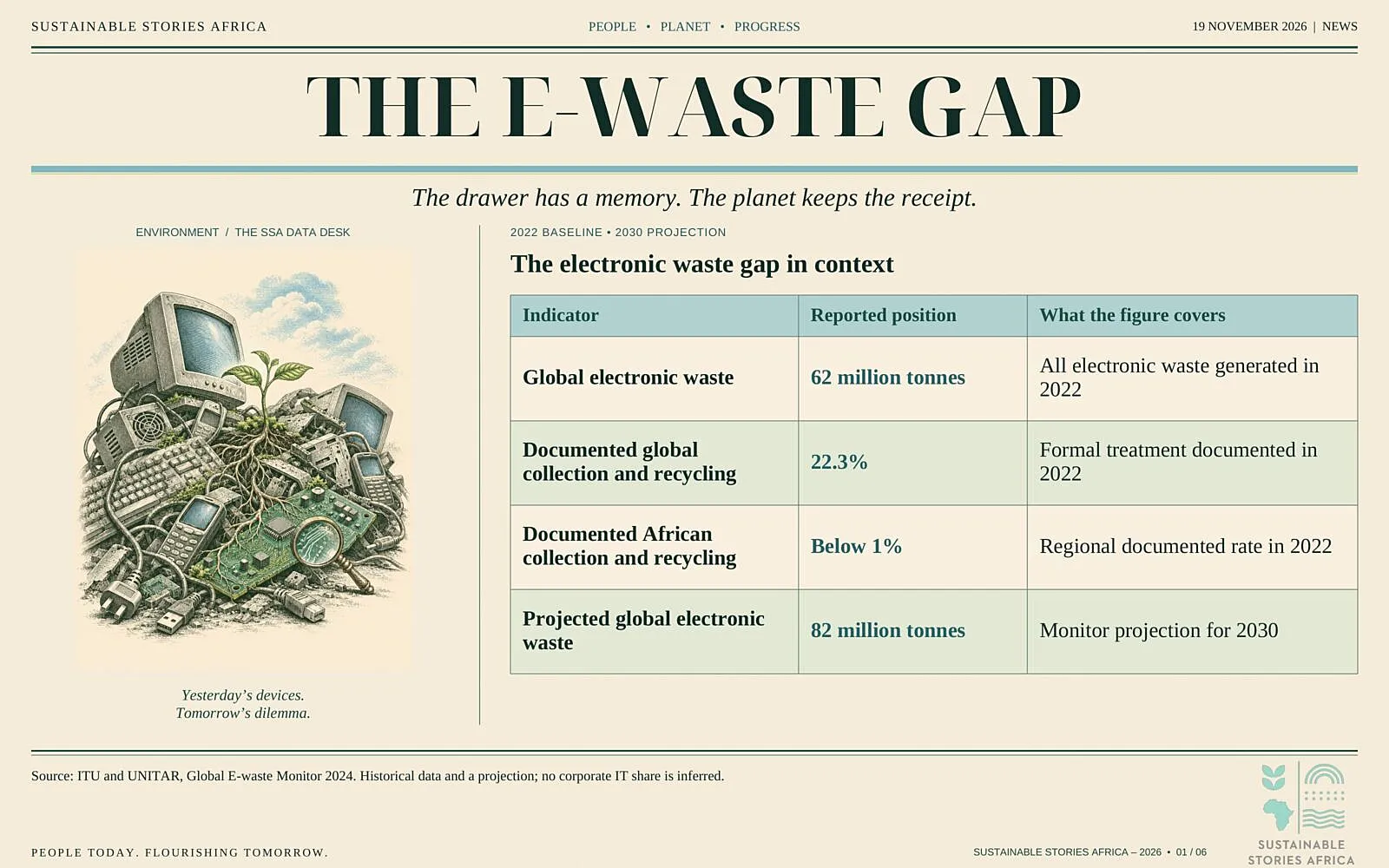
The Global E-waste Monitor 2024 puts worldwide electronic waste at 62 million tonnes in 2022.
- Only 22.3% was documented as formally collected and recycled. In Africa, the documented rate was below 1%.
- These are historical figures for all electronic waste, not a measurement of corporate laptop disposal in 2026.
OneStop ESG describes routes ranging from resale and refurbishment to component recovery and improper disposal.
- It also warns that a first collection certificate may reveal little about later handlers.
- Its example involving 400 laptops is hypothetical, rather than a reported corporate case.
Data protection introduces a separate test.
The US National Institute of Standards and Technology published revised media sanitisation guidance in September 2025.
- It supports organisational programmes that select controls according to information sensitivity.
- A device’s suitability for reuse and the security of its stored information therefore require distinct assessments.
A second user needs a dependable machine
For African schools, charities and smaller businesses, the potential benefit is access to equipment that remains useful.
- That benefit is conditional.
- A cheap computer with no dependable battery, compatible software or repair support can transfer costs to its next owner.
- Donation volume alone would be a poor measure of success.
A credible reuse programme should establish the intended workload, available technical support and responsibility for failed devices.
- A recipient needs to know what it is receiving and how long it can reasonably expect the equipment to serve that purpose.
- These are proposed safeguards, rather than commitments announced by a particular company.
The same discipline matters commercially.
- Finance teams can compare an independently assessed resale opportunity with collection and processing charges.
- Sustainability teams can ask whether a reuse claim describes actual devices reaching users. Security teams can check whether the evidence covers each relevant storage medium.
There is no universal environmental answer for every machine.
- An assessment should consider repair requirements, expected remaining service, electricity consumption and the recipient’s operating conditions.
Keeping an unsuitable device in service merely to increase a reuse total would substitute an attractive statistic for a sound decision.
Put evidence into the disposal contract
Companies can start with a practical review of the next equipment retirement:
- A condition inventory
- A documented sanitisation process
- An agreed route for items that cannot be reused.
The contract should state what records the organisation expects back and who can authorise a change of destination.
An informative management report would reconcile the number collected with the numbers reused, repaired, recycled and still awaiting treatment.
- Weight can help account for material flows, but it cannot establish that a working computer reached another user.
- Where contractors use subcontractors, reporting should make that relationship visible.
Procurement should also assess the credibility of promised returns.
- A high rebate with weak reporting may leave financial and environmental questions unresolved.
- A service provider able to explain its grading, pricing and final treatment offers a firmer basis for accountability.
These are purchasing criteria companies can apply before equipment leaves their premises.
For boards, the immediate opportunity is to assign responsibility across finance, technology, security and sustainability.
- An asset retirement can then be closed when its financial treatment, information controls and destination have been evidenced.
- This makes the final stage of ownership a decision leaders can explain.
The review can start with one retirement batch rather than an elaborate new programme.
Comparing what left the office with the final contractor report would reveal missing information and help the organisation specify better evidence for its next contract.
Path Forward – Keep productive value in circulation longer
Assess equipment before collection, match reusable devices to realistic needs and retain evidence of secure handling.
African companies can make retirement contracts accountable for destinations and outcomes.
The priority is a documented second life where appropriate, followed by safe treatment when continued use is no longer sensible.