Global investment in sustainable technologies has reached approximately $17 trillion over the past decade, according to Bain & Company's 2026 sustainability report.
However, the consultancy finds that financial commitments have translated into sharply different outcomes across technologies, sectors and markets.
The findings challenge business leaders to distinguish commercially viable sustainability opportunities from investments constrained by technology, consumer behaviour or public policy.
Green Investment Surges Despite Uneven Progress
Global sustainability investment continues to expand, but the transition toward cleaner technologies is progressing at dramatically different speeds, according to Bain & Company's The Visionary CEO's Guide to Sustainability 2026: Navigating Divergence.
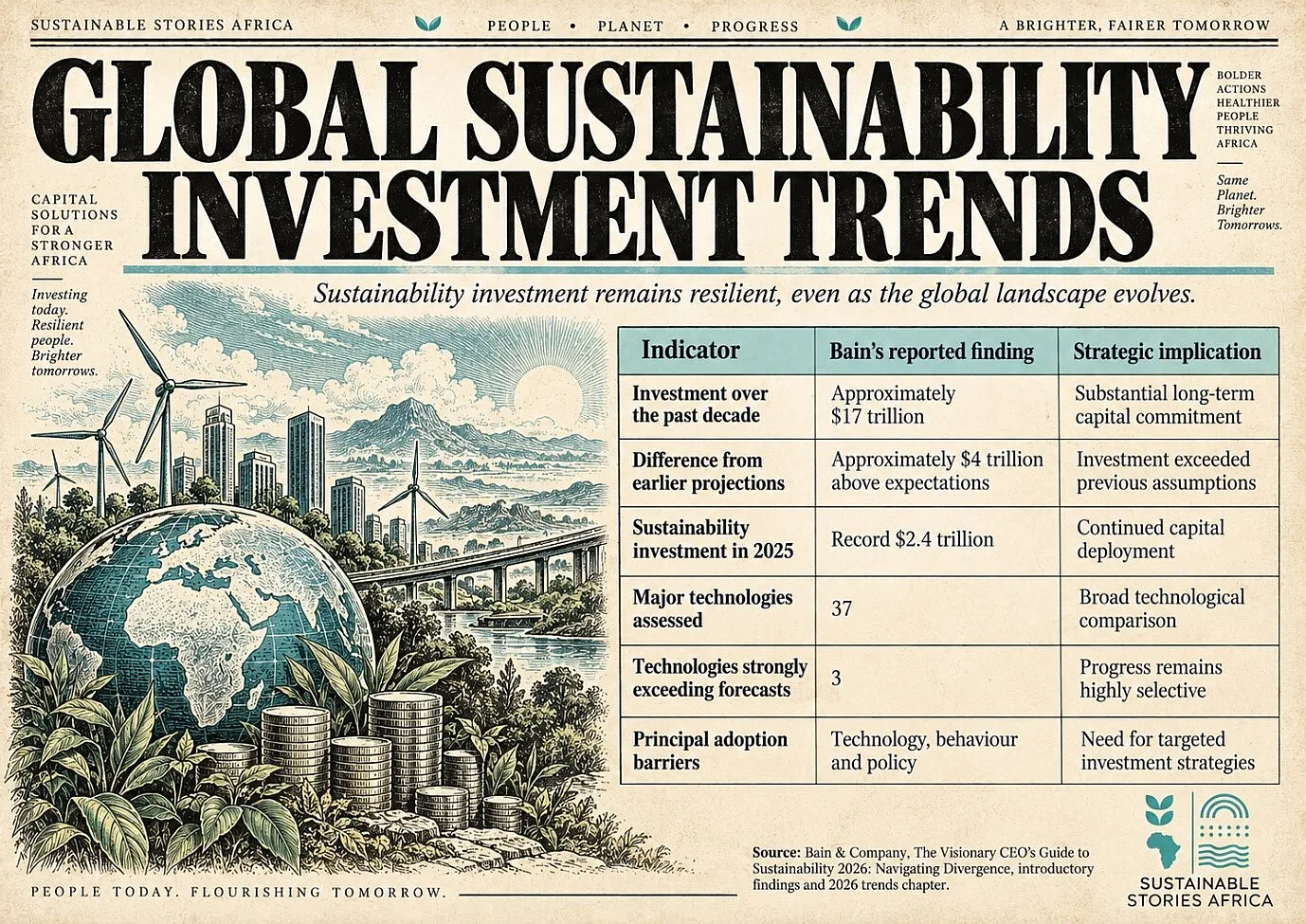
The report estimates that approximately $17 trillion has been invested in sustainable technologies over the past decade, exceeding earlier expectations by around $4 trillion.
- Investment reached a record $2.4 trillion in 2025, challenging suggestions that corporate and financial support for sustainability has broadly disappeared.
Nevertheless, Bain's examination of 37 major sustainable technologies found that only three substantially exceeded previous expectations.
The contrast suggests that capital availability alone does not determine whether green technologies achieve large-scale commercial adoption.
Technology Policy And Behaviour Shape Outcomes
The report identifies three major barriers that can prevent sustainability technologies from reaching anticipated levels of adoption:
- Technology readiness
- Behavioural acceptance
- Supportive policy
A solution may be technically promising but economically uncompetitive.
Another may be commercially available but struggle because customers are reluctant to change established purchasing habits.
A third may require infrastructure, regulation or incentives that have not developed sufficiently.
- These challenges explain why seemingly comparable sustainable technologies can produce different commercial outcomes.
Bain argues that companies should understand the conditions surrounding each technology rather than assume that all sustainability investments will mature at similar rates.
The report also highlights the importance of geographical differences, particularly the role of Asia in energy-transition supply chains and the changing nature of consumer attitudes toward sustainability.
For African economies, this uneven global transition creates opportunities as well as risks.
Countries with renewable energy resources, industrial potential and critical mineral reserves may attract investment, but the ability to capture economic value depends on infrastructure, productive capabilities and market conditions.
Focused Investments Could Strengthen African Competitiveness
The report's central implication is that companies should invest with conviction informed by evidence rather than pursue every emerging green technology.
For African businesses, this principle could support more disciplined sustainability investment in renewable power, industrial energy efficiency, circular economy solutions and climate-resilient infrastructure.
- A manufacturer seeking to reduce energy expenses, for example, should evaluate not only the environmental benefits of cleaner power but also its reliability, capital requirements and implications for production costs.
Similarly, countries hoping to benefit from demand for critical minerals should consider whether domestic processing, technical skills and industrial infrastructure can capture additional value.
- Investments that address real market needs and remove identifiable implementation barriers may be more resilient than projects driven primarily by fashionable sustainability narratives.
However, delayed technologies should not automatically be abandoned; public policy, technological breakthroughs and changing demand can alter their prospects.
Corporate Leaders Must Reassess Investment Priorities
Corporate executives should examine existing sustainability portfolios and distinguish initiatives with proven financial and environmental benefits from those requiring additional support.
Governments should provide consistent regulations, infrastructure planning and investment frameworks that help viable technologies scale.
Investors should consider commercial readiness, local economic participation and measurable impact alongside emissions reduction potential.
For African policymakers, regional cooperation could also improve project bankability and reduce fragmented green investment markets.
Path Forward – Strategic Conviction Will Shape Sustainability Leadership
Bain's analysis suggests that sustainability leadership will increasingly depend on identifying opportunities where technological, commercial and policy conditions support meaningful progress.
African businesses and governments can respond by building evidence-led investment strategies that deliver climate benefits, industrial development and long-term economic value.