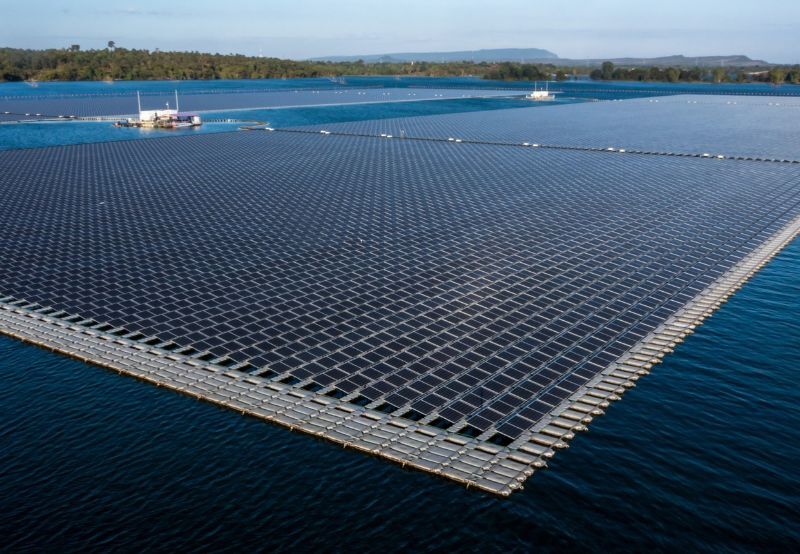
Rwanda is seeking private investors to develop a 200-megawatt floating solar power plant alongside an 800-megawatt-hour battery storage system on Lake Sake.
The proposed facility could become Africa's first utility-scale installation combining floating solar generation with integrated energy storage.
The development highlights new opportunities for renewable investment, land-efficient power generation and stronger electricity security across African economies.
Rwanda Advances Ambitious Floating Solar Development
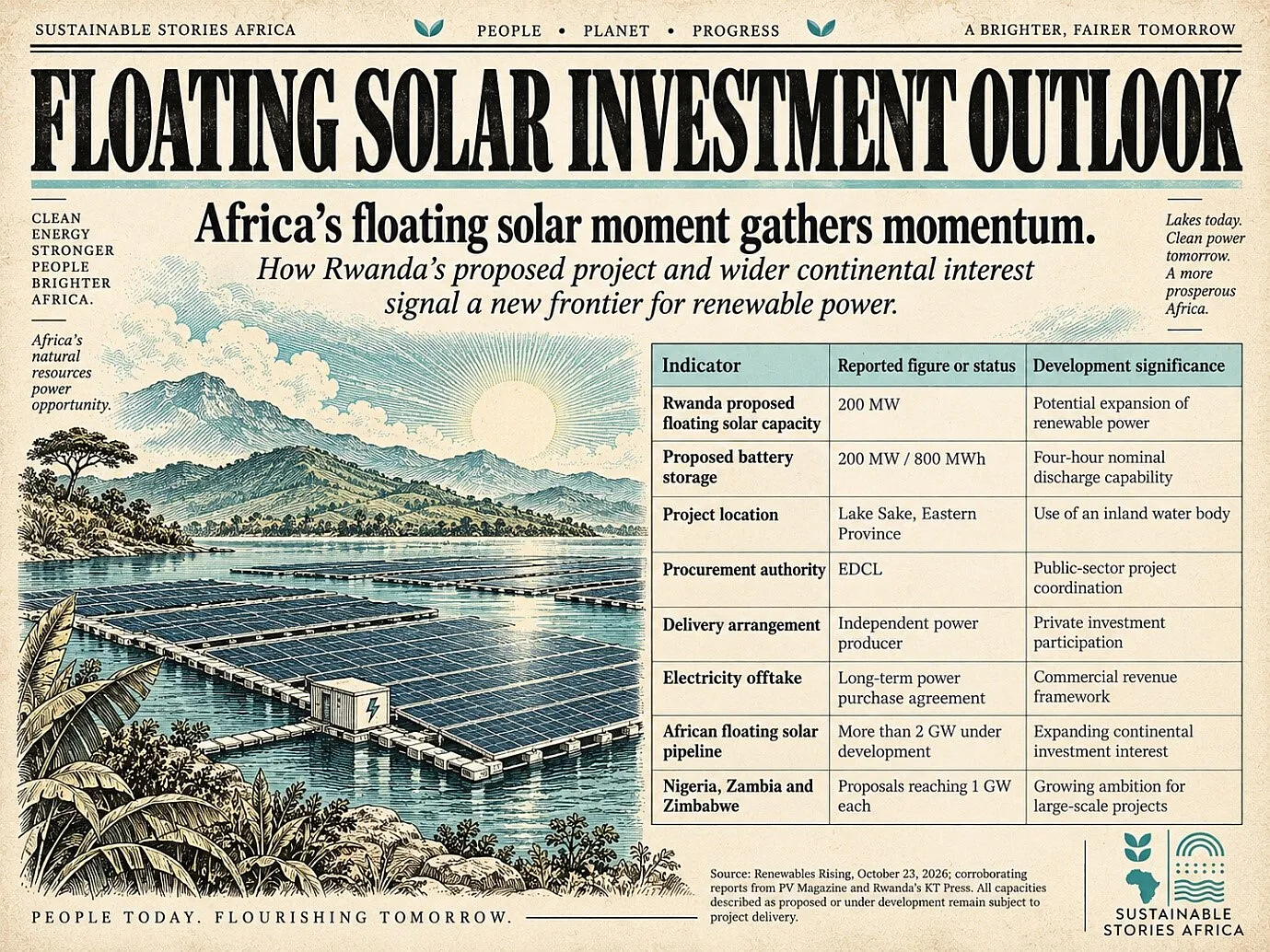
Rwanda has invited private investors to develop a 200-megawatt floating solar photovoltaic plant integrated with an 800-megawatt-hour battery energy storage system, potentially establishing a landmark renewable electricity project for Africa.
The proposed facility will be located on Lake Sake in Ngoma District, Eastern Province, and the Energy Development Corporation Limited (EDCL), a subsidiary of the state-owned Rwanda Energy Group, leads procurement.
According to Renewables Rising, the project could become Africa's first utility-scale floating solar installation combining large-scale photovoltaic generation with battery storage.
The selected independent power producer would develop the facility and supply electricity through a long-term power purchase agreement.
Additional project reporting identifies the Energy Utility Corporation Limited, another Rwanda Energy Group subsidiary, as the intended electricity offtaker.
The proposed development has not yet reached construction or commercial operation.
- Its scale, financing and eventual delivery will depend on the procurement process and successful project execution.
Floating Solar Technology Expands Energy Opportunities
Floating photovoltaic systems are installed on buoyant structures anchored to water surfaces, including lakes and reservoirs.
- Unlike conventional solar farms, which require substantial land areas, floating installations can use suitable water bodies while reducing competition with agriculture, housing and other land-dependent activities.
This could be particularly significant for African economies balancing expanding electricity demand with growing pressure on productive land.
- The technology can also benefit from cooler operating conditions over water, potentially improving photovoltaic efficiency under favourable circumstances.
However, the commercial and environmental performance of floating installations depends on location, water conditions, engineering design and maintenance requirements.
Rwanda's proposed battery energy storage system introduces another important dimension.
- The facility is designed around 200 MW of storage discharge capacity and 800 MWh of energy storage, providing a nominal four-hour discharge duration at full rated power.
- This could help shift electricity generated during daylight hours into periods of higher demand, including the evening.
Battery storage can also provide grid-support services, although actual capabilities depend on technical specifications and system design.
The proposed facility reflects a wider trend in African renewable energy development.
Renewables Rising reports that more than 2 GW of floating solar projects are under development across the continent.
Nigeria, Zambia and Zimbabwe have also announced floating solar proposals reaching 1 GW.
- These figures illustrate growing project ambitions, but proposed capacity should not be confused with operational electricity generation.
Clean Electricity Investment Could Strengthen Economies
If implemented successfully, the Lake Sake project could support Rwanda's efforts to diversify electricity generation and improve power-system flexibility.
- Reliable energy infrastructure is essential for manufacturing, healthcare, education, agricultural processing and digital economic activity.
Businesses facing unreliable electricity often experience production interruptions, higher operating expenses and reduced competitiveness.
- Electricity storage can help address variability in renewable generation, but its contribution must be evaluated alongside transmission infrastructure, grid demand and existing power plants.
The project could also generate opportunities for local engineering companies, construction contractors, maintenance providers and technical professionals.
- Rwanda's procurement requirements create a route for domestic firms to participate through partnerships, subcontracting and associated services.
Nevertheless, the benefits will depend on procurement transparency, affordable electricity pricing and the extent of local participation.
Environmental safeguards remain essential.
- Large floating solar developments can affect aquatic ecosystems, water access, fishing activities and other uses of water bodies.
Project planning must therefore consider environmental assessments, community consultation, water management and responsible equipment disposal.
Policymakers Must Strengthen Renewable Investment Frameworks
Investors and public authorities should prioritise rigorous feasibility studies, transparent procurement and credible electricity purchase arrangements.
Financial assessments must consider construction costs, exchange-rate exposure, battery replacement, long-term maintenance and electricity demand.
Public institutions should prioritise completing environmental and social impact assessments before major construction activities begin.
Local training and enterprise participation should also be integrated into project implementation wherever commercially and technically feasible.
For other African countries, the Rwandan initiative offers an opportunity to evaluate floating solar as part of broader electricity planning rather than as a replacement for all conventional generation infrastructure.
Path Forward – Requires Responsible Investment
Rwanda's proposed floating solar development illustrates the potential for combining renewable power generation with energy storage to strengthen electricity systems.
Its success will depend on mobilising investment, transparent procurement, environmental safeguards and effective grid integration.
For African economies, advancing comparable technologies responsibly could strengthen energy security, support industrial development and accelerate the transition toward more sustainable electricity infrastructure.
Culled from: Behold Africa's first floating solar + storage