
A long-term clinical trial involving patients with chronic kidney disease has found that a prescribed fruit-and-vegetable intervention was associated with fewer hospitalisations, emergency visits and cases progressing to dialysis.
The findings challenge assumptions about the relative benefits of dietary and conventional approaches to managing metabolic acidosis.
For African health systems facing growing chronic disease burdens, the research highlights opportunities for clinician-supervised nutritional care and preventive treatment.
Dietary Intervention Shows Strong Clinical Potential
A decade-long clinical trial has found that a prescribed fruit-and-vegetable intervention produced more favourable long-term outcomes than conventional sodium bicarbonate treatment or usual care among selected patients with chronic kidney disease.
The findings, reported by the American Society of Nephrology on October 22, 2026, were scheduled for presentation during ASN Kidney Week 2026.
Researchers enrolled 108 adults with stage 3 chronic kidney disease and metabolic acidosis, a condition involving excessive acid accumulation in the body.
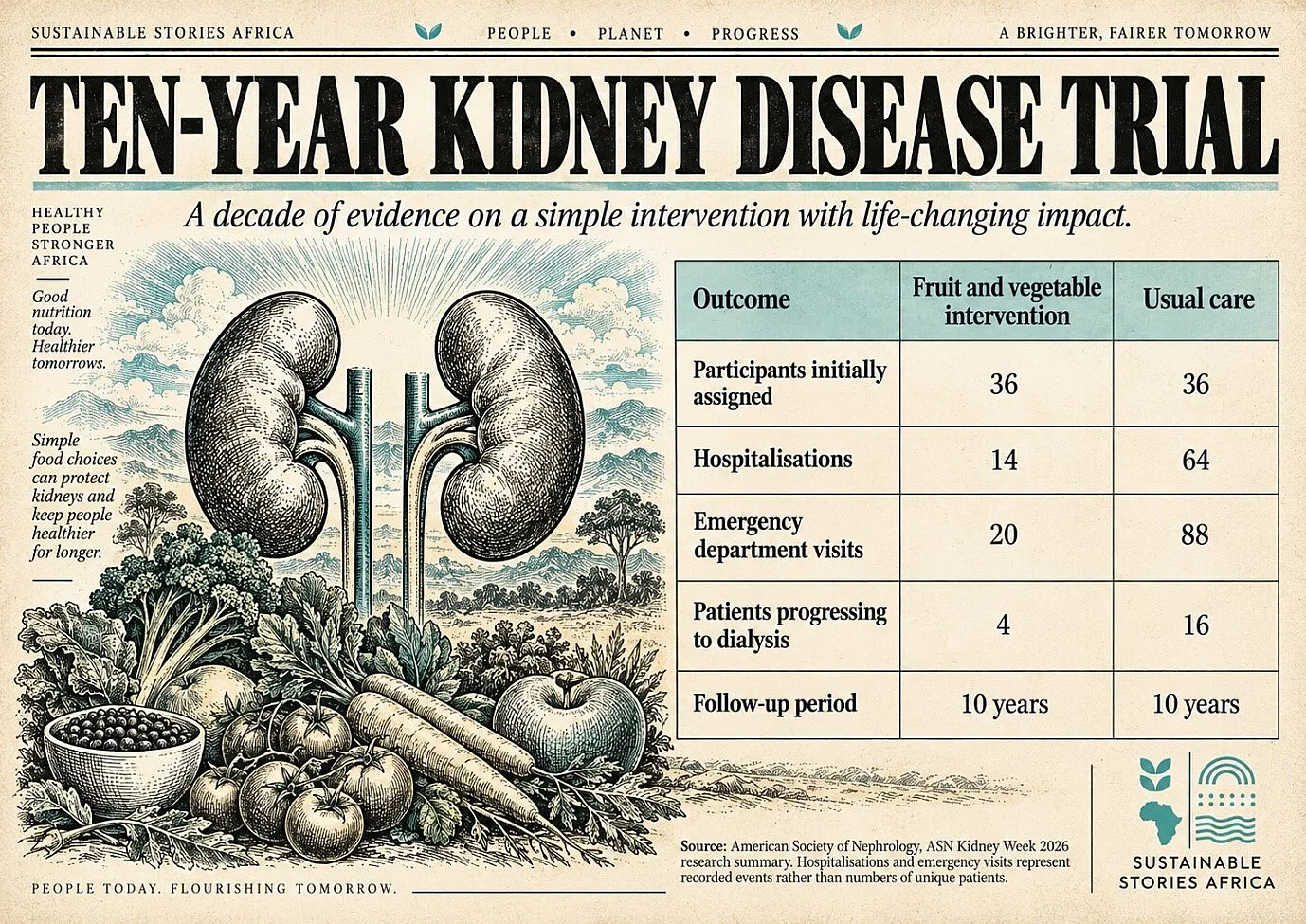
Participants were randomly assigned to three groups of 36 patients each: a fruit-and-vegetable intervention, oral sodium bicarbonate or usual care.
The study reported substantially fewer hospitalisations, emergency department visits and dialysis outcomes in the dietary intervention group compared with usual care.
Ten-Year Findings Reveal Health Benefits
Metabolic acidosis is an important complication of chronic kidney disease because impaired kidney function reduces the body's ability to maintain a normal acid-base balance.
- Untreated or inadequately managed metabolic acidosis may contribute to disease progression and other health complications.
Oral sodium bicarbonate has long been used to help neutralise excess acid.
In this trial, the dietary intervention was designed to reduce dietary acid load by approximately half through carefully selected fruits and vegetables.
Over the ten-year follow-up period, researchers recorded 115 hospitalisations, 166 emergency department visits and 34 patients who required dialysis across the study population.
- The dietary intervention group experienced 14 hospitalisations, compared with 64 among patients receiving usual care.
- Emergency department visits were also substantially lower, with 20 visits in the dietary group compared with 88 in usual care.
- Four participants in the dietary group progressed to dialysis, compared with 16 receiving usual care.
The study reported no corresponding improvement over usual care in these clinical outcomes among patients assigned to sodium bicarbonate.
Nutrition Strategies Could Reduce Healthcare Pressure
The findings have potential relevance for countries managing rising rates of hypertension, diabetes and chronic kidney disease.
- In many African communities, the affordability and availability of specialised medical care remain significant barriers to long-term disease management.
- A clinically appropriate dietary intervention could potentially complement chronic disease treatment while reducing avoidable healthcare utilisation.
However, the findings require careful interpretation.
The trial involved a relatively small patient population, and the available conference summary does not provide all the details needed to assess the study's generalisability.
More importantly, people with kidney disease may develop dangerously elevated potassium levels.
- Some fruits and vegetables are rich in potassium and may be unsuitable without individual assessment.
Consequently, the results should not be interpreted as a recommendation for patients to stop prescribed medication, discontinue monitoring or independently adopt a high-potassium diet.
Healthcare Systems Should Evaluate Dietary Care
Health professionals should examine whether supervised dietary acid reduction can be incorporated into suitable kidney disease treatment programmes.
- This requires nutrition assessment, monitoring of kidney function, potassium testing and individualised care plans.
Researchers should also investigate whether the benefits observed in the trial can be reproduced in larger and more diverse populations, including African settings.
Health authorities could strengthen collaboration between nephrologists, dietitians and primary healthcare providers to evaluate nutritional approaches alongside established treatment protocols.
Path Forward – Clinical Evidence Should Guide Dietary Interventions
The findings suggest that nutrition may offer substantial benefits in the management of selected chronic kidney disease patients.
Future research should clarify patient eligibility, safety, affordability and long-term clinical effectiveness before such approaches are expanded across health systems.
Culled from: Fruits and vegetables outperform medication for treating metabolic acidosis in chronic kidney disease