France has reported the first known human infection involving Shamonda virus following the death of a patient with a compromised immune system.
Authorities have not identified a wider public health threat, while international health specialists continue investigating possible transmission pathways.
The development highlights the importance of integrated human, animal and environmental health surveillance, particularly in regions where the virus has previously circulated among livestock.
Rare Livestock Virus Raises Public Concerns
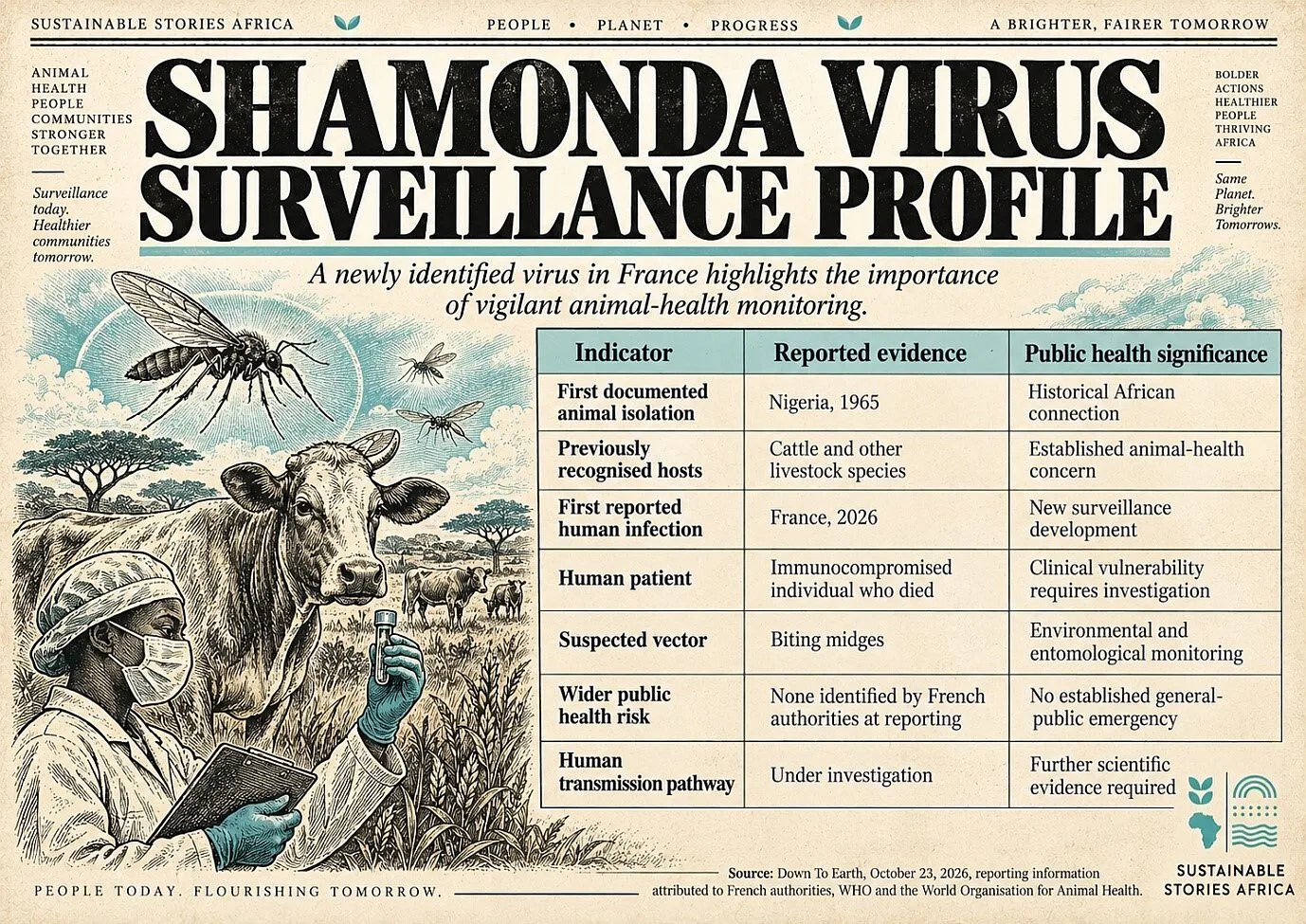
French health authorities have reported the first known human case of Shamonda virus after an immunocompromised patient died in early October 2026.
According to information reported on October 23 by Down To Earth, the patient had been receiving treatment for a serious underlying illness.
- French officials made it clear that there is no identification of a broader public health risk.
The World Health Organisation is working with French authorities to understand how the infection occurred and whether additional public health precautions are necessary.
- Shamonda virus had previously been detected in animals, particularly livestock, making the human diagnosis an important development for infectious disease surveillance.
However, the reported case does not establish sustained human transmission or demonstrate that Shamonda virus caused the patient's death independently of other medical conditions.
Virus History Connects Africa And Europe
Shamonda virus was first identified among cattle in Nigeria in 1965.
- Subsequent detections have been reported among animals in parts of Africa, Asia and Europe.
The virus is associated with biting midges, small insects that transmit several important animal pathogens.
- Animal infections have been linked to symptoms including fever, gastrointestinal illness, reproductive complications, reduced milk production and developmental abnormalities in offspring.
- The French patient reportedly had exposure to an area where the virus was circulating in animals and potentially infected midges were present.
Nevertheless, the precise route of human infection remains under investigation.
The development illustrates an increasingly important public health challenge: pathogens that circulate primarily in animals may occasionally cross species barriers under circumstances that scientists do not yet fully understand.
For African countries with significant livestock populations, veterinary monitoring and information-sharing between animal-health and human-health institutions remain essential.
Integrated Surveillance Could Prevent Future Threats
The case reinforces the significance of the One Health approach, which recognises the connections between human health, animal health and environmental conditions.
- Instead of investigating unusual human illnesses without considering potential animal exposures, One Health encourages collaboration among clinicians, veterinarians, laboratory scientists and environmental specialists.
This is particularly relevant to African livestock economies where animal production, rural livelihoods and public health systems intersect.
- Stronger surveillance could improve the detection of unfamiliar infections while helping veterinary authorities investigate disease outbreaks affecting livestock productivity.
However, the available evidence does not justify treating Shamonda virus as an established cause of widespread human disease.
- Risk communication must distinguish confirmed observations from scientific uncertainties, particularly when a rare infection is associated with a patient's death.
Exaggerated public messaging could create unnecessary anxiety, disrupt legitimate agricultural activities or encourage inappropriate health measures.
Health Authorities Must Investigate Transmission Carefully
Public health institutions should prioritise laboratory verification, epidemiological investigation and coordinated surveillance of relevant animal populations and possible vectors.
- Authorities should document clinical findings, potential exposures and any additional suspected cases using established infectious disease protocols.
For African veterinary and public health institutions, improved diagnostic capacity and cross-border scientific collaboration could strengthen preparedness for emerging zoonotic threats.
Members of the public should rely on established public health guidance rather than assume that the first recognised human infection signals a new epidemic.
Path Forward – Scientific Vigilance Must Guide Public Responses
The French case demonstrates why emerging pathogens deserve careful investigation even when available evidence suggests limited public risk.
For Africa, strengthening One Health surveillance, laboratory networks and transparent scientific communication can protect livestock-dependent livelihoods while improving readiness for future infectious disease threats.
Culled from: https://www.downtoearth.org.in/health/first-known-human-case-of-shamonda-virus-reported-in-france-patient-dies