
European sustainability reporting is entering a new phase as Boston Consulting Group advocates a more strategic approach to corporate environmental, social and governance disclosures.
The proposed simplification of European Sustainability Reporting Standards could substantially reduce reporting complexity and operational costs.
For African businesses linked to European markets, the reforms highlight the growing importance of credible sustainability data, transparent governance and strategic reporting.
Europe Reconsiders Its Sustainability Reporting Priorities
Corporate sustainability reporting can become less complex following proposed revisions to Europe's disclosure framework, according to an October 2026 analysis by Boston Consulting Group (BCG).
The consultancy argues that businesses should move beyond compliance-driven reporting and adopt smart compliance by connecting material environmental and social issues with corporate strategy and decision-making.
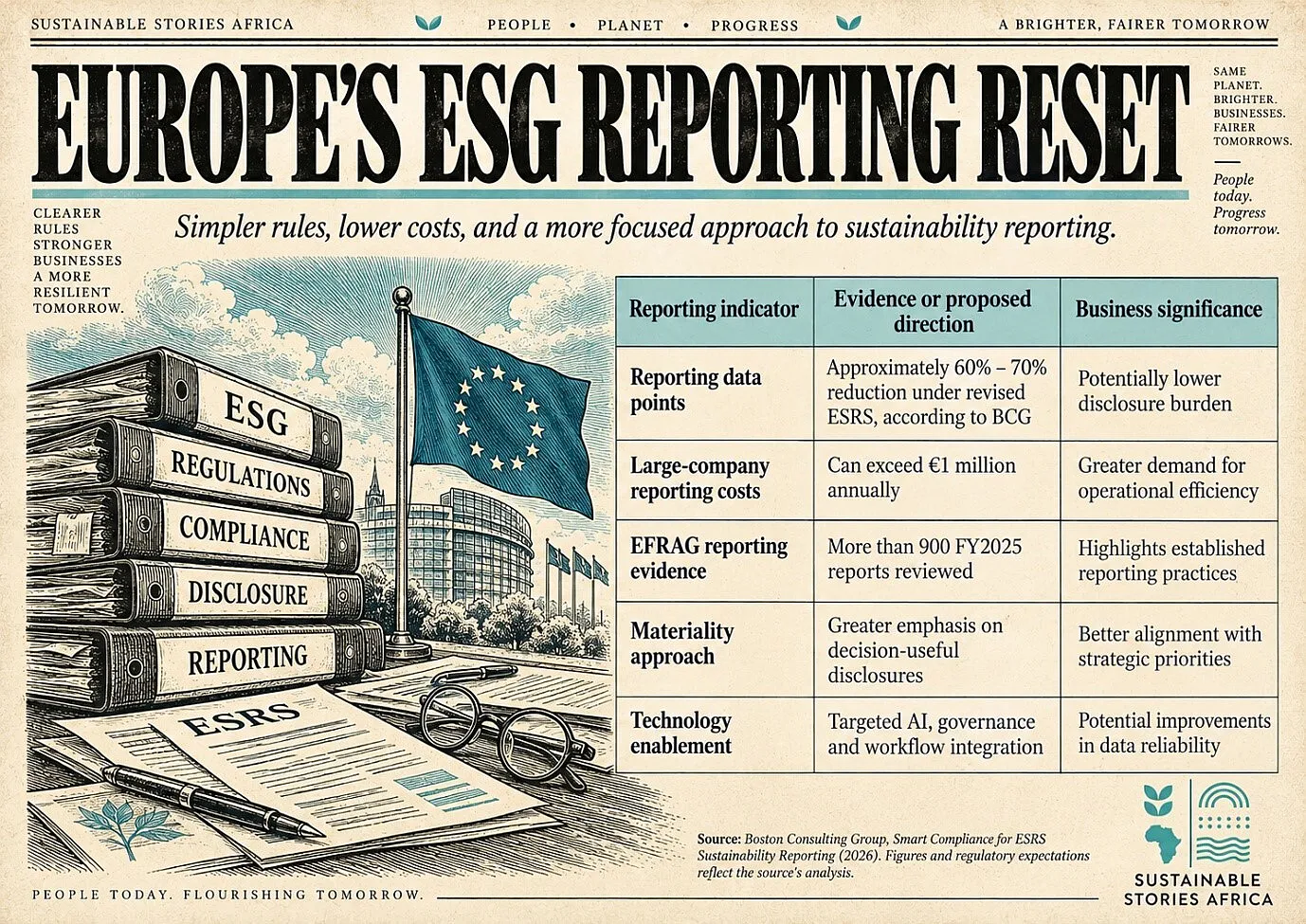
BCG's analysis indicates that the revised European Sustainability Reporting Standards, described in its report as ESRS Set 2, could reduce the number of required reporting data points by approximately 60% – 70%.
The proposed changes follow growing concerns about extensive disclosure requirements, rising administrative costs and reports that provide substantial information without sufficiently demonstrating how sustainability influences business decisions.
Rising Reporting Costs Challenge Corporate Efficiency
The European Union's Corporate Sustainability Reporting Directive has reshaped corporate disclosure expectations, requiring affected organisations to produce more structured information about environmental, social and governance performance.
However, implementation has exposed weaknesses in existing corporate reporting systems.
- BCG observes that large organisations can incur recurring annual sustainability reporting costs exceeding €1 million, particularly when data collection, specialist staff, external advisers and assurance activities are considered.
The consultancy also draws on research by the European Financial Reporting Advisory Group that covers more than 900 sustainability reports for the 2025 financial year.
- Many companies continue to disclose numerous material topics without clearly connecting these issues to measurable targets, investment choices or management incentives.
This creates a reporting paradox:
- Businesses may produce increasingly detailed documents while offering stakeholders limited insight into the sustainability issues that determine long-term performance.
African exporters and businesses operating in European value chains, challenges may arise when international buyers request emissions data, supply-chain information, labour indicators and evidence of responsible business practices.
Strategic Reporting Could Strengthen Business Value
BCG proposes a reporting model that integrates three dimensions: sustainability strategy, end-to-end reporting processes and enabling capabilities.
- The first involves reassessing double materiality, which considers both the sustainability-related issues' effect on a company's financial position and the company's impacts on people and the environment.
- The second requires redesigning reporting processes to reduce duplication, improve internal controls and clarify responsibilities.
- The third involves strengthening governance, organisational capabilities and the targeted application of artificial intelligence.
Importantly, reducing unnecessary disclosures should not weaken transparency or remove genuinely material sustainability concerns.
Businesses must continue consulting relevant stakeholders, including communities, employees, suppliers and civil society organisations, to avoid overlooking significant risks and impacts.
For African companies, this approach offers a practical opportunity to build sustainability reporting systems that strengthen access to capital, stakeholder confidence and corporate resilience.
Companies Must Strengthen Data Governance Immediately
Corporate boards, finance executives and sustainability professionals should assess whether existing reporting processes genuinely support business decisions.
- Organisations need consistent emissions methodologies, reliable operational data, clear accountability and documented evidence to support material disclosures.
- Artificial intelligence may improve the processing and interpretation of sustainability information, but its effectiveness depends on accurate source data and appropriate human oversight.
Companies should also monitor evolving reporting obligations rather than assume that European simplification removes all requirements affecting international operations and value chains.
Path Forward Requires Strategic Accountability
The emerging reporting model offers an opportunity to align sustainability transparency with operational efficiency and commercial resilience. Organisations should prioritise material issues, strengthen data governance and integrate ESG considerations into strategic planning.
For African businesses, credible sustainability reporting can support international competitiveness, stronger investor relationships and more accountable environmental and social performance.
Culled from: Smart Compliance for ESRS Sustainability Reporting | BCG