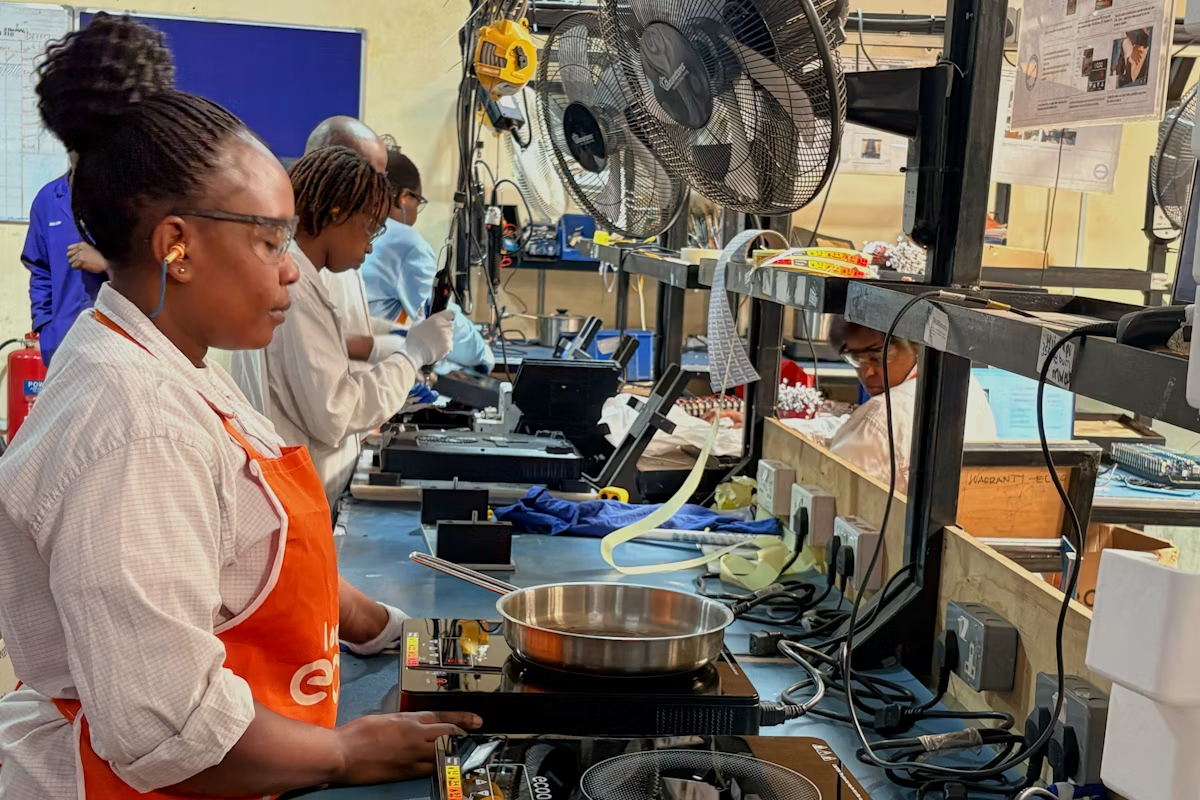
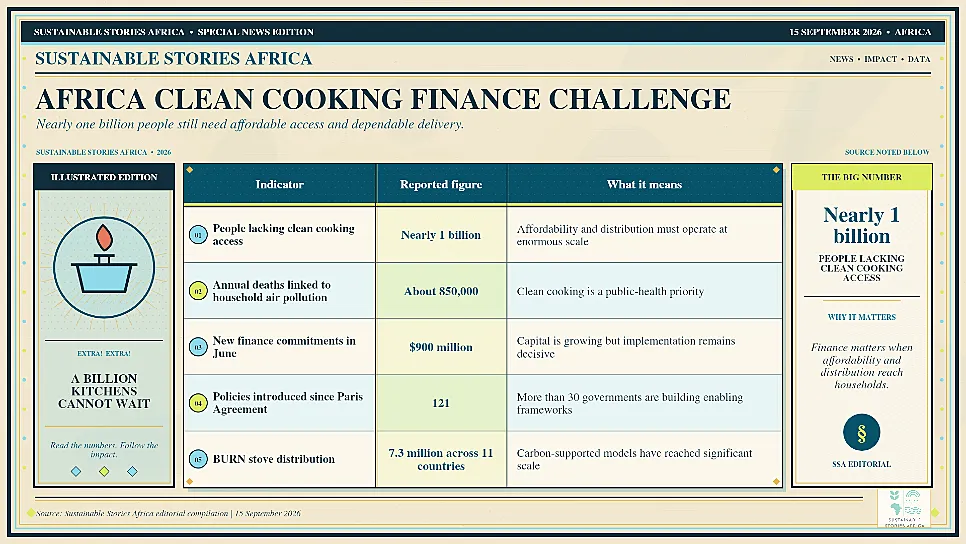
Carbon finance is helping African clean-cooking companies reduce appliance prices as nearly one billion people still rely on polluting fuels.
The continent secured $900 million in new commitments in June, but carbon revenues generally arrive after stoves are distributed.
Closing that timing gap will require blended capital, credible emissions data and solutions matched to household energy realities.
Household Energy Becomes Finance Priority
Carbon-credit revenue is becoming an important source of capital for clean cooking in Africa, subsidising efficient stoves and electric appliances for households that otherwise struggle with upfront costs.
The financing is urgently needed:
- Nearly one billion people on the continent continue to depend on charcoal, firewood and other polluting fuels.
The health burden is severe.
- The International Energy Agency estimates that household air pollution linked to charcoal and firewood contributes to about 850,000 African deaths each year.
In June, Africa secured $900 million in new clean-cooking finance commitments, while more than 30 governments representing about 80% of people without access have introduced 121 policies since the 2015 Paris Agreement.
Carbon Revenue Arrives Too Late
Clean-cooking projects can generate credits when verified evidence shows that households have reduced emissions by using more efficient or cleaner technologies. Companies sell the credits and use revenue to lower product prices.
- Nairobi-based BURN says it has distributed more than 7.3 million cookstoves across 11 African countries using carbon finance to support its model.
The difficulty is timing.
- Companies must manufacture equipment, build distribution networks and place products in homes before emissions reductions can be measured and monetised.
They carry the upfront cost while future credit prices and demand remain uncertain. That mismatch can constrain even businesses with strong household demand.
Cleaner Kitchens Deliver Multiple Gains
Affordable clean cooking can reduce smoke exposure, lower pressure on forests and cut the time households spend collecting fuel.
- It can also protect disposable income where charcoal prices are rising.
These gains are closely connected:
- Healthier households lose fewer work and school days.
- Women and children often recover time used for fuel collection and fire tending.
No single technology will fit every market.
- Electric cooking becomes attractive where power is reliable and affordable.
- Efficient biomass or other transitional options may produce faster health and fuel gains in weak-grid communities.
Policy should therefore focus on verified outcomes and household circumstances rather than prescribing one appliance everywhere.
Blend Capital and Protect Integrity
Public finance, development institutions, commercial lenders, equity investors and carbon buyers should share the early-stage risk.
- Working-capital facilities and results-based payments can bridge the period between distributing equipment and receiving verified credit revenue.
- Consumer finance can spread purchase costs without imposing unaffordable terms.
Market integrity is equally important.
- Credits must be based on conservative assumptions, credible usage data and independent verification.
- Digital monitoring may strengthen evidence, but it must protect household privacy and reflect actual cooking behaviour.
Governments need clear carbon ownership rules and national registries so communities, companies and investors understand how value is allocated.
Path Forward – Finance Cleaner African Kitchens
Clean cooking needs diversified finance that reaches companies and households before carbon revenue arrives, supported by credible measurement and fair consumer terms.
Governments should integrate cooking with electricity, health and forestry plans while matching technologies to local realities.
High-integrity carbon markets can help, but durable progress requires public policy and patient capital alongside every verified credit.