
A University of Cambridge-led review links reading for pleasure with stronger cognition, better mental health, empathy and healthier ageing.
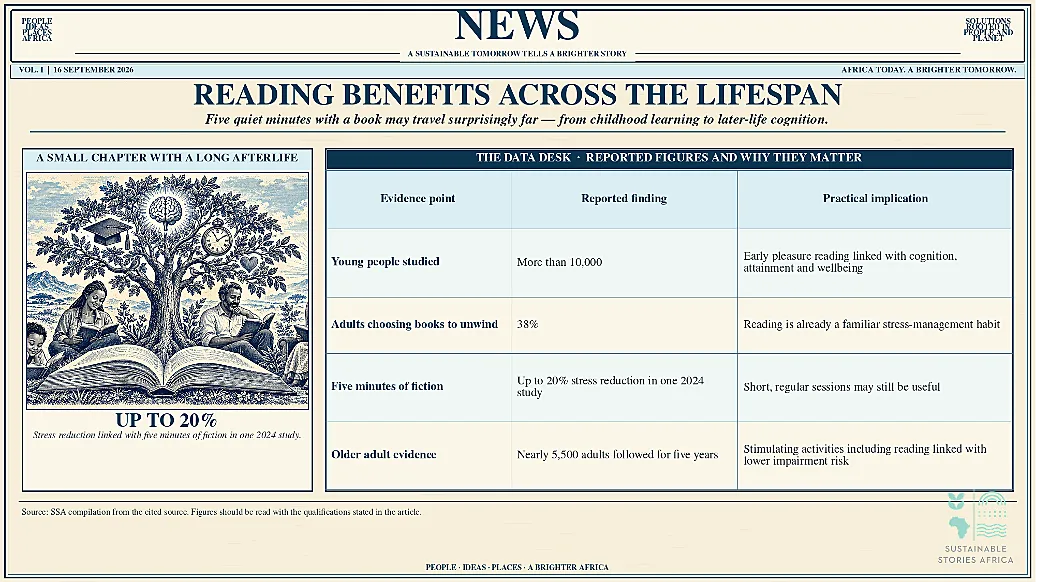
Evidence includes benefits among more than 10,000 young people and a lower risk of cognitive impairment among older adults who regularly undertook stimulating activities such as reading.
Researchers say access, enjoyment and shared reading should become priorities across schools, families and communities.
A Simple Habit With Lifelong Returns
Reading for pleasure may be one of the most accessible tools for supporting brain health, learning and social connection throughout life.
- A review led by University of Cambridge researchers brings together evidence linking enjoyable reading with better attention, memory and wellbeing in children, lower stress in adults and reduced cognitive decline in later life.
The researchers worked with The Queen’s Reading Room as part of the National Year of Reading.
- Their central message is deliberately broad: the benefits do not depend on choosing a classic novel.
- Comics, graphic novels, magazines, newspapers and stories connected to a child’s favourite programme or game can all provide an entry point when enjoyment, rather than obligation, drives the habit.
Early Reading Builds More Than Literacy
Some of the strongest evidence comes from a study of more than 10,000 young people.
- Children who began reading for pleasure early showed better attention, memory and executive functioning, stronger academic achievement, fewer mental-health problems and healthier lifestyles, including more sleep and less screen time.
Reading is closely associated with literacy, but its relevance extends into mathematics because both activities draw on language, memory and executive function.
- At a time when reading enjoyment among children and adolescents has fallen to record lows in some surveys, especially among boys and disadvantaged groups, the findings make access to appealing books an equity issue as well as an educational one.
Adults also report important benefits.
Nearly two in five adults, or 38%, selected books as their preferred way to unwind.
- A 2024 neuroscience study commissioned by The Queen’s Reading Room found that five minutes of fiction could reduce stress by up to 20%, while supporting concentration, problem-solving and feelings of connection.
These figures are promising, although much of the wider evidence remains associative rather than proof that reading alone causes every outcome.
Benefits Continue Into Healthy Ageing
Later in life, mentally stimulating leisure activities, particularly reading, are associated with slower cognitive decline and reduced dementia risk.
- In a study of nearly 5,500 adults aged 55 and older, frequent participation in activities including reading was linked to a significantly lower likelihood of cognitive impairment during five years of follow-up.
- Another study associated reading newspapers, magazines and books with a 33% reduction in Alzheimer’s disease risk.
Brain-imaging research offers possible explanations.
- Reading is associated with differences in regions involved in language, learning, emotional regulation and executive control, alongside stronger white-matter connectivity and cortical thickness in language-related areas.
- Small intervention studies have also recorded structural changes after targeted reading training, although larger studies are needed to establish how effects differ across ages and populations.
Shared reading may add a social layer.
- Book clubs and family reading create conversation, empathy and routine, while offering participation for older people who may have limited mobility.
- Programmes in shelters and domestic-violence refuges also use shared reading therapeutically, demonstrating how books can support recovery and belonging beyond formal classrooms.
Make Enjoyable Reading Easy To Access
The policy response should begin with choice.
- Schools and libraries can offer locally relevant fiction, comics, graphic novels, audiobooks and accessible formats instead of defining serious reading too narrowly.
- Parents and teachers can start with a young person’s existing interests and build confidence gradually rather than turning every book into a test.
Public-health and ageing programmes should also treat reading groups as practical social infrastructure.
- Libraries, community centres, clinics and care homes can host inclusive clubs, intergenerational sessions and mobile services.
- Digital access can extend reach, but it should complement affordable print collections and safe public spaces, especially where data costs or device access are barriers.
For African education systems facing learning poverty and unequal library access, the evidence strengthens the case for investment in books, librarians and reading culture.
The objective is not to claim that reading replaces medical care, exercise or social policy.
- It is to recognise a low-cost habit that can reinforce learning, relaxation and connection when people have the freedom and resources to enjoy it.
Path Forward – Turn Reading Access Into Public Infrastructure
Governments, schools and communities should expand diverse, affordable reading materials and protect time for voluntary reading from childhood through older age.
Libraries, book clubs and shared-reading programmes can connect education, mental wellbeing and healthy ageing.
Future research should test causality across populations, while policy focuses now on access, choice and enjoyment rather than waiting for perfect evidence.
Culled from: Reading for pleasure: Lifelong health and cognitive benefits