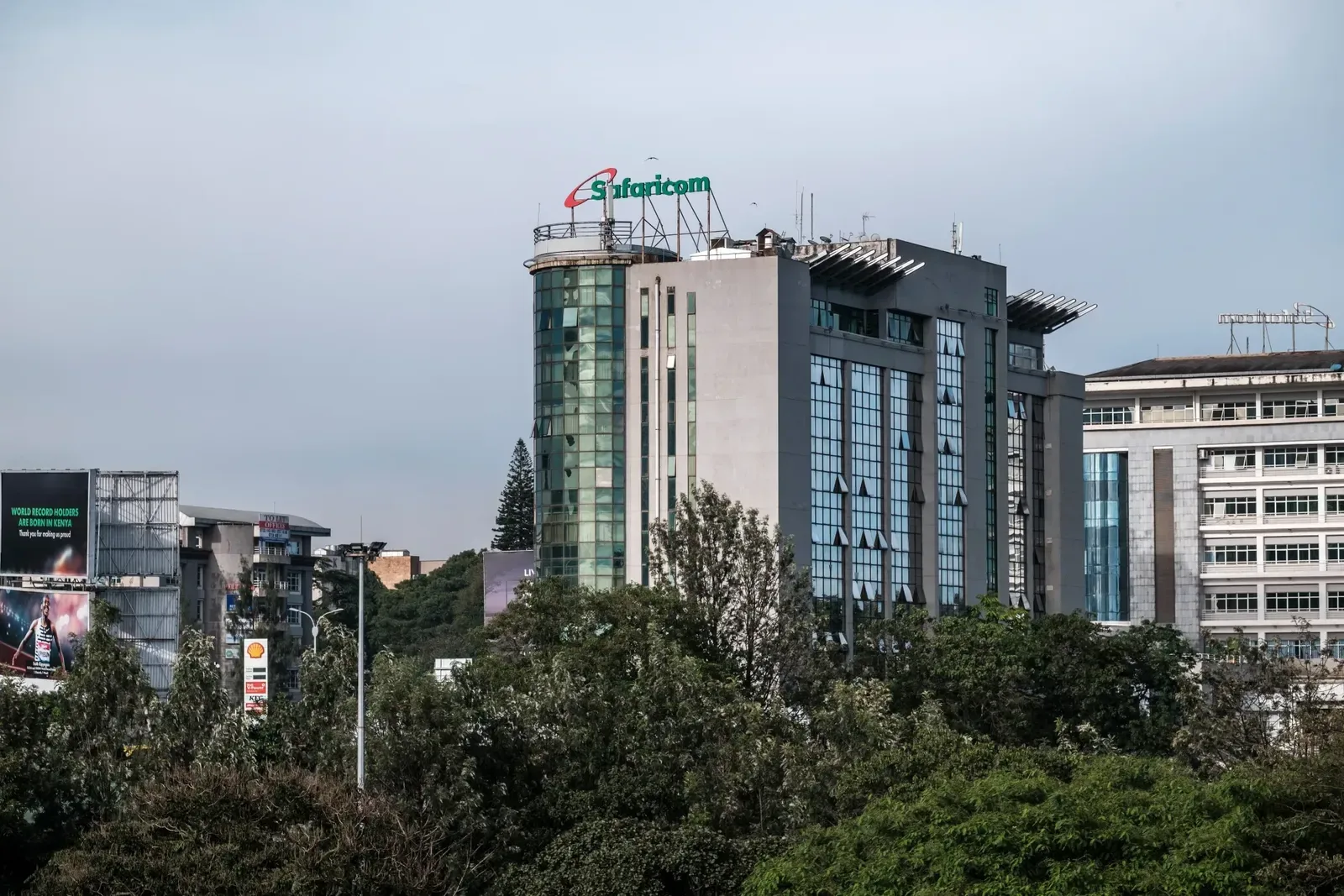
Kenya’s High Court has nullified the government’s sale of a 15% Safaricom stake to Vodacom and ordered the shares restored to the state.
The judges found inadequate public participation, material non-disclosure and failures involving competition, procurement, public finance and national-security assessment.
Vodacom plans to appeal, extending uncertainty around ownership of one of East Africa’s most strategic digital companies.
Court Reverses A Landmark Telecoms Deal
Kenya’s High Court has voided the government’s sale of a 15% stake in Safaricom to South Africa’s Vodacom, ruling that the transaction breached constitutional and legal requirements.
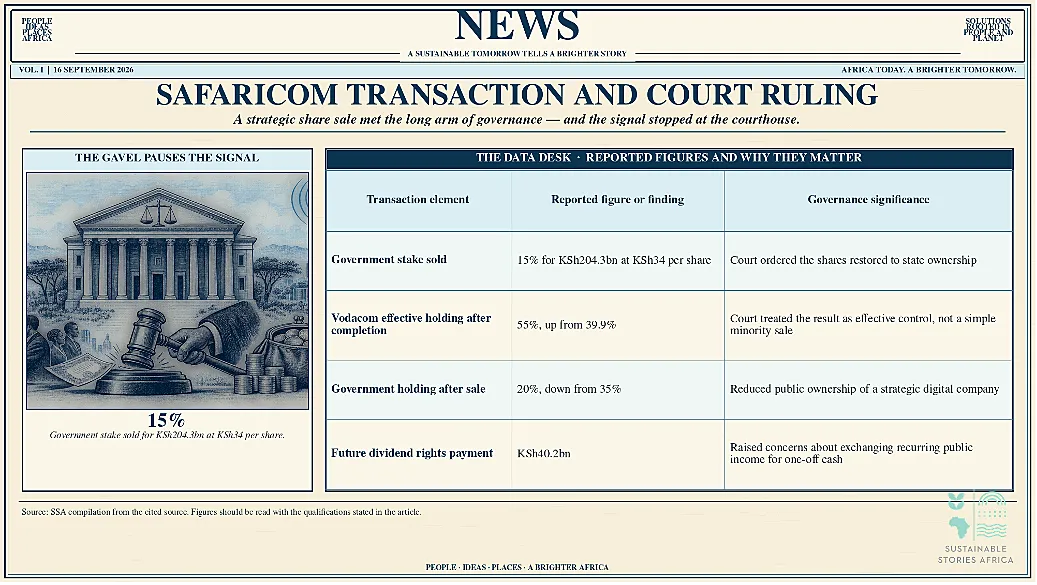
- A three-judge bench ordered the shares restored to state ownership, placing a deal worth KSh204.3 billion, about $1.58 billion, at the centre of a new legal and governance battle.
The decision goes beyond the price of a share sale.
- Safaricom operates M-Pesa, government payment channels, communications networks and infrastructure used in election transmission.
- The court concluded that a transaction presented as a partial divestiture effectively transferred control to a foreign majority shareholder without adequate disclosure, meaningful public participation or a sufficient prior assessment of national-security risks.
From Minority Sale To Effective Control
The government sold its 15% holding at KSh34 per share, reducing its Safaricom stake from 35% to 20%.
- Vodacom, which already held 39.9% through Vodafone Kenya, also acquired an effective 5% interest from Vodafone International Holdings.
- When the transactions were completed on June 30, Vodacom’s effective ownership rose to 55%.
The court found that this outcome was not simply a routine disposal of shares but a merger, acquisition and takeover with consequences for control.
- Judges said material information about the buyer, ownership structure and effects of the transaction was concealed or misrepresented to the public, Cabinet and Parliament.
- They also faulted the absence of a competitive process for identifying a strategic investor and found the pricing process failed the rationality test.
Public hearings had been held in 30 counties, but crucial documents, including the share purchase and dividend-rights agreements, were reportedly not made available.
- The bench held that participation must be real and informed, not a procedural count of meetings.
Without the underlying agreements, citizens could not meaningfully assess value, control, future income or risk.
Public Assets Demand Long-Term Accountability
The ruling places intergenerational equity at the heart of privatisation.
- Alongside the KSh204.3 billion sale proceeds, the government received KSh40.2 billion by selling rights to future dividends attached to its remaining 20% holding.
- The court questioned whether converting a continuing income stream into a one-off payment deprived future generations of value from a profitable public asset.
That concern has wider relevance across Africa, where governments under fiscal pressure may look to asset sales to finance infrastructure.
- Divestment can attract capital, improve operational scale and release funds for public priorities.
However, those gains depend on transparent valuation, competitive procurement, clear use of proceeds and safeguards for strategic infrastructure and personal data.
A credible process can also protect investors.
- When approvals rest on incomplete disclosure or weak participation, even a completed transaction can be reversed.
- That raises financing costs and political risk for governments, buyers, minority shareholders and employees.
Strong governance is therefore not an obstacle to investment; it is part of the investment case.
Appeal Must Not Replace Better Disclosure
Vodacom said it would review the judgment, appeal to the Court of Appeal and seek a stay.
Kenya’s government also indicated that it would challenge the ruling.
- Those steps may determine whether the transfer remains reversed while litigation continues, but an appeal should not postpone the policy lessons already visible.
Any renewed transaction should publish the full ownership structure, valuation assumptions, transaction agreements, dividend implications and intended use of proceeds before approval.
- Competition, capital-markets, procurement, data-protection and national-security reviews should be coordinated and open to scrutiny.
Parliament and citizens need enough time and information to test the government’s case.
Kenya also needs a clear framework for strategic digital assets.
- Safaricom is simultaneously a listed company, payments platform, data custodian and communications provider.
- Control decisions should therefore address commercial value alongside resilience, privacy, service continuity and democratic trust.
The court’s message is that public participation has substance only when the public can see what is changing and why.
Path Forward – Rebuild Trust Before Revisiting The Transaction
The appeal process should clarify the immediate ownership position, while regulators and the Treasury publish the transaction record and address the court’s findings.
Future divestment must combine independent valuation, competitive selection, meaningful public participation and national-security review.
Kenya can still pursue investment and infrastructure finance, but the process must protect public value, data, competition and intergenerational equity.
Culled from: Kenya’s High Court voids Vodacom’s $1.5bn Safaricom takeover