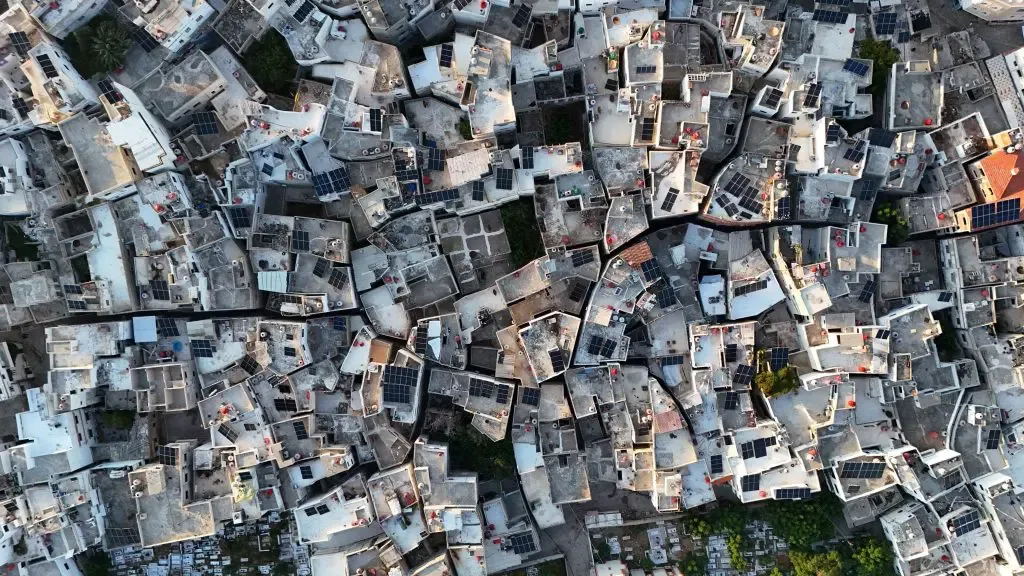
Syria’s damaged power system has triggered a rapid, largely self-financed shift to decentralised solar energy.
Off-grid capacity reportedly climbed from about 250 megawatts in 2022 to more than two gigawatts in 2025, although incomplete registration makes the estimate uncertain.
The boom is keeping homes and livelihoods running, but unequal access shows why solar finance and public-grid reconstruction must advance together.
Solar Lifelines Emerge From Grid Collapse
When electricity reaches a village for only an hour a day, a solar panel becomes more than a climate technology.
- It keeps food cold, children studying and farms working.
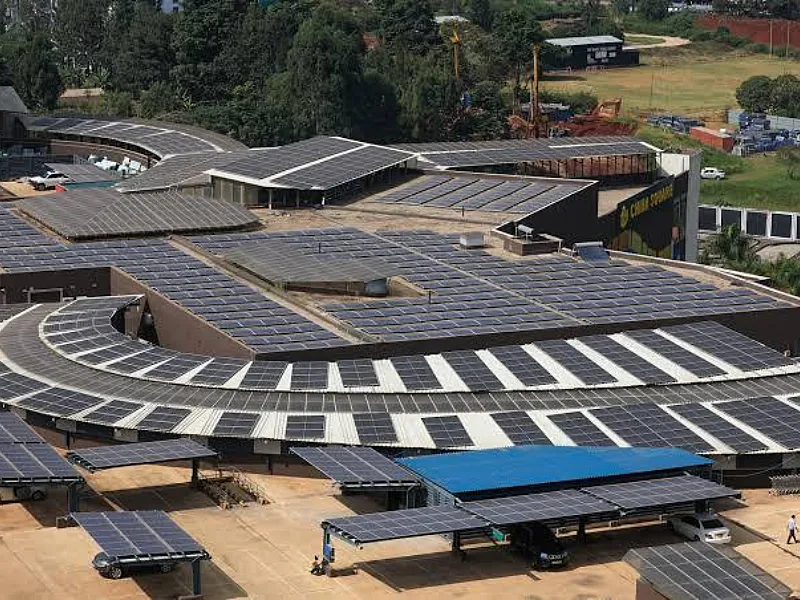
That is the reality behind Syria’s decentralised solar boom, where households, businesses and aid organisations have installed power systems as the public grid has deteriorated after years of conflict.
In Khirais, a remote farming village rebuilt from 2021, 24 households now receive round-the-clock electricity from panels mounted on a community centre, reportedly paying just $0.20 a month.
- The project supports lighting, refrigeration and basic equipment.
Its wider lesson is stark: when a central system fails, locally organised clean energy can preserve daily life before national reconstruction catches up.
A Fast Transition Built From Necessity
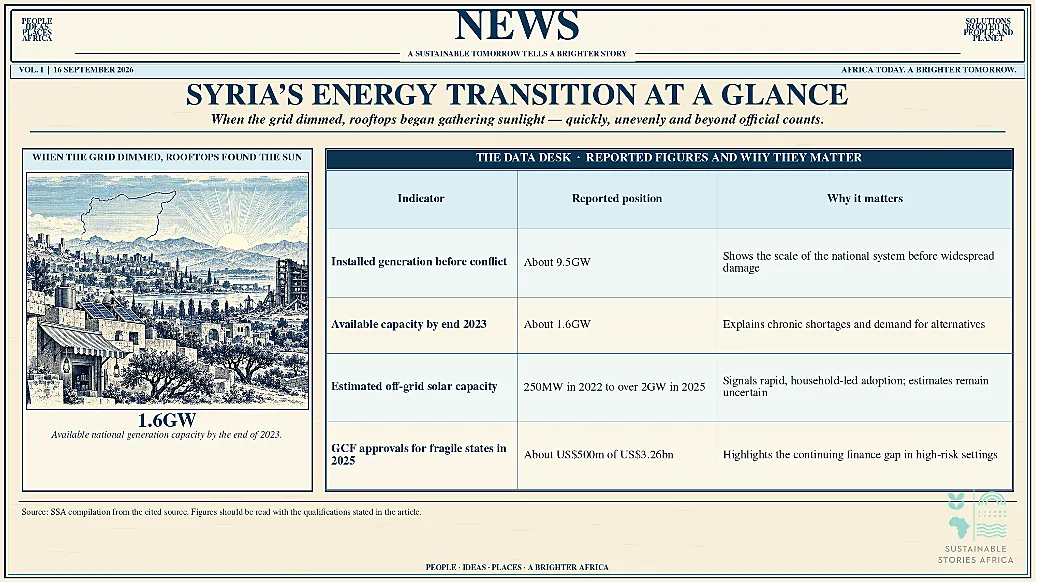
Syria had roughly 9.5 gigawatts of installed generation capacity before the conflict.
- By the end of 2023, available capacity had fallen to about 1.6GW, leaving millions with less than two hours of public electricity a day.
That gap created an unplanned market for rooftop panels, batteries and neighbourhood systems.
Industry estimates cited by Green Central Banking suggest off-grid solar capacity rose from around 250MW in 2022 to more than 2GW in 2025.
The figure is indicative, not definitive: much of the equipment is privately financed and unregistered, and nominal panel capacity is not dependable electricity.
Still, the direction is unmistakable.
- Solar adoption accelerated because diesel was expensive, grid supply was scarce and waiting carried an immediate economic cost.
The pattern matters far beyond Syria.
- More than 80% of the estimated 800 million people without electricity live in fragile or conflict-affected settings.
However, only about $500 million of the Green Climate Fund’s record $3.26 billion in 2025 approvals went to such states.
Distributed systems can disperse risk and quickly power water pumps, communications, clinics, shops and food processing while larger networks are repaired.
Resilience Must Not Become Another Divide
The benefit is clearest where local power restores income.
- A farmer who can irrigate, a shopkeeper who can refrigerate stock and a clinic that can run essential equipment all gain resilience against outages and fuel-price shocks.
- Solar and battery systems can also reduce pressure on a damaged network while creating a foundation for cleaner recovery.
However, the same transition can deepen inequality.
- Imported equipment requires foreign currency and significant upfront spending.
- Households that receive dollar-linked wages or remittances are better placed to buy panels, batteries and replacement parts.
- Poorer families may remain tied to costly generators, rationed supply or darkness. Weak technical standards and low-quality components add maintenance and safety risks.
A fair system therefore needs community-scale projects, targeted subsidies and power-sharing arrangements.
- Where concessional finance supports a farm or factory, nearby households should also benefit.
Otherwise, public money may create islands of reliable electricity without repairing the social contract around energy access.
Finance Both Rooftops And Public Networks
Financial policymakers should treat decentralised solar as a bridge, not a substitute for a functioning grid.
- Capital subsidies can lower upfront costs; guarantees and pre-financing can help local lenders serve borrowers without conventional collateral or credit histories.
- Trusted community organisations can also improve delivery, repayment support and equipment quality.
At the same time, grants and long-term public finance are needed for transmission lines, substations, metering, technical standards and maintenance capacity.
- The World Bank’s $146 million Syria Electricity Emergency Project supports repairs to high-voltage interconnectors and substations, but the scale of damage demands broader investment.
Regulators should begin with reliable data on household demand, diesel use, battery costs, rooftop potential and utility finances.
- They can then design tariffs and net-metering rules that allow surplus power to support the grid without undermining affordability.
- Syria’s households have already demonstrated demand.
The policy task is to turn improvised resilience into an inclusive energy system.
Path Forward – Build One Fair And Resilient System
Syria’s recovery should pair grant-funded grid reconstruction with targeted support for households, farms and small businesses that cannot afford solar upfront.
Clear equipment standards, local finance channels, community power-sharing and carefully designed net metering can connect decentralised systems to public recovery.
The objective is not two electricity markets, but one resilient system in which clean power reaches people regardless of income or remittances.
Culled from: When the lights go out, solar panels go up - by Ike Walker