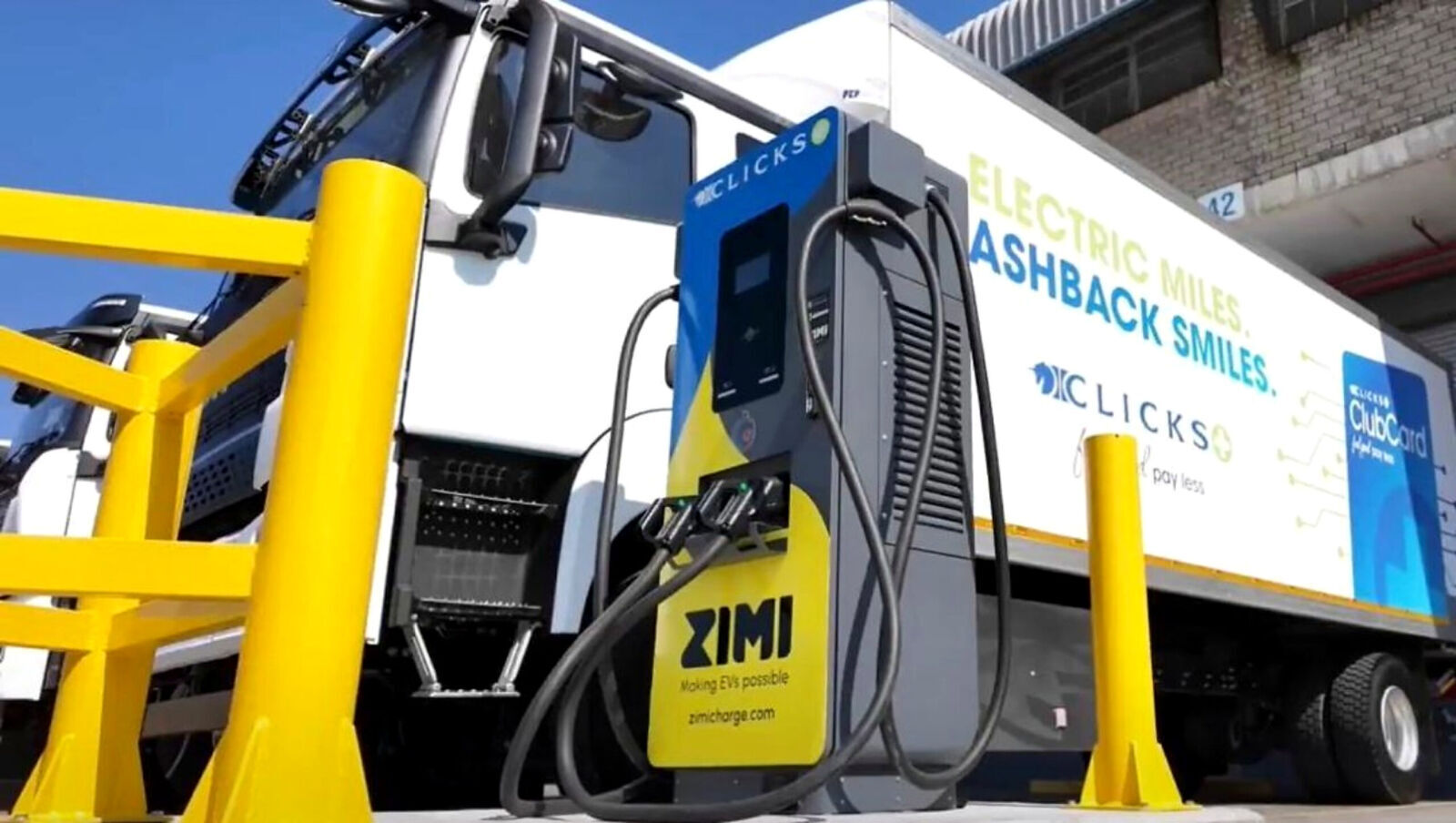
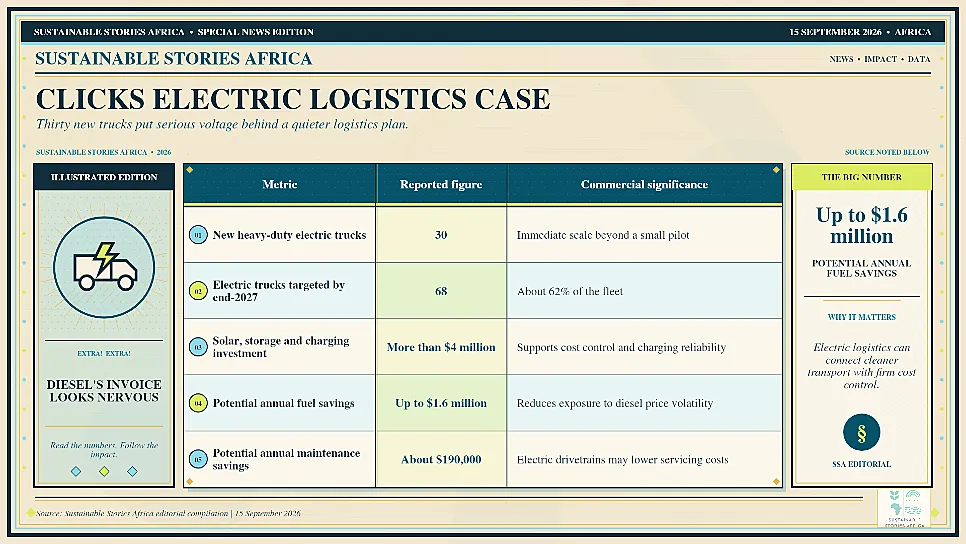
South Africa's Clicks Group has purchased 30 heavy-duty electric trucks and invested more than $4 million in supporting energy infrastructure.
The company expects fuel and maintenance savings approaching $1.8 million annually as its electric fleet expands.
Its solar-charging strategy offers African logistics operators a practical model for lowering emissions while controlling volatile energy costs.
Electric Fleet Economics Become Visible
South African pharmaceutical retailer Clicks Group has bought 30 Sany heavy-duty electric trucks, pairing the vehicles with more than $4 million in solar generation, battery storage and charging infrastructure.
The group expects to operate 68 electric trucks by the end of 2027, representing about 62% of its fleet.
The investment offers a useful answer to a persistent question about commercial decarbonisation in Africa: can lower emissions also improve operating economics?
Clicks projects annual fuel savings of up to $1.6 million and maintenance savings of roughly $190,000. Those figures turn fleet electrification from a corporate pledge into a measurable productivity strategy.
Energy Integration Changes the Calculation
Heavy trucks consume large volumes of diesel, exposing logistics operators to global oil prices, exchange-rate pressure and fuel-supply disruptions.
- Electric vehicles replace much of that variable expense with electricity, but the benefit depends on charging costs and reliability.
Clicks is addressing that risk by investing in its own solar and storage system.
Off-grid or behind-the-meter charging can make energy costs more predictable.
- Vehicles can charge when solar output is strong or when stored electricity is available, while route planning keeps trucks close to suitable depots.
The model is especially relevant for retailers and distributors with regular routes, central warehouses and fleets that return to base.
Cleaner Routes With Stronger Margins
If the savings materialise, the investment could demonstrate how energy and transport planning reinforce each other.
- Solar charging improves the emissions profile of electric trucks and can lower their operating costs.
- Batteries add flexibility, while predictable routes allow businesses to size vehicles and chargers around real demand.
For African cities, the public gains extend beyond corporate margins.
- Heavy diesel vehicles contribute to roadside air pollution and noise, particularly around warehouses and densely populated delivery corridors.
- Electrification can improve local air quality while supporting demand for renewable power, technical services and charging infrastructure.
- Fleet data can also help financiers understand real battery performance under African temperatures, road conditions and payloads.
Turn Pilots Into Bankable Programmes
Companies considering electrification should begin with route-level total-cost analysis.
- The calculation must include vehicle price, financing, utilisation, electricity, chargers, battery warranties, maintenance, residual value and downtime.
- A vehicle that looks expensive at purchase may become competitive when its full operating life is assessed.
Governments can accelerate adoption through standards for heavy-vehicle charging, predictable import rules and incentives tied to verified emissions reductions.
Banks and leasing companies should develop products that recognise lower lifetime running costs rather than financing only the purchase price.
Operators should publish performance data, enabling the wider market to distinguish replicable savings from optimistic forecasts.
Path Forward – Electrifies Fleets With Evidence
Clicks must now demonstrate dependable operations and verified savings as its electric fleet moves from pilot scale towards a majority share.
For the wider market, transparent data, suitable finance and integrated solar charging can turn fleet electrification into a credible cost and climate strategy across African logistics.
Culled from: A playbook to cut costs with electric trucks