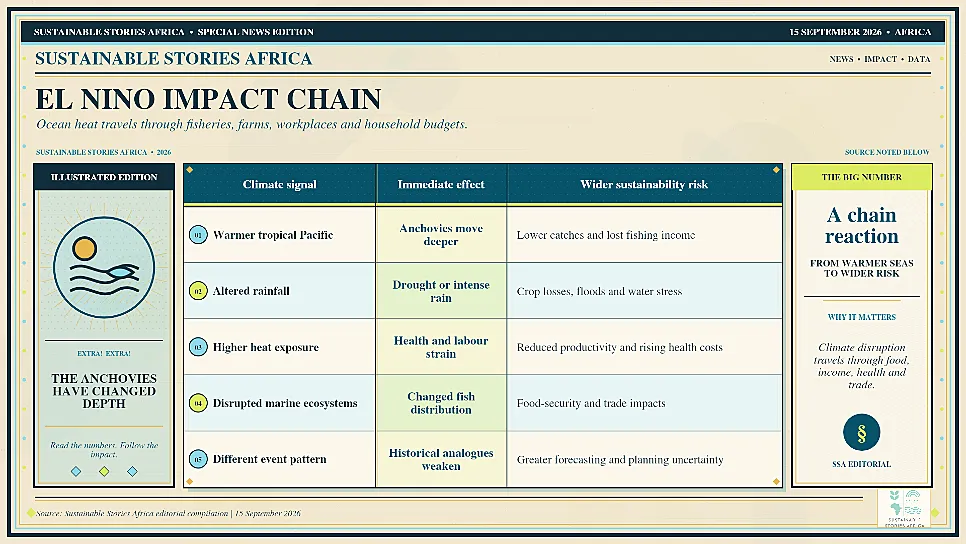
A strengthening super El Niño has already disrupted Peru's anchovy fishery after warmer waters pushed mature fish deeper.
Scientists expect wide-ranging extreme weather, although this event may differ from familiar historical patterns.
For African governments, the early warning underscores the need to prepare food, health and disaster systems for distant but connected climate shocks.
Warm Waters Empty Fishing Grounds
The waters off Peru normally sustain one of the world's most productive fisheries, yielding millions of tonnes of anchovies used in animal feed and fertiliser.
In late August, however, the government ended the anchovy season early after a strengthening El Niño warmed the tropical Pacific and drove mature fish towards deeper, colder water.
The disruption is an early economic signal from what scientists describe as a super El Niño.
Nature reported that the extreme weather associated with the 2026 event could differ from past episodes, complicating preparedness based on historical patterns.
The core risk is not a single uniform forecast but a chain of regional changes in rainfall, heat, oceans and food production.
Ocean Changes Travel Through Markets
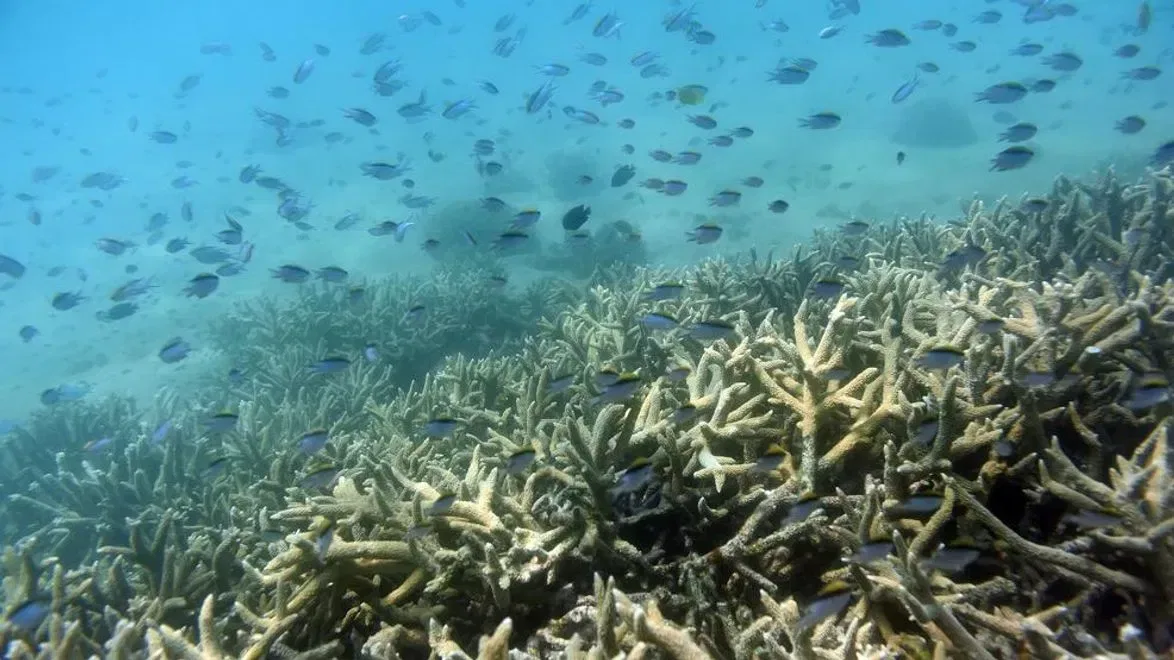
El Niño begins with unusually warm surface waters in the central and eastern tropical Pacific and changes atmospheric circulation far beyond the ocean itself.
- Effects can include drought in some regions, heavy rain and flooding in others, altered storm patterns, heat stress and shifts in marine ecosystems.
- Outcomes depend on the event's timing, location and interaction with long-term global warming.
Peru's anchovy sector shows how quickly a physical change becomes a livelihoods and supply-chain problem.
- When fish move beyond practical reach or reproductive conditions deteriorate, boats, processors and workers lose income.
- Reduced supply can also affect global fishmeal and fertiliser markets, passing costs to farmers and consumers far from the Pacific coast.
Earlier Preparation Can Reduce Losses
Seasonal forecasts cannot prevent El Niño, but they can change outcomes.
- Governments can pre-position food and medical supplies, clear drainage, protect reservoirs and communicate planting advice.
- Insurers, banks and humanitarian agencies can use forecast triggers to release money before losses become disasters.
- Fisheries managers can adjust seasons and monitoring as species move.
African countries have particular reasons to watch.
- El Niño teleconnections can influence rainfall and temperature across parts of eastern and southern Africa, but local effects vary.
- Generic regional warnings are therefore insufficient.
- National meteorological agencies must translate global signals into district-level guidance for farmers, health services, dam operators and disaster managers.
Prepare Systems for Compound Shocks
Governments should activate cross-ministry preparedness plans rather than leaving the forecast to weather agencies.
- Agriculture, water, health, energy and social-protection teams need shared scenarios, clear triggers and contingency budgets.
- Market regulators should monitor food and fertiliser prices where disrupted fisheries or crops affect imports.
Climate services must communicate uncertainty honestly.
- An unusual event can produce surprises, so plans should remain flexible and update as observations change.
- Regional institutions can share data and coordinate responses across river basins and food markets.
The cost of early preparation is usually smaller than emergency reconstruction after a forecast warning was ignored.
Path Forward – Turns Warning Into Preparedness
The super El Niño should trigger practical readiness across fisheries, food systems, health services, water management and disaster finance.
African decision-makers need local forecasts, flexible plans and early funding that can respond as conditions evolve.
Uncertainty is not a reason to wait; it is a reason to prepare for several credible outcomes.
Culled from: The super El Niño is already wreaking havoc: here’s what’s in store | Nature