Climate & Capital has returned to the climate-finance conversation under publisher Peter McKillop.
Its reappearance comes as record investment still falls short of transition needs, especially in emerging markets.
The editorial challenge is to connect capital, policy and real-world outcomes without treating headline finance totals as proof of progress.
A finance voice re-enters the debate
Climate & Capital has returned to the public conversation, with publisher Peter McKillop again positioning climate change as a business, finance and public-policy story.
The return matters at a moment when the central question is no longer whether climate investment is growing, but whether capital is reaching the places, technologies and communities where it can change outcomes.
McKillop, an award-winning journalist and publisher, also leads Green Central Banking. His platforms have focused on the relationship between financial institutions and the transition to a post-carbon economy.
That lens is increasingly important as political resistance, higher borrowing costs and competition for public budgets test climate commitments, while physical climate risks continue to accumulate.
Record flows still hide structural shortages
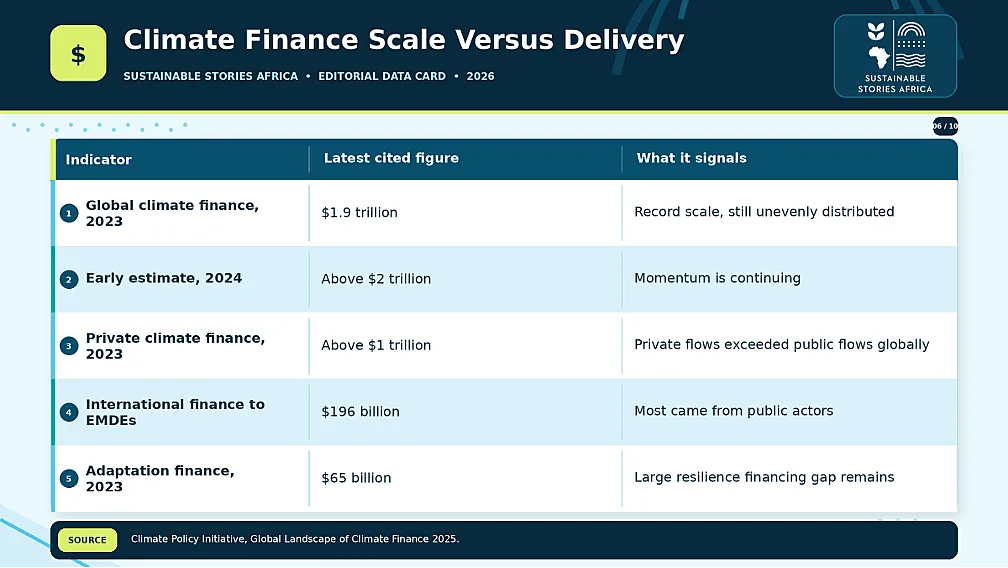
The Climate Policy Initiative estimated that global climate finance reached a record $1.9 trillion in 2023, with early data indicating that flows exceeded $2 trillion in 2024.
- Private finance passed $1 trillion for the first time.
- These figures demonstrate scale; however, they do not resolve distribution.
- International climate finance to emerging markets and developing economies reached $196 billion in 2023, and 78% came from public actors.
The composition is equally revealing.
- Mitigation attracted about $1.78 trillion, compared with $65 billion for adaptation and $58 billion for activities combining both goals.
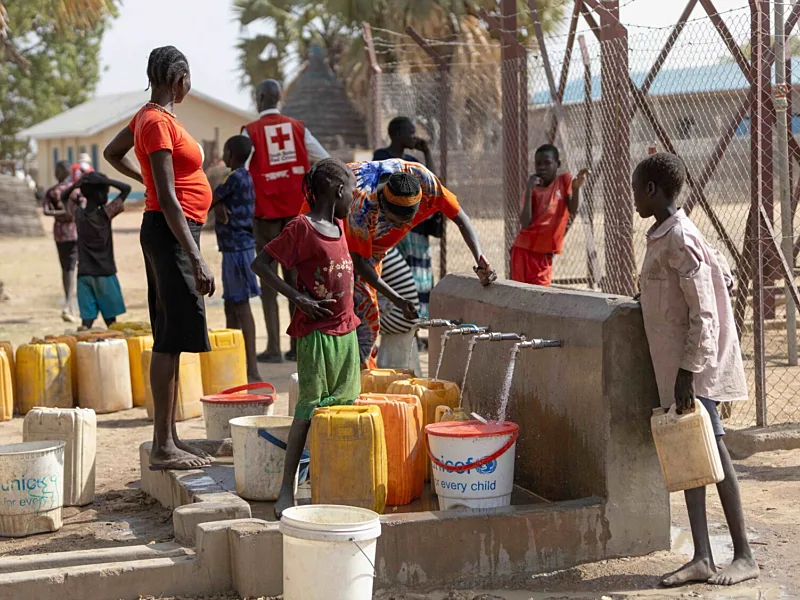
For African markets, the issue is not simply a shortage of projects or savings.
- It is a high cost of capital, thin project pipelines, currency risk, limited fiscal space and an overreliance on instruments that add debt where resilience needs patient funding.
Better scrutiny can improve capital allocation
A stronger climate-finance information ecosystem can help investors separate credible transition plans from labels.
- It can examine who carries risk, who receives returns and whether projects deliver affordable power, resilient transport, safer housing, jobs or restored ecosystems.
- It can also test whether blended-finance structures mobilise genuinely additional private capital or merely subsidise transactions that would have happened anyway.
For African governments and businesses, better reporting can make bankable opportunities more visible.
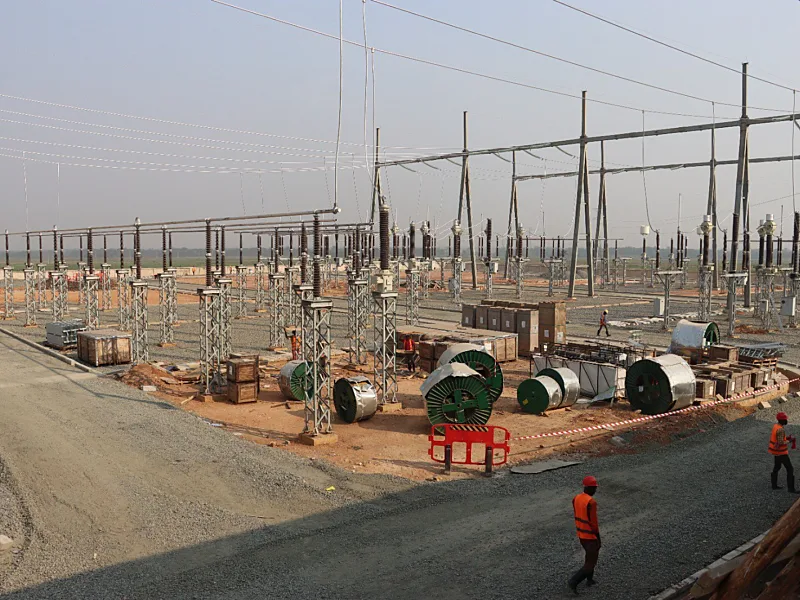
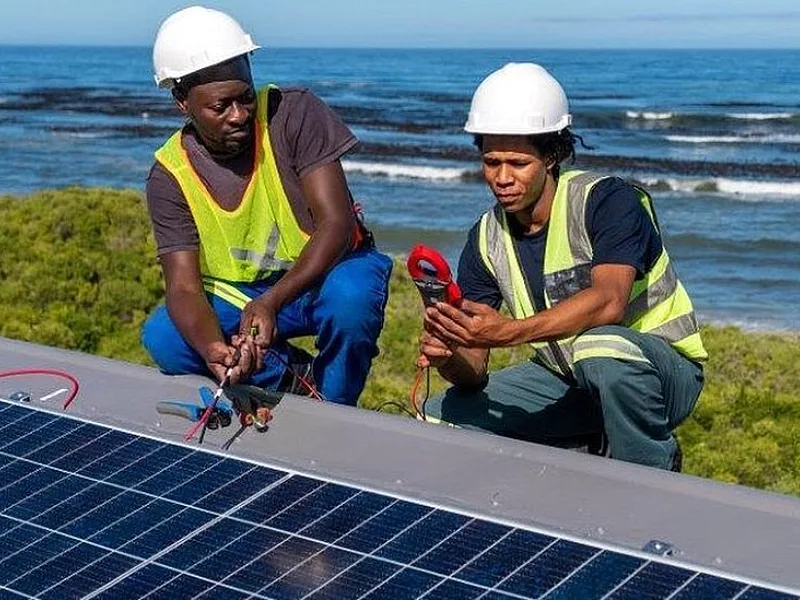
- Distributed energy, climate-smart agriculture, urban cooling and water security all produce economic value, but their benefits do not always fit conventional short-term models.
- Journalism that links financial structure to measurable outcomes can strengthen accountability and show where guarantees, local-currency finance and concessional capital are most useful.
Move the conversation from labels to outcomes
The next phase of climate finance must be judged by execution.
- Asset owners should disclose not only allocations but also additionality, expected emissions reductions, resilience outcomes and community safeguards.
- Development finance institutions should publish how their risk-sharing lowers end-user costs and crowds in capital.
- Regulators and central banks should continue assessing climate risk within their mandates, using transparent evidence rather than political branding.
Media organisations also carry responsibility.
- Reporting should follow money from announcement to disbursement and from project finance to lived impact.
- It should make room for local developers, workers and affected communities, not only global institutions.
- Climate & Capital's return creates another platform for that scrutiny, at a time when the credibility of the transition depends on showing what capital actually changes.
That scrutiny should include the terms behind celebrated deals.
- A solar plant financed in dollars can still leave a local utility exposed to currency shocks; a resilient-infrastructure fund can still favour assets in richer cities; and a green bond can still finance projects without publishing meaningful impact data.
- Comparing promised and realised outcomes would help markets learn.
It would also reveal where policy, project preparation or financial design is blocking investment, allowing public money to target those constraints instead of absorbing private losses without a clear development return.
Consistent definitions would help too.
- Comparable reporting on mitigation, adaptation and dual-benefit finance would reduce double counting and allow governments to see which sectors and regions remain underserved.
- Open project-level data can turn climate-finance coverage into usable market intelligence.
Path Forward – Make every climate dollar answerable publicly
The priority is transparent, outcome-based reporting on climate flows, costs, risk sharing and beneficiaries. Emerging markets need more affordable capital, not larger headline totals alone.
Publishers, investors and public institutions should follow commitments through delivery. The transition becomes credible when finance lowers risk, expands access and produces verifiable environmental and social value.
Culled from: Climate & Capital returns - by Peter Mckillop