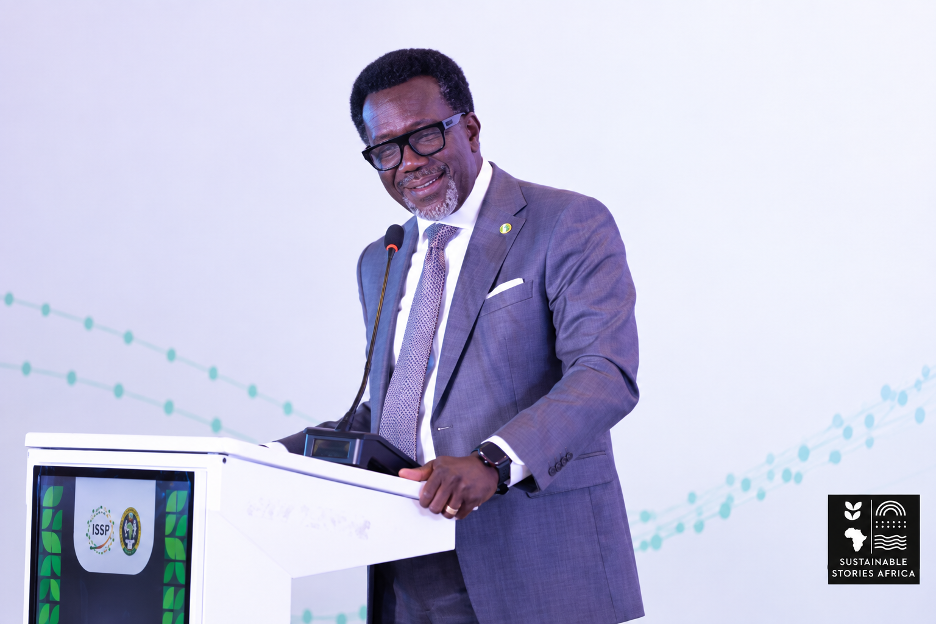
Nigeria's insurance regulator has placed consumer trust, digital distribution and inclusion at the centre of the industry's next growth phase.
Mr Olusegun Ayo Omosehin, Commissioner for Insurance and Chief Executive Officer of NAICOM, gave the welcome address at the ISSP launch.
He said the expansion of the market would be supported, but never at the expense of solvency, transparency or public confidence.
Regulator Defines Insurance Growth Beyond Premiums
Nigeria's next phase of insurance growth must be built on strong balance sheets, sound governance, prompt claims settlement and measurable value for policyholders, the National Insurance Commission has said.
Mr Olusegun Ayo Omosehin, Commissioner for Insurance and Chief Executive Officer of NAICOM, delivered the welcome address at the September 3 launch of the Insurance Sector Strengthening Programme.
He described ISSP as a landmark initiative to make the industry more inclusive, innovative, resilient and trusted.
The message was both supportive and firm. NAICOM will create an enabling environment for innovation, Omosehin said, but operators must meet prudential standards, act ethically, treat customers fairly and settle genuine claims on time.
"Market expansion and innovation will be supported, but not at the expense of solvency, transparency or public trust," he said.
The remark placed consumer outcomes, rather than premium collection alone, at the heart of sector reform.
 |  |
Six Pillars Address Persistent Market Barriers
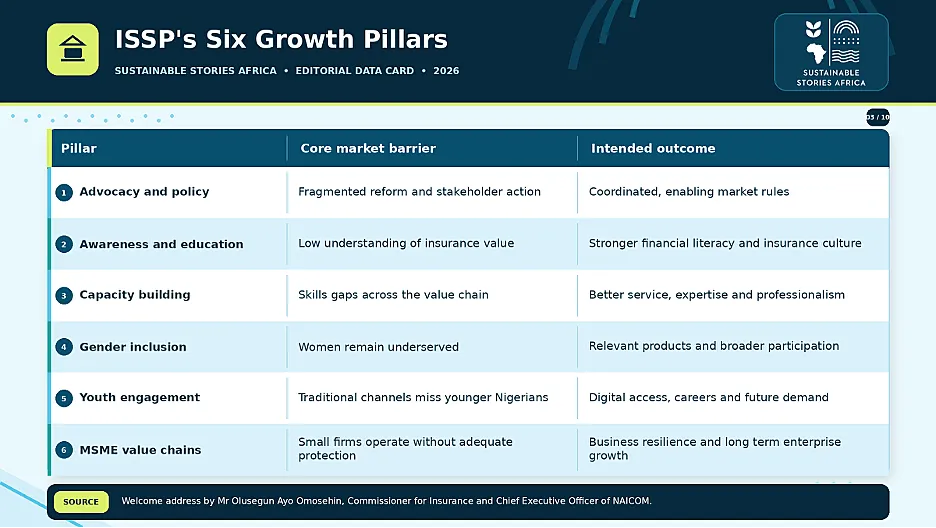
Omosehin identified low coverage, limited public understanding, capacity gaps, trust concerns and fragmented distribution as constraints on growth. Women, young people and small businesses remain underserved even though they are central to Nigeria's economy and future market demand.
These barriers reinforce one another.
- People who do not understand a product are unlikely to buy it. Customers who have seen delayed claims are unlikely to recommend it.
- Operators without the right skills or data struggle to design affordable cover for unfamiliar segments.
A coordinated programme is therefore more likely to succeed than isolated campaigns that address awareness without improving service and product relevance.
ISSP offers a coordinated response through six pillars:
- Advocacy and policy.
- Awareness and education.
- Capacity building.
- Gender inclusion.
- Youth engagement.
- Micro, small and medium enterprise value chain development.
The programme also aligns with the Nigerian Insurance Industry Reform Act 2025 and its objectives for penetration, professionalism, innovation and consumer protection.
- Awareness efforts, Omosehin said, must present insurance as a practical tool for financial protection and risk management, including for Nigerians in rural communities.
- Capacity development must also prepare professionals for changing technology and customer expectations.
Together, those priorities can improve both demand for insurance and the industry's ability to serve that demand responsibly.
Digital Distribution Can Rebuild Public Confidence
The address said the recapitalisation focus of the past year had largely been concluded, shifting attention to distribution.
- Younger Nigerians live on mobile phones, Omosehin observed, so an industry concentrated on large offices in major cities risks missing the market.
Digital platforms, insurance technology and data-led delivery can make products more convenient, transparent and personalised. However, technology will only deepen trust if it improves service and claims experiences.
- Nigerians should no longer see insurers as quick to collect premiums and reluctant when losses are reported, he said.
Mobile distribution can lower the cost of reaching customers, simplify payments and provide clearer records of coverage.
- It can also support faster communication during claims.
However, digital access introduces responsibilities around fair product design, data handling and customer support.
- Convenience must not become a route for selling unsuitable products or hiding important terms in complicated processes.
The social and economic prize is substantial.
- Better coverage can protect household income, stabilise small enterprises and strengthen recovery after shocks.
- Greater inclusion of women and young people can expand demand, talent and innovation across the value chain.
Every Operator Must Earn Consumer Trust
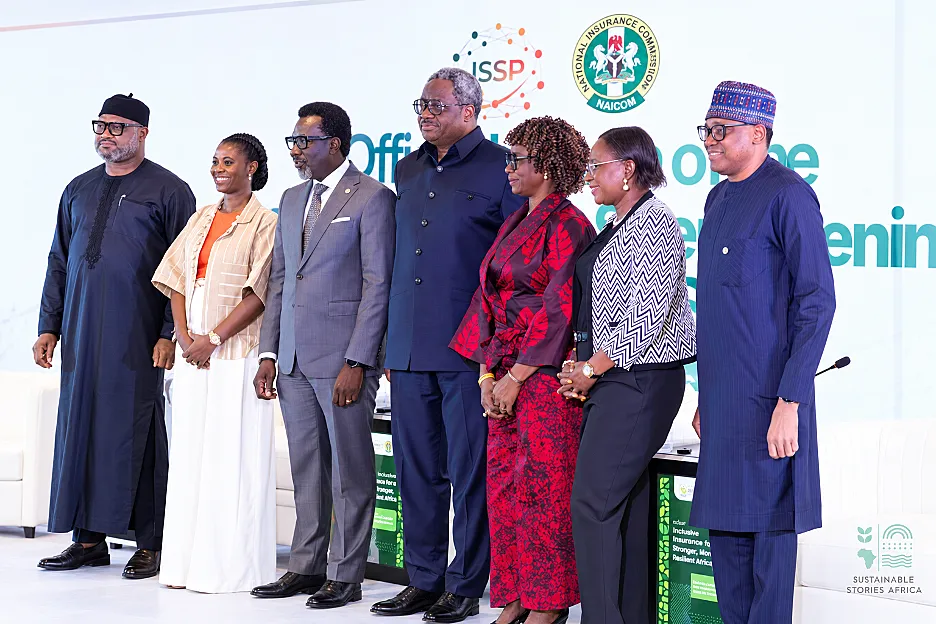
Omosehin called for a shared response.
- Operators must develop relevant products and distribution channels. Professional bodies must strengthen standards and capacity.
- Development partners should provide technical support. Educational institutions must nurture talent, while the media improves public understanding.
NAICOM, he said, will continue to engage, guide and support the market while insisting that every operator earns confidence through compliance, professionalism and service excellence.
- Regulation must act as a shield for policyholders and a compass for responsible market development.
The test for ISSP will therefore be practical:
- Whether collaboration produces clearer products, faster claims, stronger consumer protection and access that reaches rural communities, women, young people and small businesses.
Measurement should track more than the number of policies sold.
- Renewal rates, claims experience, complaint resolution, geographic reach and customer understanding can show whether people receive lasting value.
Publishing these outcomes would help operators learn, allow the regulator to intervene early and give the public stronger reasons to believe that reform is changing market conduct.
Path Forward – Service Integrity Must Power Sustainable Expansion
The industry must now translate ISSP's six pillars into funded actions, accountable owners and measurable coverage, claims and trust outcomes.
Growth built on integrity can turn insurance into an instrument of resilience, social protection and wealth creation. Growth built only on promises will deepen scepticism. NAICOM's position is clear: innovation and inclusion must advance alongside solvency, professionalism and consistent value for Nigerians.