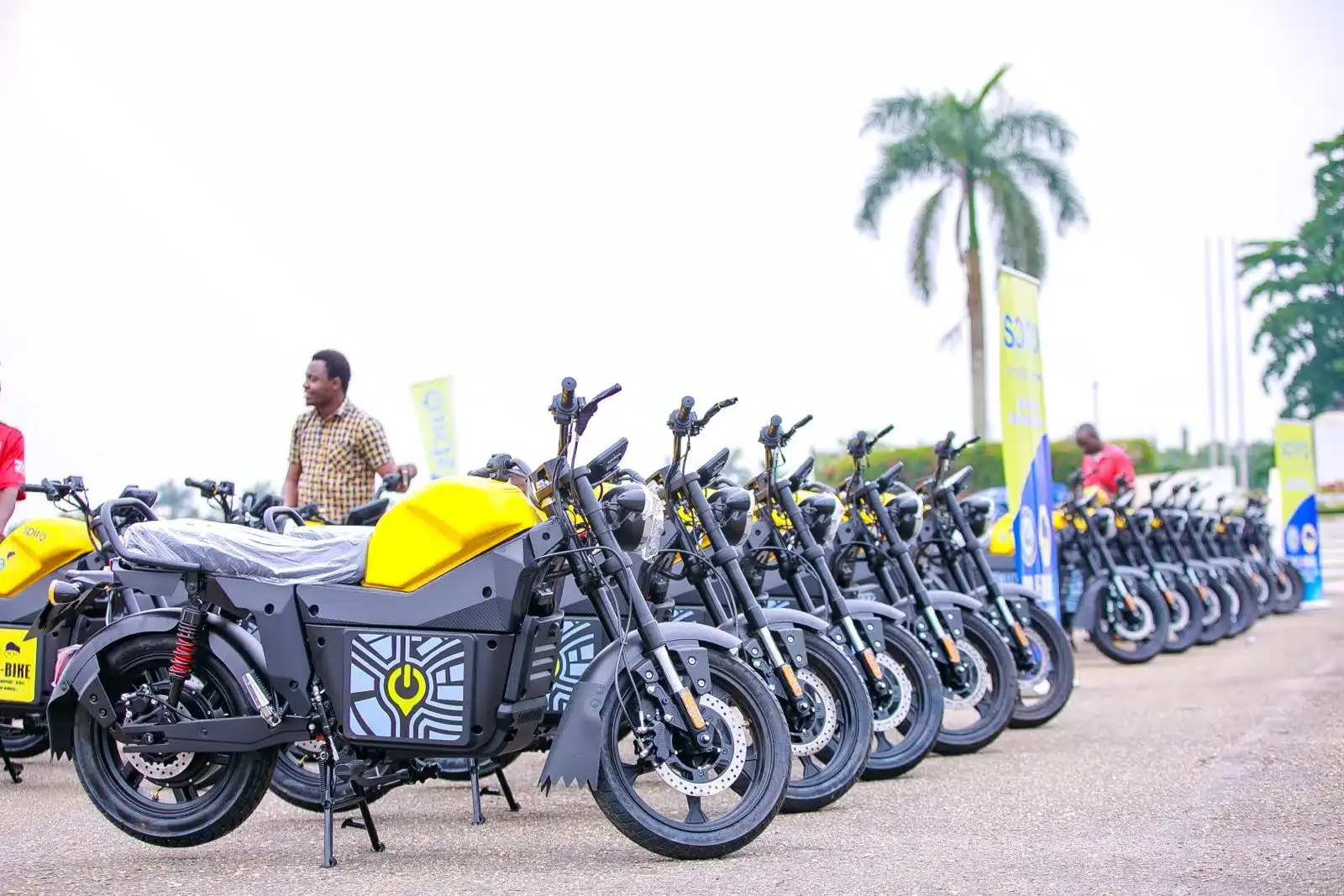
African electric mobility company Spiro has introduced its first 100 electric motorcycles in Ghana, accompanied by battery-swapping infrastructure.
The Accra launch marks another stage in its expansion across African transport markets.
The initiative aims to reduce operating costs and charging downtime for commercial riders, while raising questions about infrastructure availability, financing and long-term affordability.
Ghana Welcomes New Electric Motorcycle Investment
Electric mobility company Spiro has entered Ghana with an initial deployment of 100 electric motorcycles, expanding its battery-swapping business into another African market.
- The launch, reported on 20 October 2026, took place in Accra and introduced the company's Ekon 450 M1 V3 electric motorcycle.
The programme combined the introduction of new vehicles with demonstrations of battery-swapping technology, designed to allow riders to exchange depleted batteries for charged replacements.
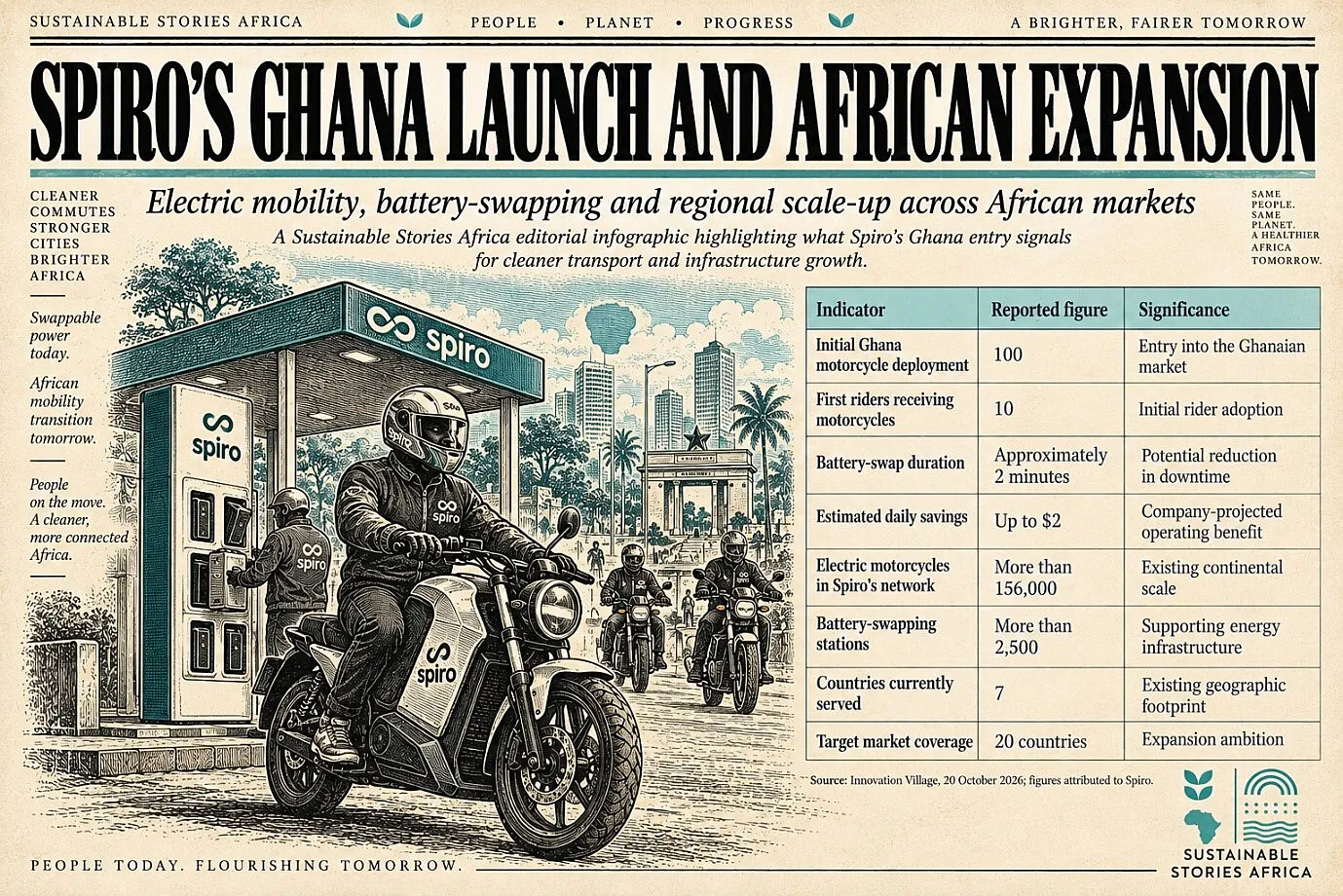
- Spiro says the process can take approximately two minutes, potentially allowing commercial motorcycle operators to reduce the time they would otherwise spend waiting for batteries to recharge.
The company also estimates that riders could save up to $2 daily compared with operating petrol-powered motorcycles.
These are company-reported estimates rather than independently verified savings across Ghana's motorcycle market.
Battery Swapping Addresses Transport Operating Costs
The Accra launch included a convoy of 100 electric motorcycles and the handover of the first vehicles to 10 riders.
- Commercial motorcycle operators often depend on vehicle availability to generate daily income.
- Long charging periods can therefore create an important barrier to electrification.
Battery swapping seeks to address this constraint by separating the ownership and operation of the motorcycle from the time needed to recharge its battery.
Spiro says it operates more than 156,000 electric motorcycles and over 2,500 battery-swapping stations across seven countries.
The company plans to expand its presence to 20 African markets.
Its growth strategy is supported by a reported $270 million equity funding round and an additional $18 million in debt financing from the Africa Go Green Fund.
Electric Motorcycles Could Support Local Livelihoods
Affordable and reliable electric motorcycles could deliver several benefits for Ghana's transport economy.
- Commercial riders may reduce exposure to fluctuating petrol prices, while electric powertrains can lower certain routine maintenance requirements.
- Urban communities could benefit from reduced tailpipe pollution and less transport noise.
For small businesses, especially delivery services, electric mobility could create opportunities to manage operating expenditure more predictably.
- The initiative also demonstrates the importance of developing supporting infrastructure alongside vehicle deployment.
However, economic benefits will differ according to daily mileage, battery service charges, vehicle financing and the location of swapping stations.
The environmental performance of battery-swapping systems also depends on electricity sources, battery longevity, recycling and responsible waste management.
Infrastructure Expansion Must Match Rider Demand
Spiro's expansion strategy will require sustained investment in reliable swapping infrastructure.
- Stations must be located near commercial routes and maintain enough charged batteries to meet customer demand.
- Transparent pricing will also be important in helping riders compare electric motorcycles with petrol-powered alternatives.
The company is pursuing manufacturing expansion in Nigeria, where it has outlined plans to increase production capacity from 30,000 to 200,000 motorcycles.
- These plans could create opportunities for regional supply chains, technical services and employment, although implementation timelines and production outcomes remain to be demonstrated.
For Ghana, effective public policy could include vehicle standards, battery safety requirements, recycling systems and financing support for commercial operators.
Path Forward – Scaling Electric Mobility Across African Markets
Spiro's Ghana entry illustrates how electric mobility is moving beyond demonstration projects toward wider commercial deployment across Africa.
Its long-term success will depend on affordable motorcycles, dependable battery infrastructure, transparent operating costs and measurable environmental benefits.
If these conditions exist, the model could strengthen livelihoods in commercial transport while supporting cleaner urban mobility.
Culled from: Spiro Enters Ghana With 100 Electric Motorcycles - Innovation Village | Technology, Product Reviews, Business