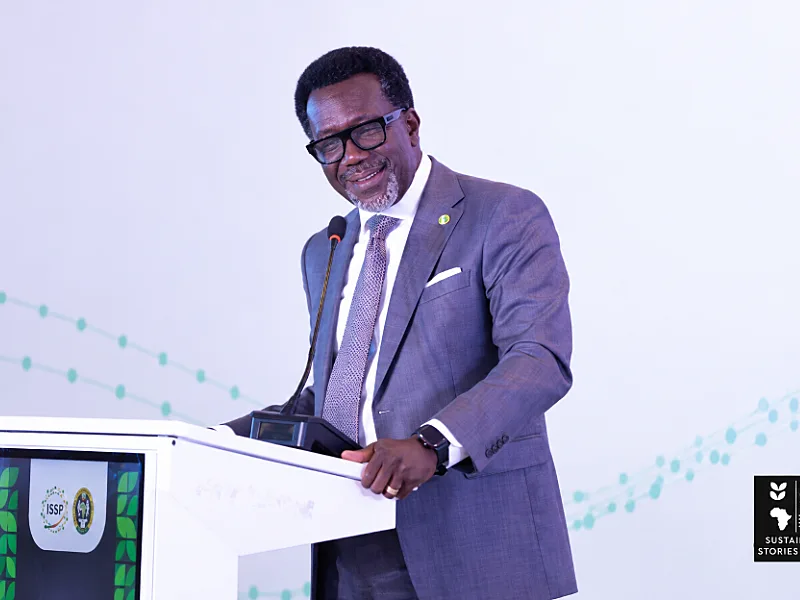
Nigeria's Senate has pledged continued legislative support for a stronger insurance market as the country pursues institutional reform and inclusive growth.
Mr Victor Ihedu delivered the goodwill message on behalf of Senator Tokunbo Abiru, Chairman of the Senate Committee on Banking, Insurance and Other Financial Institutions.
The message challenged stakeholders to turn laws and recapitalisation into protection, innovation and public trust.
Senate Places Insurance Within Economic Reform
Nigeria's insurance industry must move from the margins to the mainstream of national development, the Senate has said, backing the Insurance Sector Strengthening Programme as a platform for practical collaboration and sustained reform.
Mr Victor Ihedu delivered the goodwill message on behalf of Senator Tokunbo Abiru, Chairman of the Senate Committee on Banking, Insurance and Other Financial Institutions, at the September 3 launch of ISSP.
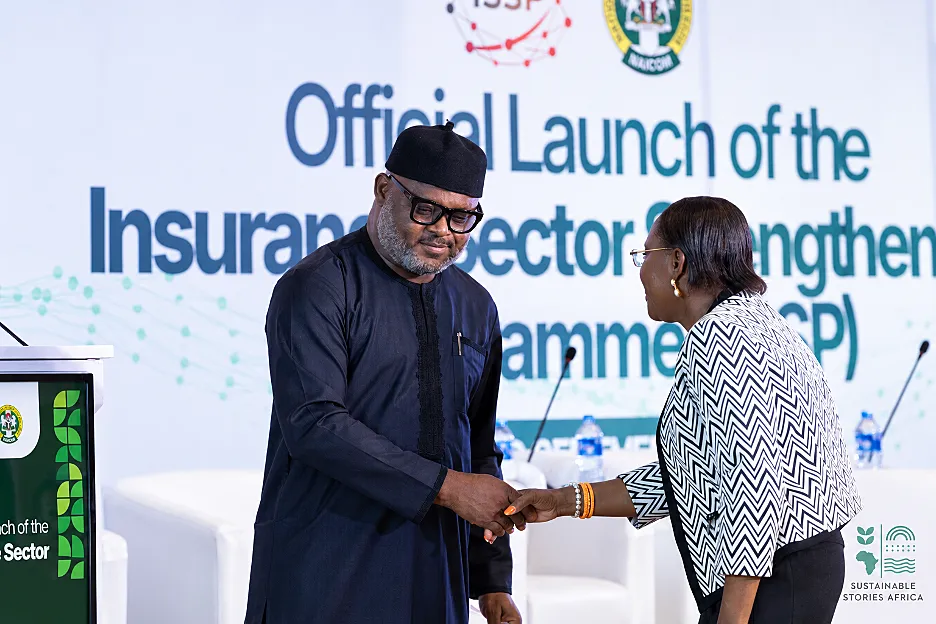
The message linked insurance reform to Nigeria's wider push to strengthen institutions, mobilise capital, deepen financial inclusion and support sustainable growth.
No modern economy can reach its potential without a strong and resilient insurance sector, Ihedu said.
- Insurance protects lives and assets, supports enterprise, promotes investment, mobilises long-term capital and gives businesses the confidence to take productive risks.
However, millions of Nigerians and businesses remain uninsured or underinsured.
That gap leaves households exposed to shocks, limits enterprise resilience and weakens the pool of patient capital available for national development.
- For a family, inadequate cover can turn illness, fire or an accident into debt and lost opportunity.
- For a small business, a single disruption can erase working capital, jobs and years of accumulated value.
At national scale, these individual vulnerabilities become a development constraint, especially when government and communities must repeatedly absorb losses that a deeper risk market could share.
 |  |
Reform Must Reach People and Businesses
The Senate message described ISSP as timely because of its focus on advocacy, public awareness, capacity development, innovation and inclusive growth.
These priorities address a persistent challenge: regulation can strengthen institutions, but insurance penetration will remain limited unless people understand products, trust providers and can obtain relevant cover.
Ihedu also connected the initiative with ongoing reform measures intended to create better capitalised, more resilient and globally competitive insurance institutions.
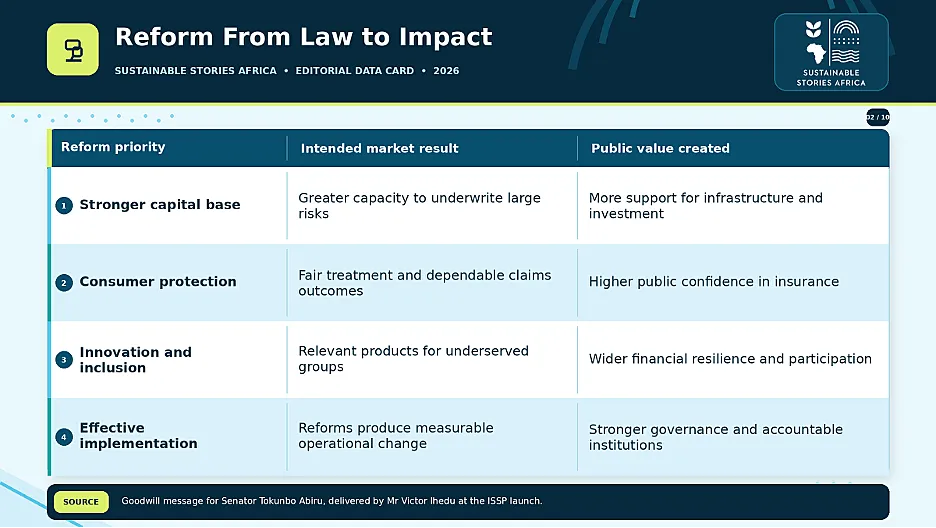
Nigeria, he said, needs insurers capable of underwriting large risks, supporting infrastructure and major investment, and protecting businesses and households.
Capital strength is especially important when projects involve energy, transport, manufacturing or other assets whose losses can be large and complex.
- Without adequate domestic underwriting capacity, more risk may be placed elsewhere, and fewer financial benefits remain within the economy.
- Stronger institutions can retain expertise and capital while still using international partnerships where necessary.
Stronger Institutions Can Unlock National Ambition
The message referred to landmark insurance legislation and said the Senate had recently passed the Insurance Regulatory Commission Bill 2026, with hopes for concurrent passage by the House of Representatives in September.
The proposed measure, it said, would further strengthen the regulator in discharging its responsibilities.
However, the address warned that legislation and regulation alone cannot deliver transformation. The true test is implementation.
- New rules and recapitalisation must translate into stronger governance, greater innovation, increased insurance penetration, improved consumer protection and deeper public trust.
Implementation also requires coordination across institutions.
- Regulators can set standards, but operators determine product quality and service.
- Lawmakers can strengthen mandates, but oversight must identify delays and unintended consequences.
- Professional bodies, technology providers and development partners can then help close skills, data and distribution gaps.
ISSP offers a place to connect those responsibilities around common milestones.
When that connection is made, insurance can enable national ambition.
- Stronger balance sheets would allow operators to absorb larger risks.
- Better products and distribution would reach more households and smaller enterprises.
- Greater trust would encourage participation and create a deeper source of long-term domestic capital.
Stakeholders Must Deliver Reform Together Now
On behalf of Senator Abiru, Ihedu assured stakeholders of the Senate's continued commitment to legislation and oversight in support of a sound, stable, innovative and inclusive financial system.
He urged regulators, operators, professional bodies, development partners and ISSP promoters to build around a shared implementation agenda.
- That requires clear responsibilities, measurable targets and sustained engagement beyond the launch event.
The desired outcome is not reform on paper. It is an industry that can support Nigeria's economic ambitions while protecting people when illness, disaster, business interruption or other shocks threaten hard-won progress.
Clear public reporting should accompany that work.
- Stakeholders need to know whether complaints are falling, claims are being settled faster, new products are reaching underserved groups and insurance participation is expanding beyond compulsory lines.
Visible evidence of progress will make the reform agenda easier to trust and sustain.
Path Forward – Implementation Must Convert Reform Into Trust
The immediate priority is to align legislation, regulation and industry action around outcomes Nigerians can see: reliable cover, fair claims, stronger institutions and wider access.
ISSP can help coordinate that work, but credibility will depend on transparent delivery.
Success will be measured by whether more households and businesses are protected and whether insurance contributes meaningfully to a resilient, prosperous inclusive nation.