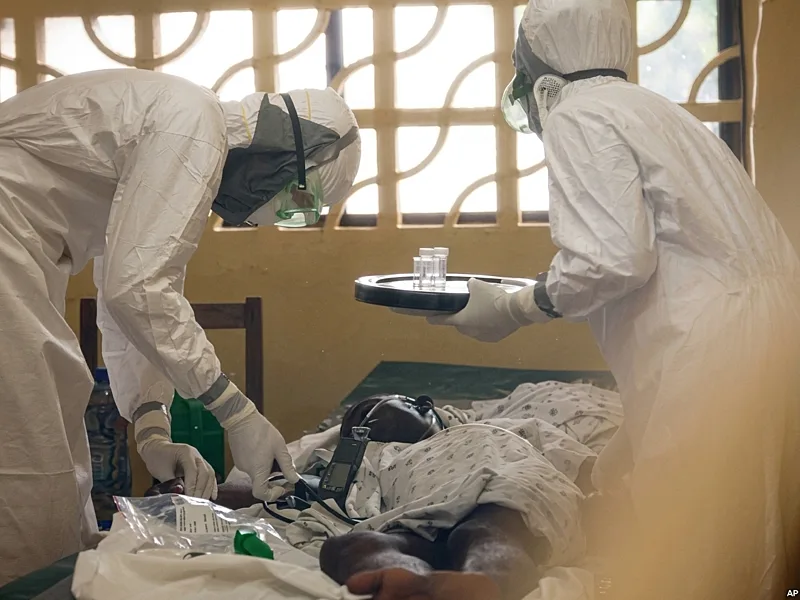
Researchers have identified converging biological networks across five illnesses marked by profound fatigue.
The finding could shift care away from treating exhaustion as an unexplained symptom.
For patients, including millions living with long COVID and ME/CFS, it offers a route towards objective tests and cross-disease treatments.
Five illnesses reveal one biological pattern
Scientists have found that five clinically distinct illnesses may converge on the same biological systems, offering what the lead researcher described as an emerging unifying explanation for profound fatigue.
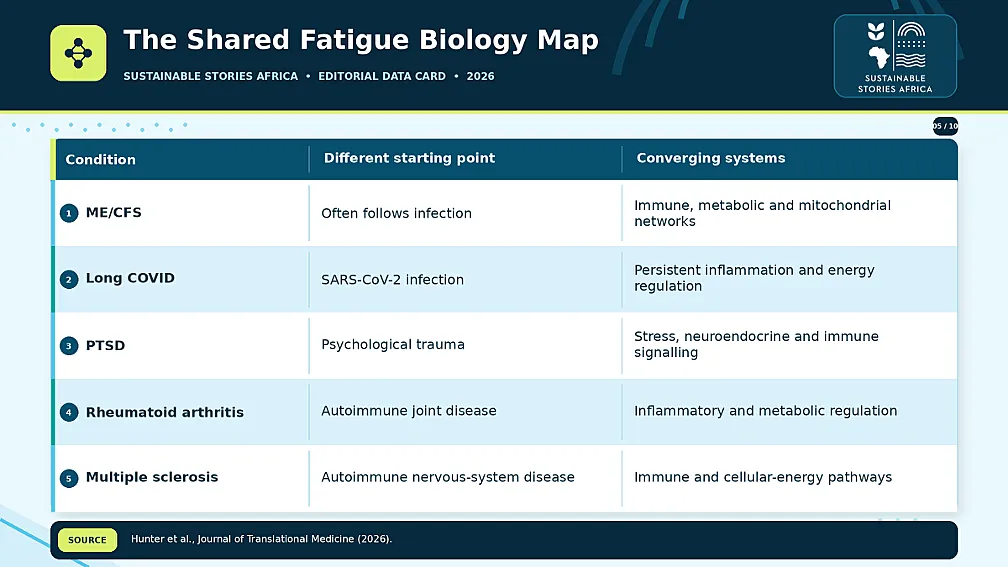
The study connects myalgic encephalomyelitis or chronic fatigue syndrome, long COVID, post-traumatic stress disorder, rheumatoid arthritis and multiple sclerosis through shared regulatory networks involving immunity, energy production, metabolism and the body's response to stress.
Published in the Journal of Translational Medicine and led by the University of East Anglia with Oxford BioDynamics and other partners, the research matters because these conditions begin differently.
Viral infection, trauma and autoimmune disease can nevertheless leave patients facing similar exhaustion, brain fog, poor concentration, disturbed sleep, autonomic problems and a sharp loss of everyday function.
Networks matter more than matching genes
The researchers did not collect new patient samples.
- They combined published genome-wide association data for long COVID, PTSD, rheumatoid arthritis and multiple sclerosis with three-dimensional genomic data from an earlier ME/CFS study.
- Oxford BioDynamics' EpiSwitch Orion platform was used to examine how DNA folds and how distant regions interact inside cells, rather than looking only for matching sequences.
At the individual-gene level, overlap was surprisingly limited.
- The stronger connection appeared when the genes were mapped into wider networks.
- The analysis showed convergence in immune and cytokine signalling, interferon responses, mitochondrial function, metabolic regulation and neuroendocrine processes.
In the ME/CFS analysis, 552 three-dimensional genomic anchors mapped to 567 genes.
- Candidate hub genes included LAG3 and components of the mTOR pathway, but the authors stressed that their roles require further validation.
Better evidence could shorten diagnostic uncertainty
The potential gain is not a single cure, but a more useful way of organising research and care. ME/CFS and long COVID are still diagnosed largely through symptoms, leaving many patients in prolonged uncertainty.
If shared regulatory signatures can be confirmed in diverse patient populations, blood-based tests may help distinguish underlying biological states, improve patient stratification and identify therapies that can be tested across more than one condition.
The relevance extends to African health systems, where specialist access and advanced diagnostics remain uneven. A validated, affordable test could reduce repeated consultations and the social cost of symptoms that are too often minimised.
However, the computational nature of the analysis means it is a framework, not clinical proof.
- Prospective studies, independent replication and representative cohorts will be essential before routine use.
Research must follow patients across conditions
Funders, regulators and research institutions should now support cross-disease studies that track immune, metabolic and stress-response markers over time.
- Clinical trials should include outcomes that patients value, including energy, cognition, sleep and the ability to work or care for family members.
- Researchers must also test whether the same signals appear across sex, age, ancestry and disease severity.
For African universities and public-health agencies, participation should begin early not after diagnostics have been designed elsewhere.
- Building biobanks, ethical data-sharing systems and regional genomics capacity would help ensure future tests work across populations.
The study's central message is practical: similar suffering across different diagnoses deserves connected science, without collapsing distinct illnesses into one.
Health systems should also prepare for the communication challenge.
- A shared pathway does not mean the five conditions are interchangeable, caused by the same event or ready for the same treatment.
- Patients need clear explanations that distinguish a research signal from a diagnosis.
- Policymakers can support this by requiring transparent validation, conflict-of-interest disclosure and meaningful patient involvement.
Well done, the discovery could reduce stigma and uncertainty, showing that disabling fatigue may reflect measurable disruption across the body rather than weakness, poor motivation or an illness that exists only in the patient's account.
Primary-care training should evolve alongside the science. Simple referral pathways, symptom documentation and protection from discrimination at work or school can improve lives before a biomarker is available. Research progress and humane care should advance together.
Path Forward – From shared signals toward fairer care
The next priorities are independent validation, prospective patient studies and affordable diagnostic development. Any test or therapy must be clinically proven before it changes care.
A systems approach can still improve the research agenda now. It invites clinicians, funders and patients to connect evidence across diseases while protecting diagnostic differences, equity and informed consent.
Culled from: Scientists uncover shared biology behind profound fatigue in five major illnesses