
Dr Kola Adesina has challenged Nigerian insurers to replace old sales models with products designed around how people actually live and spend.
Delivering the keynote address at the ISSP launch, he drew on his early insurance career and later experience in the energy sector.
His message was urgent: legislation cannot substitute for service, innovation and relevance in a young, mobile-first market.
Adesina Challenges Insurance's Persistent Growth Gap
Nigeria's insurers must follow consumer spending, design products for a young population and stop relying on compulsory cover to drive growth, Dr Kola Adesina said in the keynote address at the September 3 launch of the Insurance Sector Strengthening Programme.
Adesina, an energy sector leader whose first degree and professional qualification were in insurance, framed the industry's challenge through personal experience.
- He entered insurance in 1987, later moved into energy and eventually returned to the industry through a leadership role in insurance broking.
Across that period;
- Nigeria's population grew dramatically.
- Insurance penetration remained associated with estimates around 0.2% to 0.5%, he said.
- His question to the room was simple: to what extent has insurance grown alongside the people and economy it is meant to protect?
The comparison exposed a strategic gap.
- A larger population should create more households, enterprises, assets and transactions requiring protection.
- If insurance participation remains almost static, the problem cannot be explained by population size alone.
- It points to product relevance, access, service experience and the industry's ability to communicate value in terms people recognise.
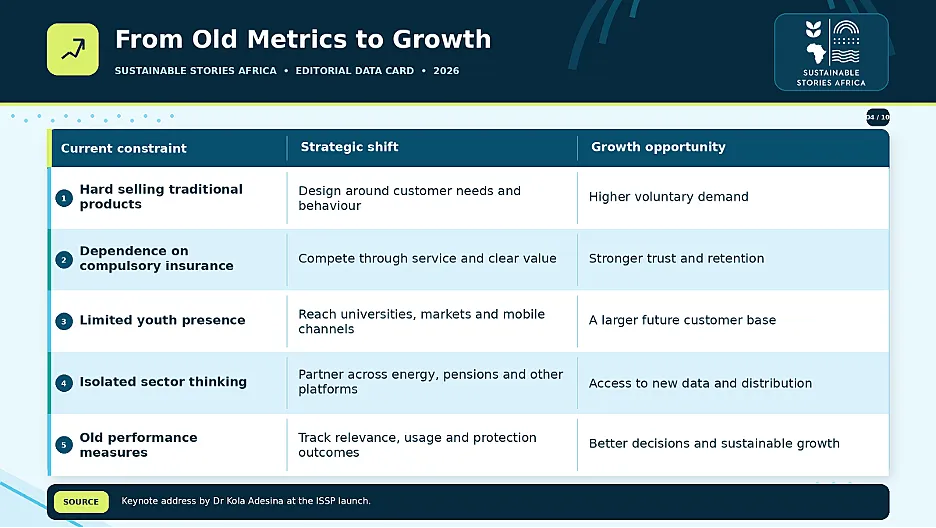
The answer, he suggested, will not come from hard selling familiar products to reluctant buyers.
- It will come from understanding what Nigerians value, how they allocate money and which risks feel urgent in their daily lives.

Products Must Follow People and Spending
"Investors naturally follow the money," Adesina said.
- Insurers should apply the same logic by studying where households and businesses spend, then offering protection and value compelling enough to earn a place in those budgets.
He pointed to the sums young Nigerians commit to betting and other speculative activities as evidence that money moves quickly when products feel immediate, accessible and culturally relevant.
- The industry's task is to create alternatives that connect protection, aspiration and value without confusing customers or depending permanently on legal compulsion.
This does not mean insurance should imitate gambling.
- It means the industry should study why some services gain attention, repeat use and small but frequent payments.
- Simple language, mobile access, visible benefits and rapid feedback all shape consumer behaviour.
- Insurers can apply those lessons while maintaining the prudence and protection that distinguish insurance from speculation.
Innovation Can Protect Ambition From Shocks
The desired future is an insurance market that meets Nigerians where they are:
- On mobile devices, in universities, across markets and within the businesses and services they already use.
Adesina encouraged partnerships with sectors that have broad customer relationships, including energy and pensions, to create new routes to relevant protection.
He also connected weak coverage to poverty and vulnerability.
- Many Nigerians, he said, are one major event away from poverty because they lack insurance.
- Disasters destroy assets and income, but too few affected people have cover that can support recovery.
Relevant products could change that trajectory.
- They could help families protect progress, give small firms confidence to invest and allow communities to recover faster from fire, flood, illness and other shocks.
For the industry, broader voluntary demand would also create a more durable path to scale.
Adesina's call for cross-sector partnership offers a practical route.
- Utilities, pension administrators, digital platforms and other services already have relationships with millions of people.
- Carefully governed collaboration could reduce distribution costs, identify real protection needs and make cover easier to access, while preserving consent, privacy and fair treatment.

Industry Must Invite Youth Into Decisions
Adesina urged sector leaders to bring Nigeria's dominant youth demographic into the rooms where insurance is discussed and designed.
- Future ISSP engagements, he said, should include more young people and take insurance conversations to universities and markets.
He also challenged leaders to review the measures used to judge performance.
"If we continue to use the old metrics to evaluate our performance, we will continue to get the old results," he said.
The immediate action is to listen before building:
- Understand customer priorities, test products with intended users, form partnerships that extend distribution and measure whether coverage genuinely improves resilience.
- Innovation, in his framing, is not novelty. It is progress reflected in more people using protection that works.
Leadership attention will be decisive.
- Adesina argued that institutions reveal their priorities through the time and money they commit.
- Treating insurance as a national development priority therefore requires investment in research, talent, technology and public engagement, not occasional declarations.
- It also requires young Nigerians to participate as designers, professionals and informed customers, rather than appear only as targets of sales campaigns.

Relevance Must Become Insurance's Growth Engine
ISSP should place customer research, youth participation, cross-sector partnerships and protection outcomes at the centre of implementation.
Nigeria's insurance gap will narrow when products earn voluntary demand through usefulness, service and trust. The sector can grow with the population, but only if it follows changing lives and spending patterns, replaces old assumptions with evidence and makes insurance part of everyday economic decisions.